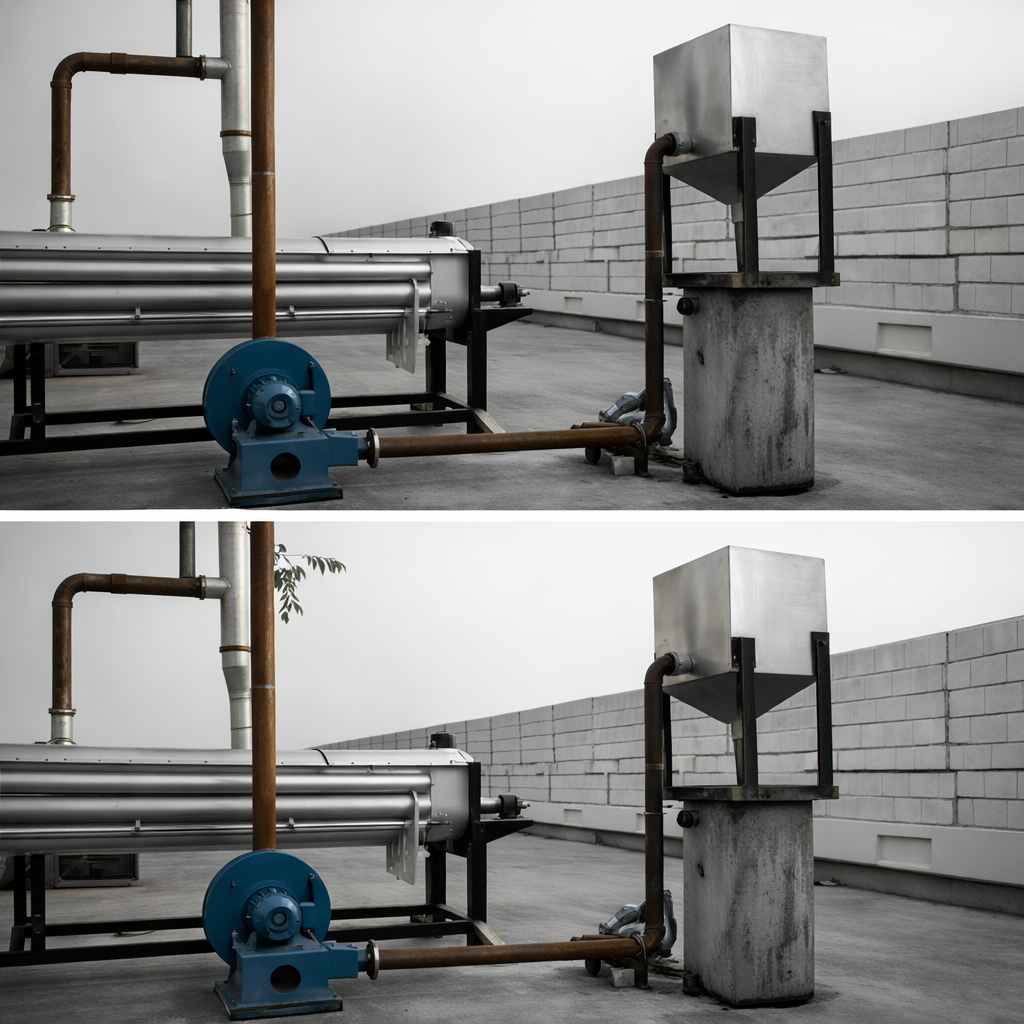
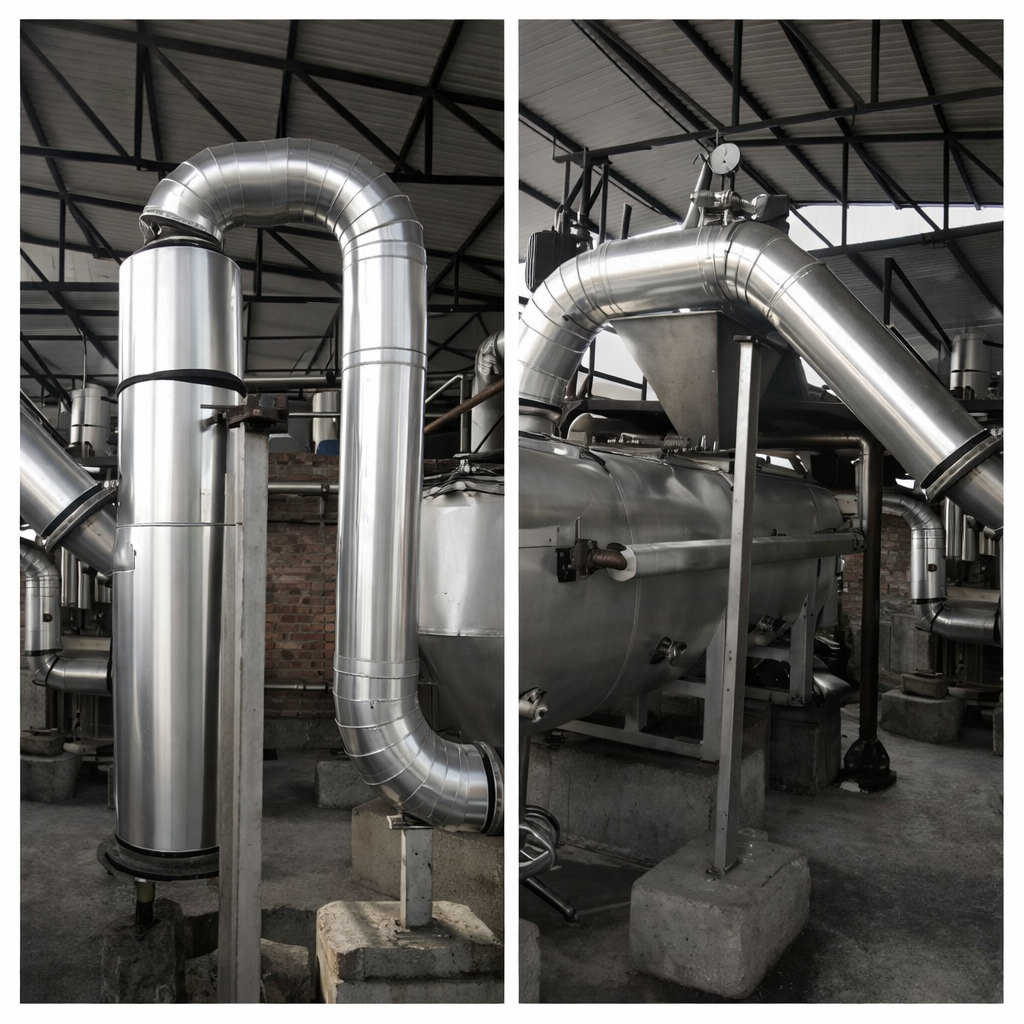
Kerone provides advanced paddle sludge dryer engineered to deliver high efficiency, precision, and industrial-grade reliability. With over 50 years of expertise across thermal, infrared, RF, microwave, and mechanical engineering, Kerone develops customized systems tailored to industry-specific requirements, ensuring maximum productivity and operational stability.
Why Choose Kerone Paddle Sludge Dryer
The machine has a heated through, containing rotating heated paddle shafts. The specially shaped paddles don’t have a transport function however are designed for max heat transfer. This leads to a wonderful management of the temperature of the product and allows a uniform product quality. At the outlet side, the product moves out of the machine via an adjustable overflow.
The machine has a heated trough, containing rotating heated paddle shafts. The specially shaped paddles don’t have a transport function; however, they are designed for maximum heat transfer. This leads to excellent temperature control of the product and ensures uniform product quality throughout the batch. At the outlet side, the product moves out of the machine via an adjustable overflow.
The rotating heated paddles continuously mix and gently agitate the material, ensuring that fresh product surfaces are constantly exposed to the heated surfaces. This controlled agitation prevents localized overheating, reduces the risk of product degradation, and enhances drying or reaction efficiency. The large heat transfer area, combined with optimized paddle geometry, enables efficient conduction-based heating, resulting in faster processing times and improved energy utilization.
Additionally, the machine is designed for stable and controlled operation under varying load conditions. The adjustable overflow mechanism allows precise control of product residence time inside the trough, ensuring consistent moisture reduction or thermal treatment. The enclosed construction minimizes heat loss and dust emission, making the system suitable for processing fine powders, granules, or pasty materials while maintaining hygiene and operational safety standards.
Types and Features of Paddle Sludge Dryer
The KERONE Paddle Drier offers a once-through drying technology that avoids back-mixing, making the machine highly suitable for sludge drying applications. The extended sludge retention time combined with a typical sludge temperature of 100º C enables effective sterilization and hygienic treatment of any type of sludge. The desired residual moisture level can be selected based on the end product requirement. This makes the machine ideal for partial drying to 35–40% dry solids, which is required before incineration of sludge.
Key Features of Paddle Sludge Dryers:
Designed for maximum heat transfer efficiency
Engineered for continuous operation applications
Ensures uniform product quality
Compatible with both steam and thermic fluid heating media
Reduces sludge weight by approximately 60%
Once-through drying technology to prevent back-mixing
Available in various MOC (Material of Construction) options
Available in multiple models ranging from 50 kg/hr to 1500 kg/hr capacity
Key Features
High operational efficiency with uniform processing
Adjustable temperature, airflow, or RF/IR power settings
Batch and continuous configurations available
Low maintenance with long service life
Custom material flow and heating patterns
Safety interlocks and advanced control systems
Powered by AI, ML & IoT
Future-Ready Engineering Driven by AI & IoT
Our advanced AI, ML, and IoT technologies, this solution delivers smarter automation, real-time insights, and predictive intelligence to enhance efficiency and drive future-ready growth.
Real-Time Monitoring & Control
Continuous tracking of process parameters with instant adjustments.
Predictive Maintenance
Intelligent fault detection to prevent failures before they occur.
Adaptive Process Optimization
Dynamic tuning of operations for maximum output and efficiency.
Cloud Dashboards & Analytics
Unified access to real-time insights and performance trends.
Energy & Resource Savings
Smarter utilization of energy to cut costs and reduce waste.
Secure IoT Connectivity
Encrypted data flow with seamless integration across plant systems.
Applications of Paddle Sludge Dryer
Paddle Sludge Dryers are widely used for drying municipal and industrial sludge generated from wastewater treatment plants. They are highly effective in reducing moisture content in sewage sludge, biological sludge, and effluent treatment plant (ETP) sludge, making the material easier to handle, transport, and dispose of. These dryers are commonly installed in municipal corporations, paper mills, textile units, and food processing industries to minimize sludge volume and convert waste into manageable solid form.
In addition to wastewater sludge, Paddle Sludge Dryers are also used for drying chemical sludge, pharmaceutical waste, petrochemical residues, and hazardous industrial by-products. Their indirect heating mechanism ensures energy-efficient drying with minimal odor and dust emissions. The dried output can be further utilized for incineration, co-processing in cement plants, composting, or safe landfill disposal, supporting environmental compliance and sustainable waste management practices.
Food, chemical, pharmaceutical, and mineral industries
Biomass, renewable fuels, and environmental systems
Packaging, paper, and pulp processing
Industrial drying, heating, curing, and material transformation
High-temperature and precision-controlled processes
Smart manufacturing with automation and AI integration
Kerone’s paddle sludge dryer solutions deliver unmatched quality, safety, and operational performance. Each system is tailored to meet production targets while ensuring energy savings, reliability, and long-term industrial value.
Seamless Export Connections Global & Local
Our Global Footprint in Industrial Excellence
Delivering world-class industrial and process solutions across countries with precision, innovation, and reliability.
Peru
Chile
Argentina
Mexico
Colombia
Brazil
USA
Canada
United Kingdom
France
Germany
Spain
Italy
Netherlands
Sweden
Switzerland
Poland
Portugal
Ireland
Czechia
Romania
Hungary
Austria
Greece
Kazakhstan
Uzbekistan
Turkmenistan
Algeria
Egypt
Nigeria
Kenya
South Africa
Saudi Arabia
UAE
Israel
Russia
India
China
Japan
South Korea
Thailand
Vietnam
Malaysia
Singapore
Indonesia
Philippines
Australia
New Zealand
Pan-India Presence. Local Expertise.
Raipur
Bilaspur
Panaji
Vasco da Gama
Gandhinagar
Ahmedabad
Surat
Chandigarh
Gurgaon
Shimla
Manali
Bengaluru
Mysore
Kochi
Pune
Mumbai
Thane
Navi Mumbai
Hyderabad
Chennai
Coimbatore
Kolkata
Lucknow
Jaipur
Udaipur
Jodhpur
Dehradun
Haridwar
Bhubaneswar
Product Gallery
Frequently Asked Questions (FAQ)
Yes, Kerone offers fully customized engineering based on capacity, temperature, and industry needs.
PLC, SCADA, IoT, AI/ML predictive systems, and remote monitoring.
Yes, Kerone designs systems that significantly reduce operational energy consumption.
Manufacturing, food, chemicals, biomass, pharma, packaging, and advanced materials.
Yes, from installation to lifetime service support, Kerone provides complete assistance.
A paddle sludge dryer (also known as a wedge rotor or paddle dryer) uses a jacketed trough with hollow counter-rotating paddle agitators through which a heat transfer medium (steam, hot water, or thermal oil) circulates. The paddles provide both heat transfer and mechanical agitation, moving the sludge through the dryer while continuously exposing fresh surfaces for evaporation. The system operates at relatively low temperatures, making it suitable for heat-sensitive sludges.
Most sludges pass through a highly cohesive, sticky intermediate phase at approximately 40–60% moisture content where they resist movement and tend to form large lumps. Paddle dryers are specifically designed to handle this phase because the mechanical action of counter-rotating paddles continuously breaks up agglomerates and ensures continuous material flow through the dryer, whereas other dryer types (belt dryers, rotary dryers) struggle with this phase.
Heat transfer fluids used in paddle sludge dryers include saturated steam (up to 180°C, 10 bar), hot water (up to 95°C), and thermal oil (up to 320°C for high-temperature applications). Steam is the most commonly used medium for municipal sludge. Thermal oil enables higher operating temperatures and is preferred for industrial sludges requiring more intensive drying or for facilities without a steam supply.
Paddle sludge dryers are compact relative to their drying capacity. Typical units range from small laboratory models handling 50–200 kg/hour of wet sludge to large industrial units handling 10,000+ kg/hour. The modular design allows parallel installation of multiple units to meet any required throughput. Their compact footprint makes them suitable for retrofitting into existing wastewater treatment plants with limited space.
Paddle dryers operate as enclosed systems, which inherently limits fugitive dust and odor release. The vapor space above the product is maintained under slight negative pressure, and the exhaust vapor is ducted to a condenser (to recover water and condense odorous compounds) followed by an air treatment system (biofilter, scrubber, or thermal oxidizer). This fully enclosed design makes paddle dryers one of the preferred technologies for drying in urban areas with strict odor regulations.
Fibrous material can be handled, though very long fibres may need pre shredding to avoid wrapping around the paddle shafts. Kerone reviews sample material to confirm whether pre treatment is needed for your specific waste stream.
Dried material exits through the adjustable overflow at the outlet end and is typically collected by a screw conveyor or directly into containers positioned below the discharge point, ready for onward handling or storage.
Once running, the system operates with minimal supervision thanks to automated temperature and level controls, though periodic operator checks are still recommended to confirm smooth material flow and catch any issues early.
Yes, running units in series is a common approach when a single pass does not achieve the target dryness, with the second unit picking up where the first leaves off to reach a lower final moisture level.
Since sludge often leaves the dryer at a high temperature, a cooling conveyor or holding area is commonly added before storage or bagging, both for safe handling and to avoid condensation forming in enclosed storage.
Kerone’s custom-designed heating and processing solutions are built to meet the demands of your growing operations. Whether you’re upgrading equipment, expanding production, or need a tailor-made solution


 Peru
Peru Chile
Chile Argentina
 Mexico
 Colombia
 Brazil
 USA
USA Canada
 United Kingdom
 France
 Germany
 Spain
Spain Italy
Italy Netherlands
 Sweden
 Switzerland
 Poland
 Portugal
 Ireland
 Czechia
 Romania
 Hungary
 Austria
 Greece
 Kazakhstan
 Uzbekistan
 Turkmenistan
 Algeria
 Egypt
Egypt Nigeria
 Kenya
Kenya South Africa
 Saudi Arabia
 UAE
UAE Israel
 Russia
 India
India China
China Japan
Japan South Korea
 Thailand
 Vietnam
 Malaysia
 Singapore
 Indonesia
 Philippines
 Australia
 New Zealand