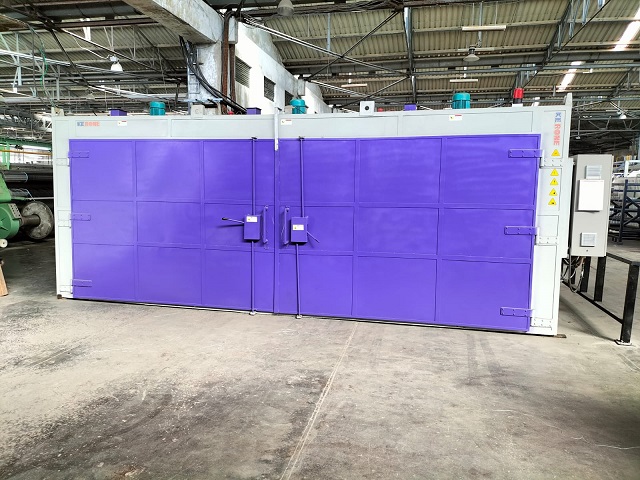
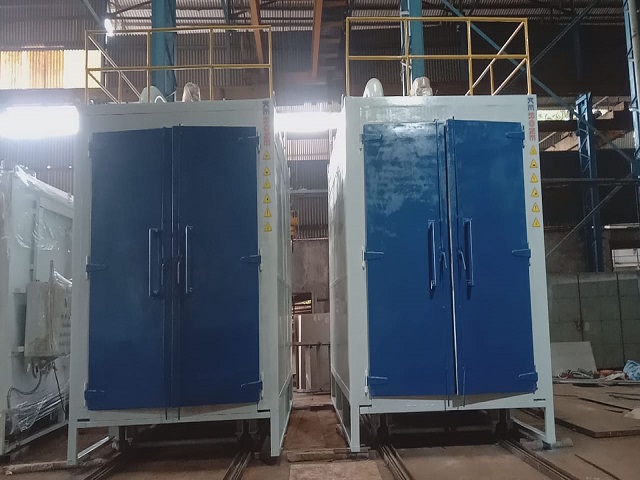
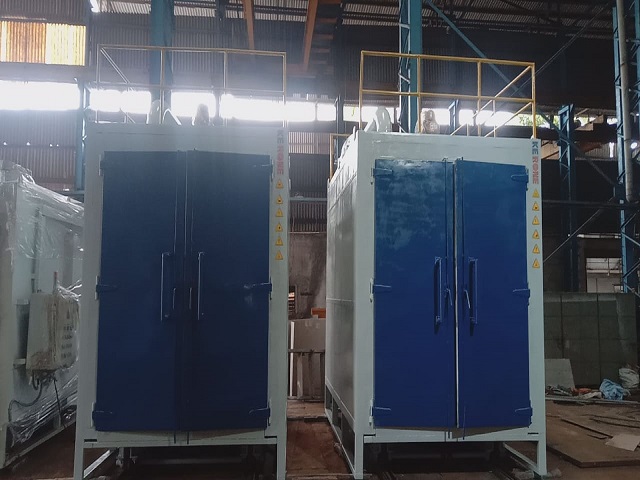
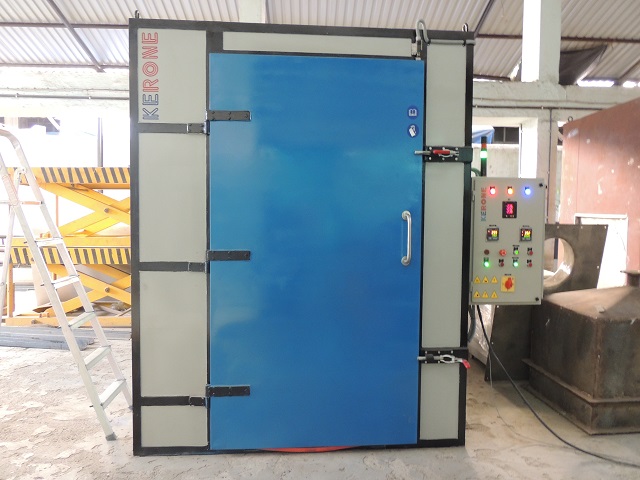
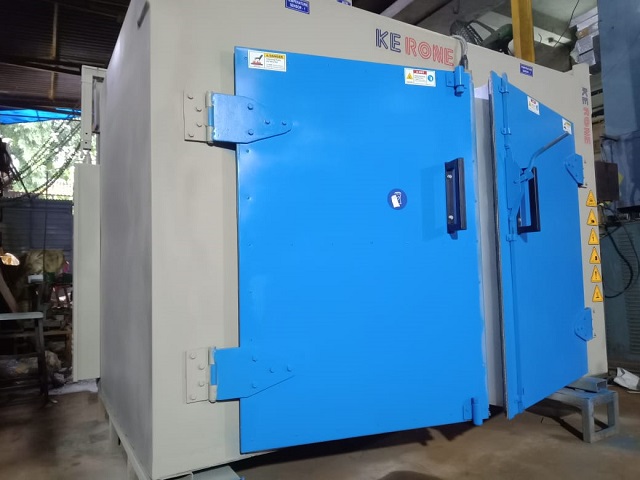
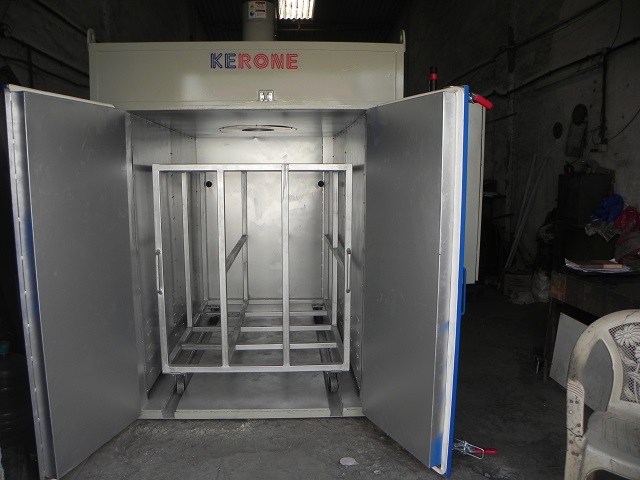
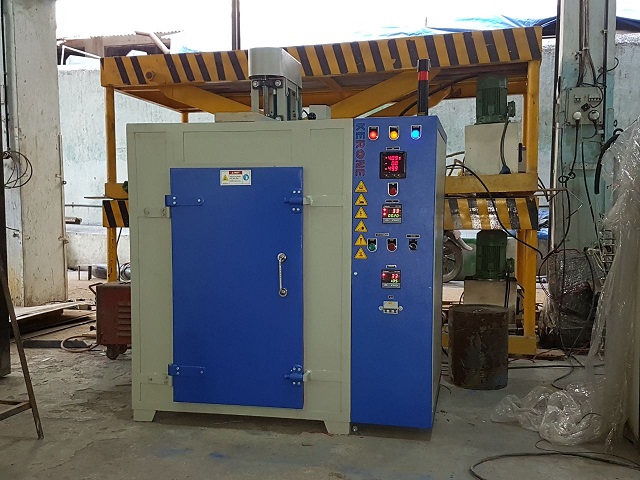
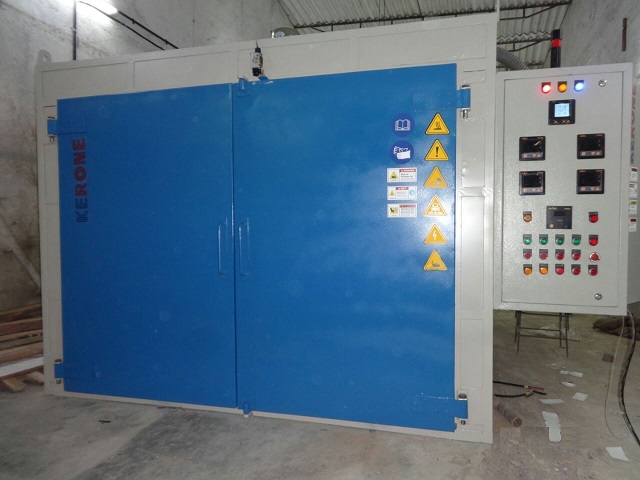
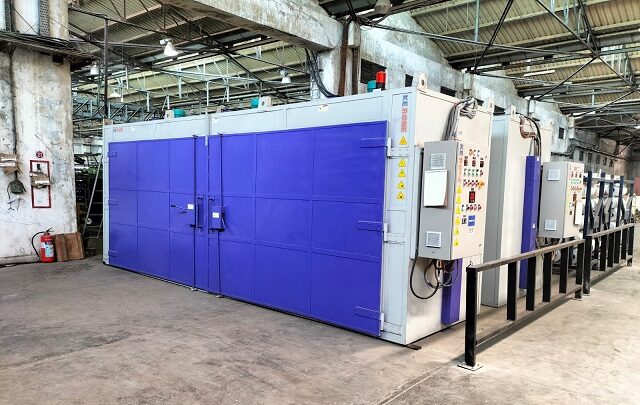
KERONE Engineering Solutions Ltd. is a pioneer in application and implementing engineering solutions with its vast knowledge and understanding and a skillful team of professionals. Since last 50 years, it has been into structuring, manufacturing & installing of Industrial machinery for various processing needs. The engineers & professionals at KERONE are proficient in technical know-how of different Industrial Ovens and provide solutions applying them in a huge no. of Industries.
Why Choose Kerone Industrial Ovens
Our technicians and engineers put in all the professional efforts to design and provide most suitable solutions that adhere to the client’s specifications. Till date we have designed and developed a wide range of Industrial heating ovens which are manufactured using standard and custom thermal processing system having a variety of configurations. Conventional Ovens are available in both Fuel Fired and Electrical Fired, Infrared Industrial Oven, Radio frequency Industrial oven, Microwave industrial oven and also various hybrid industrial ovens.
Types and Features of Industrial Ovens
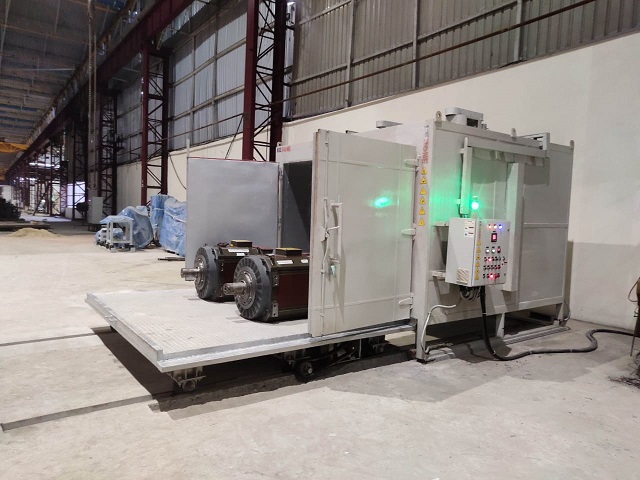
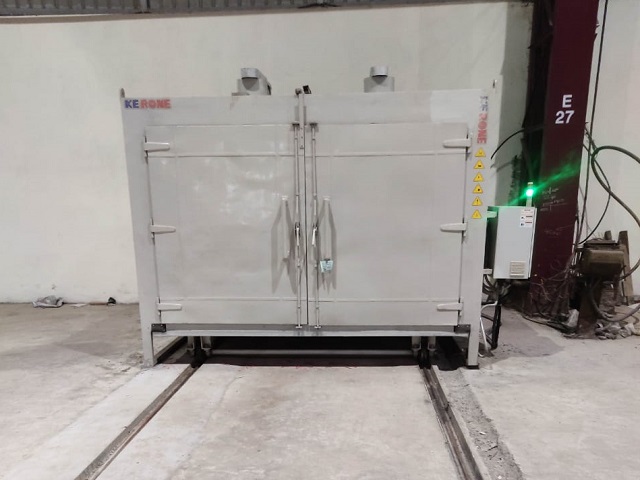
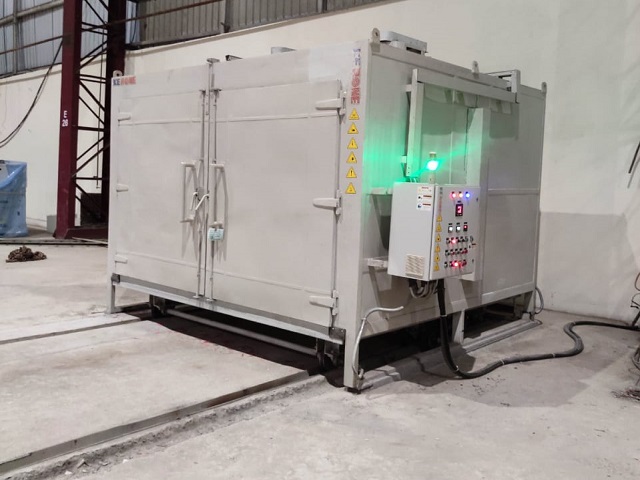
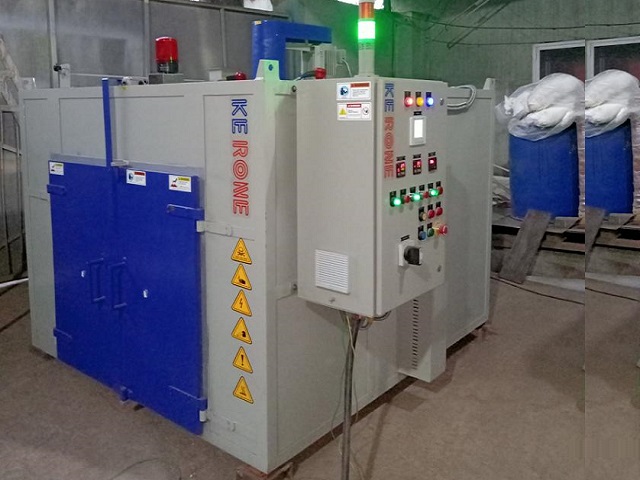
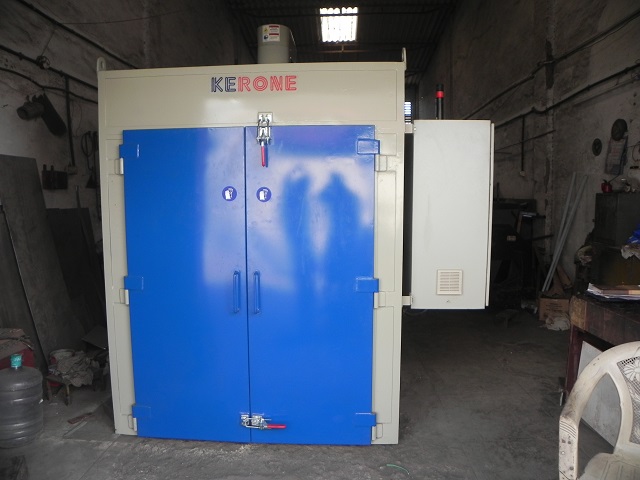
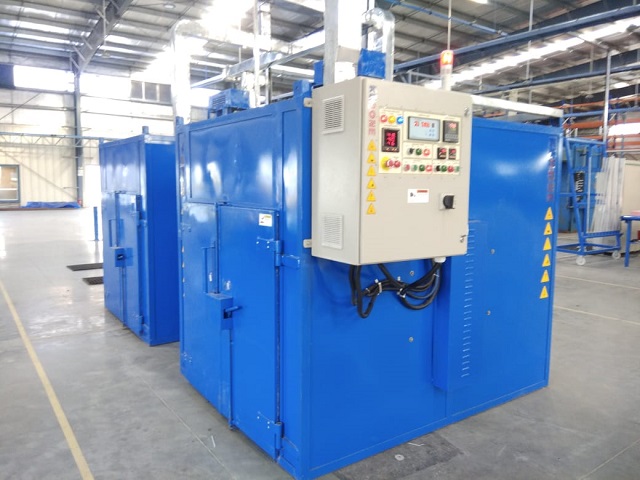
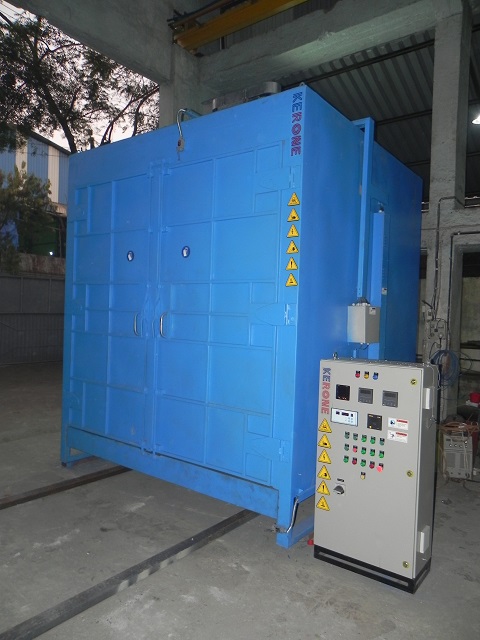
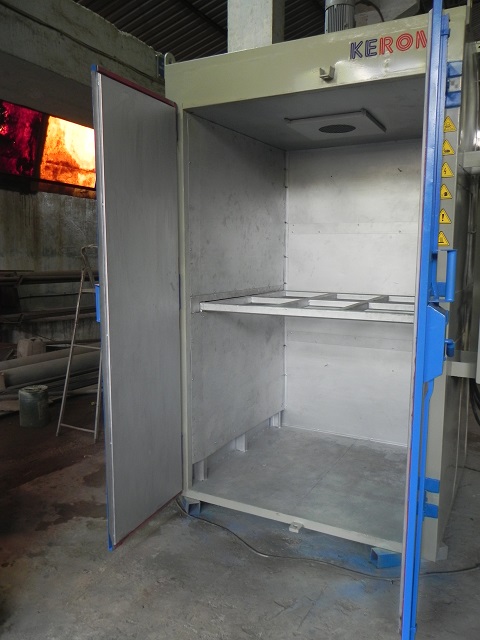
Industrial ovens are enclosed heating chambers used for a wide range of industrial applications on components, sub-assemblies, or finished products. They can be designed for small or large production volumes and may operate in batch mode or as part of a continuous conveyorized system. Industrial ovens are available in various temperature ranges, sizes, and configurations to suit specific process requirements.
By typical definition, an oven is an enclosed cavity or tunnel where material is exposed to a controlled hot environment in order to achieve physical or chemical transformation. In industrial settings, ovens are used not only for baking applications but also for drying, curing, annealing, preheating, and heat treatment processes.
KERONE is one of the leading manufacturers of industrial ovens in India. Our high-quality industrial ovens and heating systems are designed for temperatures up to 400°C, large-capacity working chambers, and uniform heat distribution to ensure reliable and efficient performance.
Classification of Industrial Ovens
1) Batch Industrial Oven
Batch industrial ovens are suitable for applications where load size or production volume varies significantly. These ovens offer flexibility in process variables such as temperature and time, making them ideal for operations that require customized heating cycles or intermittent production schedules.
2) Continuous Industrial Oven
Continuous industrial ovens are preferred for processing large quantities of identical products. They provide consistent processing times and uniform heating for high-volume production environments, such as automotive component manufacturing and food processing. Continuous ovens also allow multiple processes to be integrated within a single line, reducing material handling and improving overall throughput.
Key Features
High operational efficiency with uniform processing
Adjustable temperature, airflow, or RF/IR power settings
Batch and continuous configurations available
Low maintenance with long service life
Custom material flow and heating patterns
Safety interlocks and advanced control systems
Powered by AI, ML & IoT
Future-Ready Engineering Driven by AI & IoT
Our advanced AI, ML, and IoT technologies, this solution delivers smarter automation, real-time insights, and predictive intelligence to enhance efficiency and drive future-ready growth.
Real-Time Monitoring & Control
Continuous tracking of process parameters with instant adjustments.
Predictive Maintenance
Intelligent fault detection to prevent failures before they occur.
Adaptive Process Optimization
Dynamic tuning of operations for maximum output and efficiency.
Cloud Dashboards & Analytics
Unified access to real-time insights and performance trends.
Energy & Resource Savings
Smarter utilization of energy to cut costs and reduce waste.
Secure IoT Connectivity
Encrypted data flow with seamless integration across plant systems.
Applications of Industrial Ovens
Industrial ovens find its application virtually in every single manufacturing process and some or the other time with more focused and customized approach.
Food, chemical, pharmaceutical, and mineral industries
Biomass, renewable fuels, and environmental systems
Packaging, paper, and pulp processing
Industrial drying, heating, curing, and material transformation
High-temperature and precision-controlled processes
Smart manufacturing with automation and AI integration
Kerone’s Industrial Ovens represent the full breadth of industrial thermal processing capability, from simple drying ovens to complex multi-zone continuous processing lines operating at temperatures up to 1400°C. Whatever the application, production scale, or thermal processing requirement, Kerone has the engineering expertise, manufacturing capability, and project delivery experience to provide the optimal industrial oven solution. The company’s reputation for quality, reliability, and technical excellence makes Kerone the trusted partner for industrial thermal processing equipment worldwide.
Seamless Export Connections Global & Local
Our Global Footprint in Industrial Excellence
Delivering world-class industrial and process solutions across countries with precision, innovation, and reliability.
Peru
Chile
Argentina
Mexico
Colombia
Brazil
USA
Canada
United Kingdom
France
Germany
Spain
Italy
Netherlands
Sweden
Switzerland
Poland
Portugal
Ireland
Czechia
Romania
Hungary
Austria
Greece
Kazakhstan
Uzbekistan
Turkmenistan
Algeria
Egypt
Nigeria
Kenya
South Africa
Saudi Arabia
UAE
Israel
Russia
India
China
Japan
South Korea
Thailand
Vietnam
Malaysia
Singapore
Indonesia
Philippines
Australia
New Zealand
Pan-India Presence. Local Expertise.
Raipur
Bilaspur
Panaji
Vasco da Gama
Gandhinagar
Ahmedabad
Surat
Chandigarh
Gurgaon
Shimla
Manali
Bengaluru
Mysore
Kochi
Pune
Mumbai
Thane
Navi Mumbai
Hyderabad
Chennai
Coimbatore
Kolkata
Lucknow
Jaipur
Udaipur
Jodhpur
Dehradun
Haridwar
Bhubaneswar
Product Gallery
Frequently Asked Questions (FAQ)
Yes, Kerone offers fully customized engineering based on capacity, temperature, and industry needs.
PLC, SCADA, IoT, AI/ML predictive systems, and remote monitoring.
Manufacturing, food, chemicals, biomass, pharma, packaging, and advanced materials.
Yes, Kerone designs systems that significantly reduce operational energy consumption.
Yes, from installation to lifetime service support, Kerone provides complete assistance.
Kerone manufactures batch ovens, continuous conveyor ovens, walk-in ovens, tunnel ovens, roller hearth furnaces, car-bottom furnaces, and many specialized types.
Kerone uses industry-standard Siemens and Allen-Bradley PLC platforms with SCADA integration for process monitoring and control.
Kerone designs and manufactures its industrial ovens in accordance with ISO 9001 quality management system requirements.
Batch ovens suit applications with variable load size, frequent product changes, or production volumes too low to justify dedicated continuous equipment, offering flexibility to adjust temperature and time for each specific load. Continuous ovens suit high-volume production of identical or similar products where consistent processing time and integration with upstream and downstream conveyor-based operations improves overall line efficiency. The decision depends primarily on production volume consistency and product variety rather than a fixed industry rule, since both food processing and automotive component manufacturing, for example, use either configuration depending on the specific product line's volume and variety characteristics. Many manufacturers start with batch ovens during product development and lower-volume production, transitioning to continuous configuration once a specific product or product family reaches volume levels that justify the reduced flexibility and higher capital cost of dedicated continuous equipment.
Uneven temperature distribution within an oven chamber causes inconsistent curing, drying, or heat treatment results across a load, leading to quality variation between products processed in different chamber zones during the same cycle. Kerone achieves uniformity through optimized airflow design with strategically placed supply and return ducts, multiple heating zones with independent temperature control for larger chambers, and air circulation patterns engineered to eliminate dead zones where airflow stagnates. Load arrangement also affects achievable uniformity, since dense or improperly spaced loading can block airflow to portions of the chamber regardless of how well the oven itself is designed. Temperature mapping during commissioning, using multiple calibrated sensors placed throughout a representative load, validates that uniformity meets the process requirements before the oven is approved for production use, and periodic re-verification confirms uniformity hasn't degraded due to ductwork fouling or fan performance changes over time.
A frequent mistake is specifying chamber size based on current product dimensions without accounting for future product line changes or capacity growth, resulting in an oven that becomes a bottleneck within a few years. Underestimating ventilation requirements for processes that release solvent vapor, moisture, or particulates during heating is another common error, leading to either unsafe operating conditions or inadequate process results once the oven is in production. Buyers sometimes select heating technology based on initial equipment cost alone without evaluating operating cost differences between electric, gas, and alternative heating methods over the equipment's expected life. Failing to characterize the actual thermal load, including how quickly and to what temperature the specific product needs to heat, before finalizing oven sizing often results in mismatched heating capacity that either wastes energy or cannot achieve required cycle times.
Electric heating offers precise temperature control and clean operation without combustion byproducts, suiting applications requiring tight process control or cleanroom-adjacent environments, though electricity costs per unit of heat delivered are often higher than gas in many regions. Gas-fired heating typically offers lower operating cost for high-temperature, high-volume applications where fuel cost matters more than the precision electric heating provides, but requires combustion venting and safety systems electric heating doesn't need. Infrared heating delivers fast, direct surface heating well suited to coatings and surface curing applications, but penetrates less deeply into thick materials than convective methods. Radio frequency and microwave heating provide volumetric, rapid heating advantageous for moisture-sensitive or thick materials but at higher equipment cost than conventional convective heating. The right choice depends on the specific material, required heating depth, throughput needs, and regional energy cost structure rather than any universally superior option.
A common misconception is that increasing oven temperature always reduces processing time proportionally, when many materials have a maximum safe heating rate beyond which quality defects like cracking, warping, or surface defects occur regardless of available oven capacity. Buyers sometimes assume a single oven configuration can handle any product without modification, when chamber size, airflow pattern, and heating technology all need to match the specific product's thermal characteristics and handling requirements. Another misconception is that oven energy consumption is primarily a function of temperature setpoint alone, when insulation quality, door seal integrity, and airflow efficiency often have as much or more impact on actual energy consumption as the target temperature itself. Recognizing that oven performance depends on the interaction between equipment design and the specific material being processed, rather than viewing ovens as interchangeable boxes that simply apply heat, leads to better-informed specification decisions.
Replacing batch oven processing with an integrated continuous oven typically increases throughput by eliminating the loading, unloading, and dwell time gaps inherent to batch cycles, with manufacturers commonly seeing 20 to 50 percent capacity improvement for processes well suited to continuous operation. Integrating the oven directly into a conveyorized production line also eliminates material handling time between separate process steps that would otherwise require manual transfer between standalone batch equipment. The improvement magnitude depends heavily on how much of the previous process bottleneck was actually oven cycle time versus other constraints elsewhere in the production flow, since improving oven throughput alone doesn't help if a different process step remains the limiting factor. Kerone typically evaluates the complete production line's bottleneck structure before sizing a continuous oven, ensuring the new equipment's capacity is matched to genuinely relieve the production constraint rather than simply shifting the bottleneck elsewhere.
Modern industrial ovens incorporate improved insulation materials that reduce heat loss through chamber walls, optimized airflow design that achieves target temperatures with less energy input than older designs relying on oversized but inefficient heating capacity, and exhaust heat recovery systems that capture energy from outgoing air to preheat incoming combustion air or process air rather than venting that energy directly to atmosphere. Variable speed drives on circulation fans adjust airflow to actual process needs rather than running at constant maximum speed regardless of load, reducing electrical consumption during partial-load operation. For gas-fired ovens, modern burner technology achieves more complete combustion with lower excess air requirements, improving fuel efficiency and reducing emissions per unit of heat delivered. These efficiency improvements directly reduce a facility's energy costs and associated carbon emissions, making oven replacement or upgrade a meaningful contributor to broader industrial decarbonization and sustainability initiatives.
Kerone’s custom-designed heating and processing solutions are built to meet the demands of your growing operations. Whether you’re upgrading equipment, expanding production, or need a tailor-made solution


 Peru
Peru Chile
Chile Argentina
 Mexico
 Colombia
 Brazil
 USA
USA Canada
 United Kingdom
 France
 Germany
 Spain
Spain Italy
Italy Netherlands
 Sweden
 Switzerland
 Poland
 Portugal
 Ireland
 Czechia
 Romania
 Hungary
 Austria
 Greece
 Kazakhstan
 Uzbekistan
 Turkmenistan
 Algeria
 Egypt
Egypt Nigeria
 Kenya
Kenya South Africa
 Saudi Arabia
 UAE
UAE Israel
 Russia
 India
India China
China Japan
Japan South Korea
 Thailand
 Vietnam
 Malaysia
 Singapore
 Indonesia
 Philippines
 Australia
 New Zealand