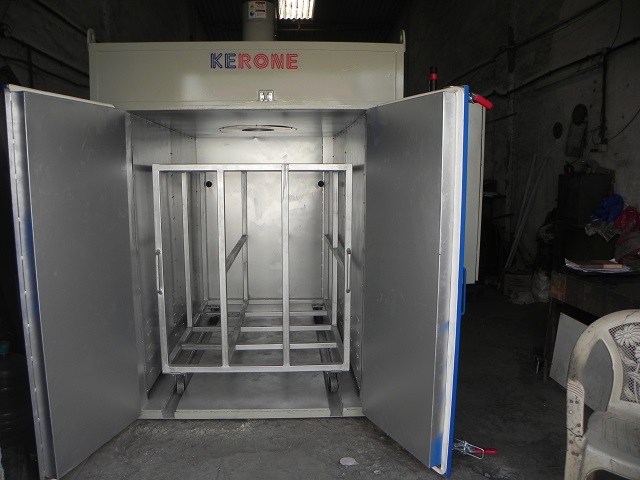
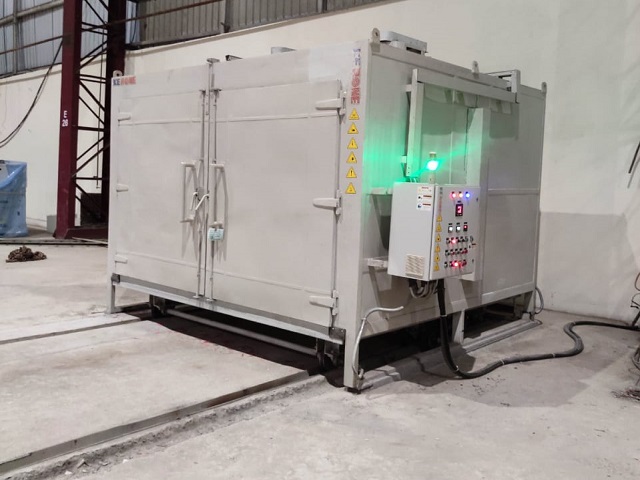
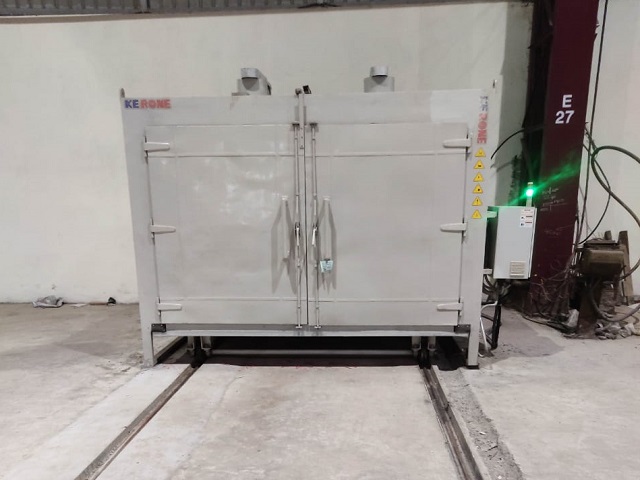
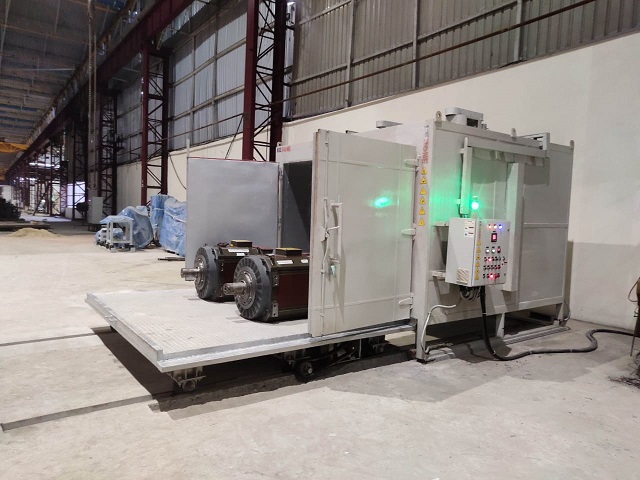
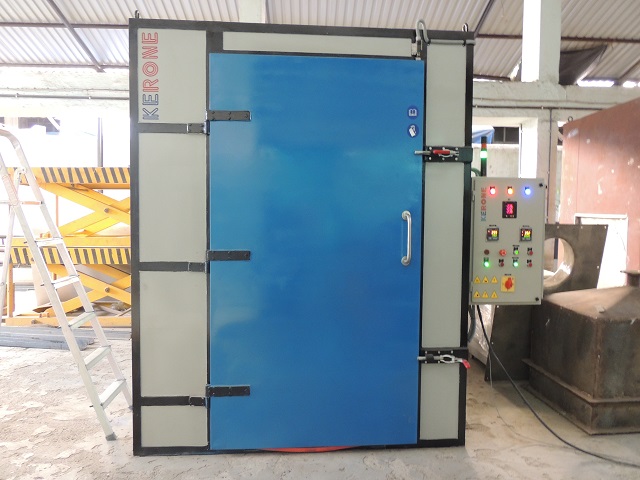
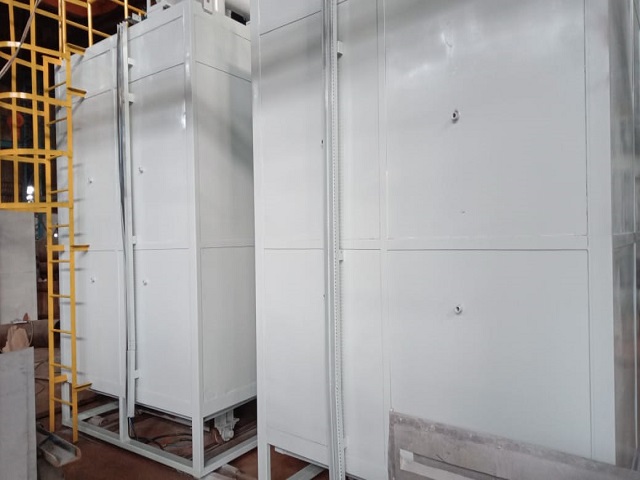
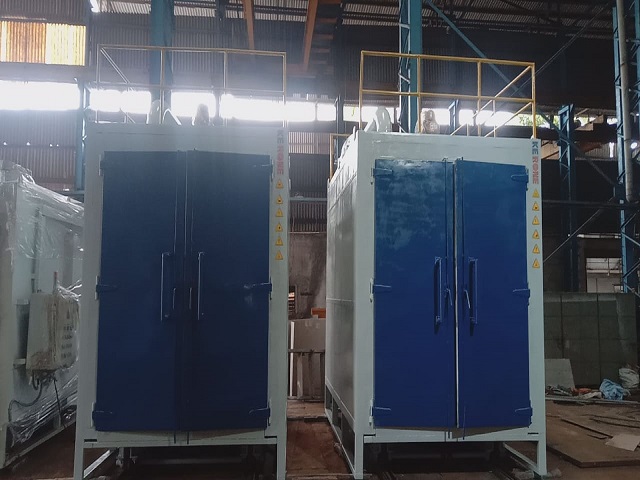
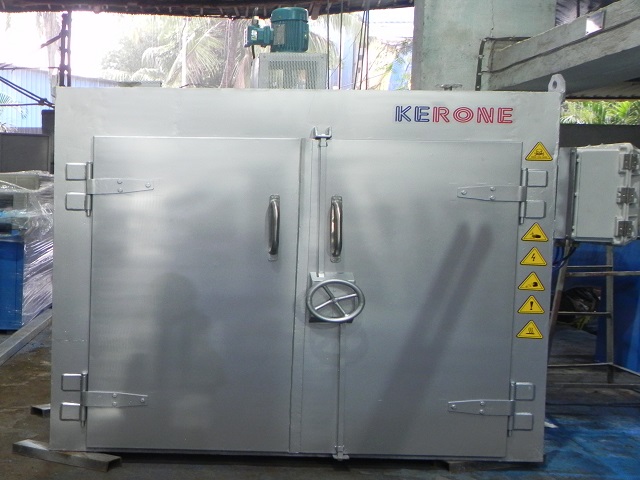
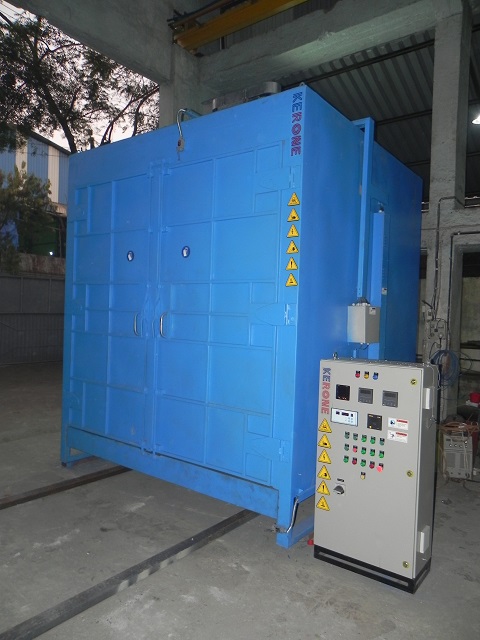
Kerone provides advanced batch ovens engineered to deliver high efficiency, precision, and industrial-grade reliability. With over 50 years of expertise across thermal, infrared, RF, microwave, and mechanical engineering, Kerone develops customized systems tailored to industry-specific requirements, ensuring maximum productivity and operational stability.
Unlike continuous ovens, batch ovens allow each charge of products to be loaded, processed at a defined temperature profile, and unloaded before the next batch begins, making them ideal for short runs, mixed products, and processes that require specific ramp-and-soak cycles. Kerone’s Batch Ovens are built to exacting standards of temperature uniformity, energy efficiency, and operator safety, serving industries from aerospace and automotive to pharmaceuticals and food processing.
Why Choose Kerone Batch Ovens
Kerone’s Batch Ovens are engineered to deliver repeatable, high-quality thermal processing results every time, backed by precise PID temperature control, excellent chamber uniformity, and heavy-duty construction that withstands continuous industrial operation. The ability to program complex heating and cooling profiles makes these ovens particularly valuable for heat treatment, curing, and testing applications where specific thermal cycles are mandated by industry standards. Kerone’s team of engineers provides expert guidance on oven selection, sizing, and process development to ensure optimal performance for each client’s specific application.
Types and Features of Batch Ovens
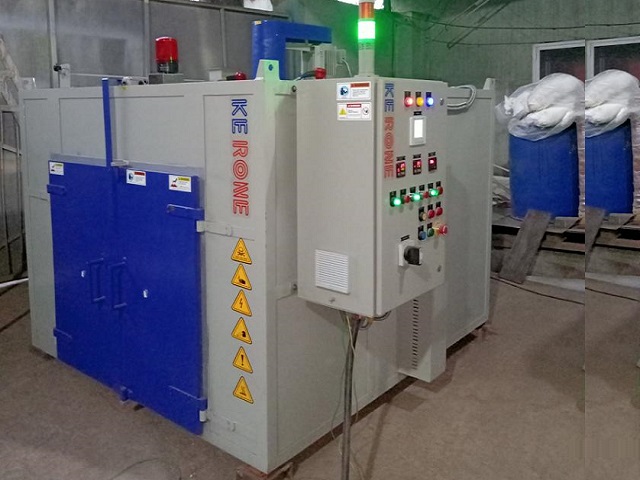
Kerone manufactures Batch Ovens in a wide range of sizes from benchtop laboratory units to large walk-in industrial chambers. Models include standard forced convection ovens, high-temperature models up to 1200°C, inert atmosphere ovens for oxidation-sensitive processes, and clean room compatible designs. Standard features include stainless steel interiors, insulated double-wall construction, programmable digital controllers, and safety thermostat protection.
Key Features
Programmable PID temperature controller with ramp, soak, and cool profiles
Excellent temperature uniformity throughout the chamber
Available from small benchtop to large walk-in chamber sizes
Stainless steel interior for cleanability and corrosion resistance
Heavy-duty insulated double-wall construction for energy efficiency
Over-temperature safety thermostat for process and operator protection
Available with inert gas atmosphere capability for sensitive processes
Data logging and reporting capability for quality assurance
Powered by AI, ML & IoT
Future-Ready Engineering Driven by AI & IoT
Our advanced AI, ML, and IoT technologies, this solution delivers smarter automation, real-time insights, and predictive intelligence to enhance efficiency and drive future-ready growth.
Real-Time Monitoring & Control
Continuous tracking of process parameters with instant adjustments.
Predictive Maintenance
Intelligent fault detection to prevent failures before they occur.
Adaptive Process Optimization
Dynamic tuning of operations for maximum output and efficiency.
Cloud Dashboards & Analytics
Unified access to real-time insights and performance trends.
Energy & Resource Savings
Smarter utilization of energy to cut costs and reduce waste.
Secure IoT Connectivity
Encrypted data flow with seamless integration across plant systems.
Applications of Batch Ovens
Kerone’s Batch Ovens are extensively used in manufacturing, research, and quality control environments. Typical applications include:
Heat treatment (annealing, tempering, stress relief) of metal components
Curing of composites, adhesives, and resin systems in aerospace and automotive
Sterilization and dehydrogenation in pharmaceutical manufacturing
Burn-in testing of electronic assemblies and components
Drying and pre-baking of moulds and patterns in foundry operations
Environmental simulation and accelerated aging of products and materials
Kerone’s batch ovens solutions deliver unmatched quality, safety, and operational performance. Each system is tailored to meet production targets while ensuring energy savings, reliability, and long-term industrial value. The wide range of available sizes, temperature capabilities, and optional features ensures that there is a Kerone Batch Oven suited to virtually any application. With robust construction, intuitive controls, and comprehensive technical support from Kerone’s engineering team, these ovens provide excellent value and long service life in demanding production environments.
Seamless Export Connections Global & Local
Our Global Footprint in Industrial Excellence
Delivering world-class industrial and process solutions across countries with precision, innovation, and reliability.
Peru
Chile
Argentina
Mexico
Colombia
Brazil
USA
Canada
United Kingdom
France
Germany
Spain
Italy
Netherlands
Sweden
Switzerland
Poland
Portugal
Ireland
Czechia
Romania
Hungary
Austria
Greece
Kazakhstan
Uzbekistan
Turkmenistan
Algeria
Egypt
Nigeria
Kenya
South Africa
Saudi Arabia
UAE
Israel
Russia
India
China
Japan
South Korea
Thailand
Vietnam
Malaysia
Singapore
Indonesia
Philippines
Australia
New Zealand
Pan-India Presence. Local Expertise.
Raipur
Bilaspur
Panaji
Vasco da Gama
Gandhinagar
Ahmedabad
Surat
Chandigarh
Gurgaon
Shimla
Manali
Bengaluru
Mysore
Kochi
Pune
Mumbai
Thane
Navi Mumbai
Hyderabad
Chennai
Coimbatore
Kolkata
Lucknow
Jaipur
Udaipur
Jodhpur
Dehradun
Haridwar
Bhubaneswar
Product Gallery
Frequently Asked Questions (FAQ)
Yes, Kerone offers fully customized engineering based on capacity, temperature, and industry needs.
Batch ovens are multi-process thermal systems used for curing adhesives and coatings, annealing and stress-relieving metal components, sintering ceramic parts, pre-heating materials before forming, polymerising polymer matrix composites, tempering glass, vulcanising rubber, and baking protective coatings on industrial components. The defining characteristic is that a discrete quantity of product, a batch is placed in the oven, processed through a defined thermal cycle, and then removed. This flexibility makes a batch oven the right choice when product types change frequently, when cycle time varies between product designs, or when sample quantities are too small to justify continuous processing.
A conventional convective batch oven circulates heated air that gradually transfers thermal energy to the product surface by convection. Heating the entire air volume in the chamber and the product itself; takes time, resulting in longer cycle times. An infrared batch oven radiates energy directly onto the product surface, converting it to heat on contact. IR heating can achieve surface temperatures 40–60% faster than convective heating in many applications. However, IR is most effective for flat or simply shaped products where the emitter has line-of-sight to all surfaces. For complex three-dimensional components with internal surfaces, a combination of IR and forced convection in the same chamber provides the best balance of speed and uniformity.
PLC, SCADA, IoT, AI/ML predictive systems, and remote monitoring.
Yes, Kerone designs systems that significantly reduce operational energy consumption.
Manufacturing, food, chemicals, biomass, pharma, packaging, and advanced materials.
Yes, from installation to lifetime service support, Kerone provides complete assistance.
Yes, Kerone offers batch ovens with inert gas purge capability for nitrogen or argon atmosphere processing to prevent oxidation.
Yes, Kerone can supply ovens meeting AMS2750 pyrometry requirements for aerospace heat treatment applications.
Yes, batch ovens are versatile and can be used for multiple process types by changing the temperature setting and profile.
Automotive and aerospace industries use batch ovens for paint curing, adhesive bonding, and composite part processing. Electronics manufacturing uses them for solder reflow, encapsulant curing, and PCB pre-heating. Metal fabrication uses batch ovens for stress relieving, normalising, and powder coat curing. Rubber processing uses them for vulcanisation of moulded parts. Foundries use batch ovens for mould and core drying. Pharmaceutical and medical device manufacturers use them for sterilisation media preparation and label curing. Ceramics manufacturing relies on batch ovens for bisque firing and glaze development. The common thread is the need for a controlled thermal environment where a specific time-temperature cycle determines the final material properties.
Kerone's batch ovens include multiple layers of temperature protection. A primary PID controller maintains the setpoint temperature. An independent over-temperature safety cutout, set above the process temperature, disconnects heating power if the primary controller fails. For gas-heated ovens, a combustion management system includes a gas pressure switch, flame detection, pre-purge cycle, and post-purge to safely extinguish and clear combustion gases. Door safety interlocks prevent heating operation when the door is open. A motorised exhaust damper provides emergency ventilation in case of thermal runaway. For ovens processing materials with volatile content, explosion relief panels sized to the chamber volume prevent over-pressurisation. All safety systems are independent of the process control system.
Multi-step curing cycles require the oven temperature to ramp at controlled rates, hold at specific temperatures for defined periods, and in some cases ramp down in a controlled manner to prevent thermal shock. Kerone's batch oven PLC systems support programmable temperature profiles with multiple ramp-and-soak segments. An operator enters the number of steps, the target temperature for each step, the ramp rate in °C per minute, and the hold duration. The PLC executes the programme automatically, and a real-time chart recorder or data logger creates a permanent record of the actual temperature profile achieved. For regulated industries, these records form part of the batch quality documentation. Recipe libraries allow multiple product cycles to be stored and recalled without re-entry.
Batch ovens that run frequent short cycles face a specific energy challenge: the chamber must be heated to process temperature at the start of each cycle, consuming energy in the ramp-up phase. For high-frequency operation, reducing oven idle temperature between batches rather than cooling completely, reduces ramp-up energy and time. Insulated chamber walls with high thermal mass retain heat between cycles. PLC-programmed standby modes reduce heater power during waiting periods without fully cooling the chamber. For very frequent cycling, a continuous oven may ultimately be more energy-efficient. Kerone evaluates both options based on actual production schedules and cycle time data before recommending batch versus continuous equipment.
Yes. Batch ovens used in aerospace composite curing must meet the temperature uniformity and documentation requirements of AMS 2750 (Pyrometry), which specifies the requirements for temperature sensor calibration, furnace temperature uniformity surveys, and instrumentation accuracy for aerospace thermal processing equipment. Kerone designs batch ovens for aerospace applications with the required number of independently calibrated temperature sensors, data acquisition systems capable of providing the required instrumentation class, and controller accuracy for the applicable furnace class. The initial furnace temperature uniformity survey (TUS) is performed by a qualified pyrometry specialist before the oven enters service, and annual re-surveys are required for ongoing certification.
Kerone’s custom-designed heating and processing solutions are built to meet the demands of your growing operations. Whether you’re upgrading equipment, expanding production, or need a tailor-made solution




 Peru
Peru Chile
Chile Argentina
 Mexico
 Colombia
 Brazil
 USA
USA Canada
 United Kingdom
 France
 Germany
 Spain
Spain Italy
Italy Netherlands
 Sweden
 Switzerland
 Poland
 Portugal
 Ireland
 Czechia
 Romania
 Hungary
 Austria
 Greece
 Kazakhstan
 Uzbekistan
 Turkmenistan
 Algeria
 Egypt
Egypt Nigeria
 Kenya
Kenya South Africa
 Saudi Arabia
 UAE
UAE Israel
 Russia
 India
India China
China Japan
Japan South Korea
 Thailand
 Vietnam
 Malaysia
 Singapore
 Indonesia
 Philippines
 Australia
 New Zealand