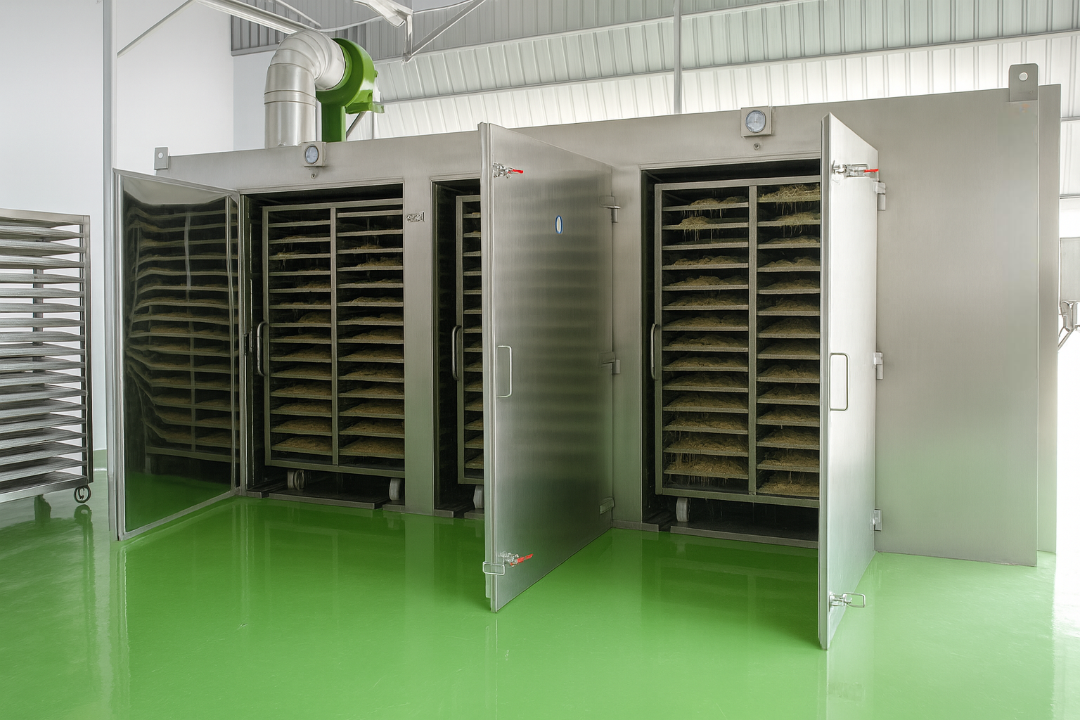
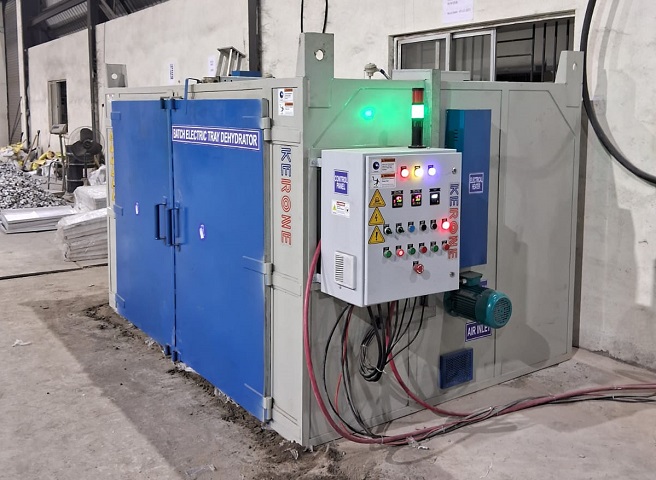
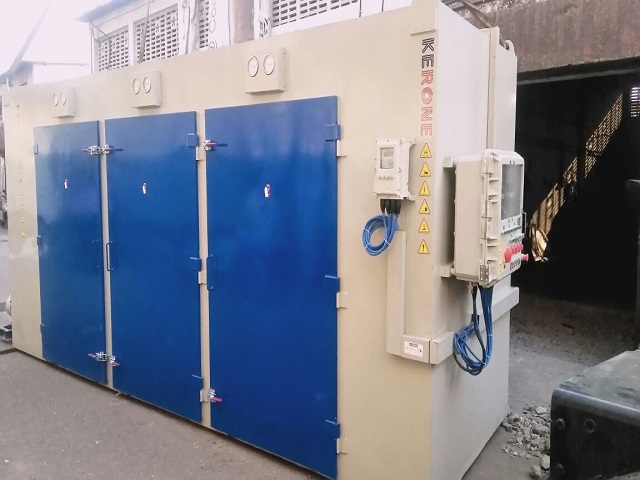
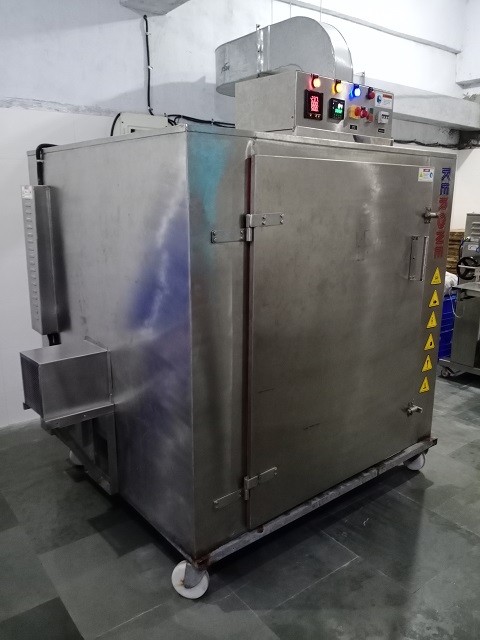
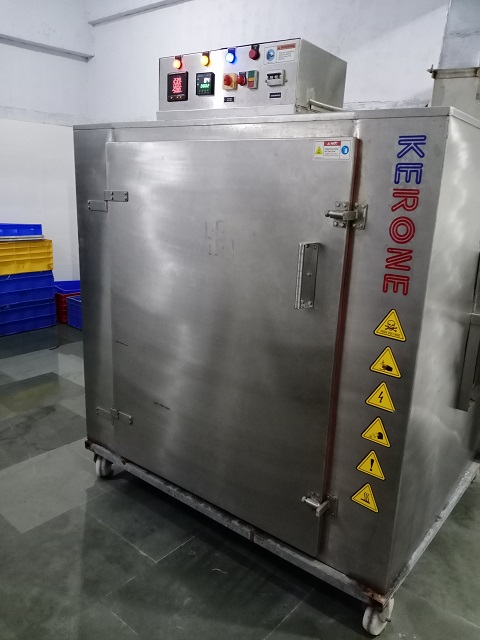
We at KERONE, provide high end dehydrator that fits in requirement of our customers. Our dehydration plants are engineered in such as way that the output should adhere to the international food and safety standards as well as providing fast and efficient operations.
Our Dehydrators are engineered for efficient removal of moisture from a wide range of food products, industrial materials, biomaterials, and chemical substances. Using controlled hot air circulation, infrared heating, microwave-assisted drying, or hybrid technologies, these dehydrators ensure uniform moisture extraction while preserving structural integrity, nutritional value, and material chemistry. Designed with energy optimization and process reliability in mind, Kerone dehydrators are suitable for small-scale, medium-scale, and continuous industrial operations.
Why Choose Kerone Dehydrators
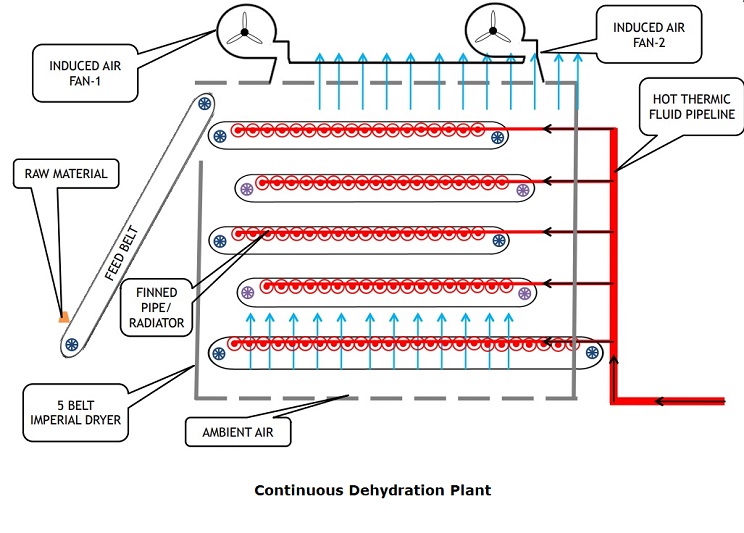
We provide both batch type as well as continuous dehydrating plants. Our dehydrators are easy to install and technically advanced to set and monitor dehydrating time, moisture level, weight of food under process as different time.
Dehydration is preservation process helped the new age food industries, in the process of dehydration the water contains with the food is reduced to desirable level for application such as instant food, powder form of spices and fruits, noodles, soups, pastas and other food preparations.
In the process of dehydration the moisture within the food is removed from its micro-organism level, hence preventing it from degrading or spoiling over time. The modern dehydrating techniques help to prevent the flavor, color, aroma and vitamin levels.
Types and Features of Dehydrators
Kerone manufactures tray dehydrators, belt dryers, rotary dryers, vacuum dehydrators, infrared dryers, microwave dehydrators, and hybrid systems for demanding applications. Features include programmable temperature control, multi-zone airflow, insulated chambers, stainless steel construction, humidity extraction, and real-time process monitoring. Systems can be designed to meet HACCP, GMP, and ISO hygiene standards for food and pharmaceutical use.
Over the last 50 years, we have successfully designed and delivered industrial dehydrators for a wide range of industries.
Our experience spans across numerous applications and customized solutions to meet diverse processing requirements.
Below are some of the commonly supplied dehydrator types, though our expertise extends far beyond these:
Types of Industrial Dehydrators:
Tunnel Dehydrator
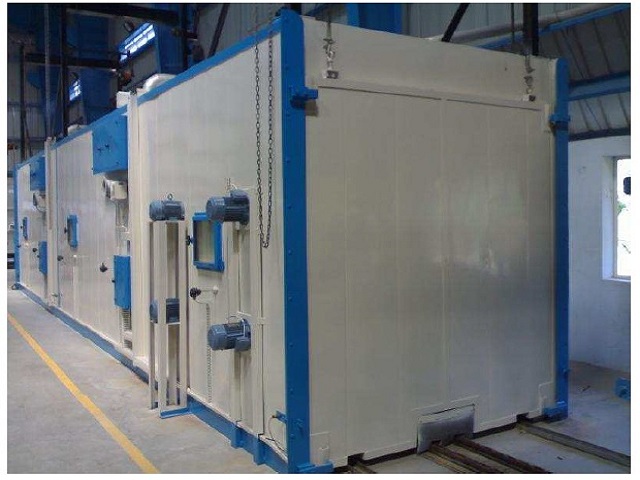
Conveyorised Dehydrators
Batch Type Dehydrator
Features of Our Dehydrators:
Easy-to-understand digital control panel
Low energy loss for efficient operation
Robust and durable design
Long service life
Controllable moisture level for consistent output quality
Key Features
Uniform moisture removal with optimized airflow and thermal distribution.
Multi-stage drying profiles for delicate, heat-sensitive, or high-moisture products.
Energy-efficient heating technologies tailored to specific materials.
Food-grade, chemical-grade, or industrial-grade construction as required.
Optional vacuum, infrared, or microwave modules for enhanced performance.
High throughput with continuous belt or rotary systems.
PLC-based automation with recipe control and data logging.
Easy cleaning and hygienic design minimizing contamination risk.
Powered by AI, ML & IoT
Future-Ready Engineering Driven by AI & IoT
Our advanced AI, ML, and IoT technologies, this solution delivers smarter automation, real-time insights, and predictive intelligence to enhance efficiency and drive future-ready growth.
Real-Time Monitoring & Control
Continuous tracking of process parameters with instant adjustments.
Predictive Maintenance
Intelligent fault detection to prevent failures before they occur.
Adaptive Process Optimization
Dynamic tuning of operations for maximum output and efficiency.
Cloud Dashboards & Analytics
Unified access to real-time insights and performance trends.
Energy & Resource Savings
Smarter utilization of energy to cut costs and reduce waste.
Secure IoT Connectivity
Encrypted data flow with seamless integration across plant systems.
Kerone’s Dehydrators deliver efficient, uniform, and reliable moisture removal across a wide variety of products. With advanced thermal control, robust construction, and multiple adaptable configurations, these systems provide superior drying performance and long-term operational efficiency for industries requiring consistent and high-quality dehydration.
Dehydrators are widely used across various industries where efficient moisture removal is essential for product quality, safety, and longer shelf life. In the packaged and instant food industry, dehydrators help in drying vegetables, fruits, spices, and ready-to-eat ingredients to maintain flavor and extend storage stability. In pharmaceutical industries, they are used for drying active ingredients, granules, and medicinal compounds under controlled conditions to ensure product consistency and compliance with quality standards.
In sugar plants, dehydrators play a crucial role in reducing moisture content in sugar crystals and by-products, improving storage and handling efficiency. Food preservation industries rely heavily on dehydration technology to prevent microbial growth and maintain nutritional value in preserved products. Chemical plants use dehydrators for drying powders, crystals, and intermediates as part of their processing operations. Similarly, in paper industries, dehydrators assist in removing excess moisture from pulp and finished paper products, enhancing strength, durability, and overall production efficiency.
Seamless Export Connections Global & Local
Our Global Footprint in Industrial Excellence
Delivering world-class industrial and process solutions across countries with precision, innovation, and reliability.
Peru
Chile
Argentina
Mexico
Colombia
Brazil
USA
Canada
United Kingdom
France
Germany
Spain
Italy
Netherlands
Sweden
Switzerland
Poland
Portugal
Ireland
Czechia
Romania
Hungary
Austria
Greece
Kazakhstan
Uzbekistan
Turkmenistan
Algeria
Egypt
Nigeria
Kenya
South Africa
Saudi Arabia
UAE
Israel
Russia
India
China
Japan
South Korea
Thailand
Vietnam
Malaysia
Singapore
Indonesia
Philippines
Australia
New Zealand
Pan-India Presence. Local Expertise.
Raipur
Bilaspur
Panaji
Vasco da Gama
Gandhinagar
Ahmedabad
Surat
Chandigarh
Gurgaon
Shimla
Manali
Bengaluru
Mysore
Kochi
Pune
Mumbai
Thane
Navi Mumbai
Hyderabad
Chennai
Coimbatore
Kolkata
Lucknow
Jaipur
Udaipur
Jodhpur
Dehradun
Haridwar
Bhubaneswar
Product Gallery
Frequently Asked Questions (FAQ)
Hot-air convection remains the most economical and widely applicable choice for products that are not highly heat-sensitive and where moderate drying time is acceptable. Infrared adds value when fast surface moisture removal or specific color and texture effects are needed, since it heats the product surface directly rather than relying solely on circulating air. Microwave-assisted drying becomes worthwhile for products where volumetric, more uniform heating significantly shortens drying time or improves rehydration quality, but it carries a higher capital and energy cost per unit processed. Hybrid systems combining two technologies are usually justified only when a single method cannot meet both the speed and quality targets simultaneously, buyers should validate this need through trials rather than assuming a hybrid system is automatically superior, since added technology also adds capital cost and maintenance complexity.
An industrial dehydrator removes moisture from food, chemicals, biomass, and materials using controlled heat and airflow for uniform drying.
They can use hot-air convection, infrared, microwave heating, vacuum drying, or hybrid combinations depending on the application.
Tray dehydrators, belt dryers, rotary dryers, vacuum dehydrators, microwave dehydrators, infrared dryers, and hybrid systems.
Yes. They can be designed to meet HACCP, GMP, and ISO hygiene standards for safe food processing.
Yes, through low-temperature drying, multi-stage profiles, vacuum drying, or infrared/microwave-assisted technologies.
Food and agro-processing, chemicals, biomass/biofuels, pharmaceuticals, and industrial materials.
Uniform drying, energy efficiency, faster moisture removal, precise temperature/humidity control, and robust industrial construction.
Yes. Kerone dehydrators include PLC-based controls, recipes, monitoring, and data logging for fully automated operation.
Dehydration is often used loosely as a synonym for drying, but in food and pharmaceutical processing it specifically implies moisture reduction to a level low enough to halt microbial activity and enzymatic spoilage, not just to a level that feels dry to the touch. A product can appear visually and texturally dry while still sitting above the water activity threshold needed for shelf stability, which is a common cause of unexpected spoilage in dehydrated products that tested fine on a simple moisture percentage basis. Buyers specifying dehydration equipment for shelf-stable products should set targets based on water activity testing, not moisture percentage alone, since the two do not always correlate precisely across different product matrices.
Batch tray or tunnel dehydrators handle frequent product changeovers and small production runs more practically, since cleaning and reconfiguration between different products is simpler on a batch system than on a continuous line that would otherwise need extended downtime for changeover. Continuous conveyorized dehydrators deliver better cost efficiency and consistency at high, steady volume of a single or limited product range, but lose much of that advantage if the facility needs to switch formulations frequently. Facilities producing a wide variety of products in smaller runs, such as contract dehydration services, typically find batch systems a better operational fit despite the lower per-unit throughput.
Food-grade dehydration generally needs to meet HACCP and either GMP or FSSAI/FDA-equivalent hygiene standards, focusing on contamination prevention, cleanability, and documented process control. Pharmaceutical-grade dehydration of extracts or intermediates requires considerably more rigorous validation, including documented temperature uniformity studies, equipment qualification protocols, and often cleanroom-compatible construction, since regulatory audits scrutinize manufacturing process control far more closely than in food production. Chemical-grade dehydration for industrial powders or intermediates typically has the least stringent hygiene requirement but may carry specific material compatibility or explosion-risk considerations depending on the substance being processed. Buyers should clarify which regulatory framework applies to their specific product before specifying equipment, since retrofitting validation documentation onto already-installed equipment is considerably more difficult than building it in from the start.
The throughput gain depends heavily on current batch cycle time and changeover frequency, but facilities running a single high-volume product typically see meaningful labor reduction, since continuous systems require less manual tray loading and unloading per tonne processed, along with more consistent moisture uniformity from one end of a production run to the other. The upgrade is most clearly justified when a single product represents a large enough share of total volume to keep a continuous line running steadily; facilities with highly variable or low-volume product mixes often find the capital cost of conversion difficult to justify against the achievable utilization rate.
Modular designs that allow additional drying zones, parallel trays, or a second conveyor pass to be added later provide a meaningfully lower-cost path to capacity expansion than a fixed, single-zone system that would need full replacement to scale up. Buyers anticipating growth within a 3–5 year horizon should discuss expansion-ready structural and utility provisioning, extra electrical capacity, reserved floor space, oversized ductwork at the initial design stage, since adding these provisions after installation is considerably more disruptive and costly than building them in from the start, even if the additional drying capacity itself is not purchased immediately.
Kerone’s custom-designed heating and processing solutions are built to meet the demands of your growing operations. Whether you’re upgrading equipment, expanding production, or need a tailor-made solution



 Peru
Peru Chile
Chile Argentina
 Mexico
 Colombia
 Brazil
 USA
USA Canada
 United Kingdom
 France
 Germany
 Spain
Spain Italy
Italy Netherlands
 Sweden
 Switzerland
 Poland
 Portugal
 Ireland
 Czechia
 Romania
 Hungary
 Austria
 Greece
 Kazakhstan
 Uzbekistan
 Turkmenistan
 Algeria
 Egypt
Egypt Nigeria
 Kenya
Kenya South Africa
 Saudi Arabia
 UAE
UAE Israel
 Russia
 India
India China
China Japan
Japan South Korea
 Thailand
 Vietnam
 Malaysia
 Singapore
 Indonesia
 Philippines
 Australia
 New Zealand