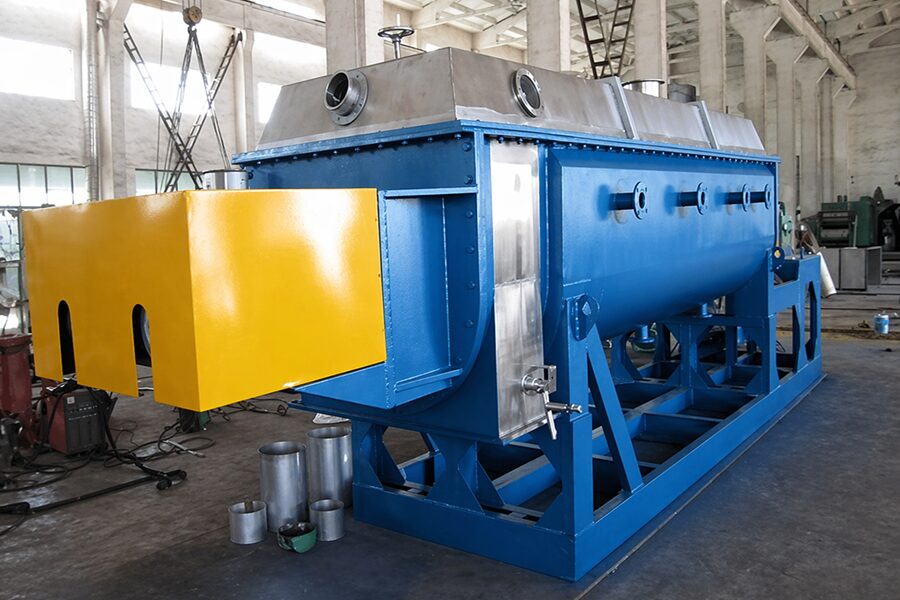
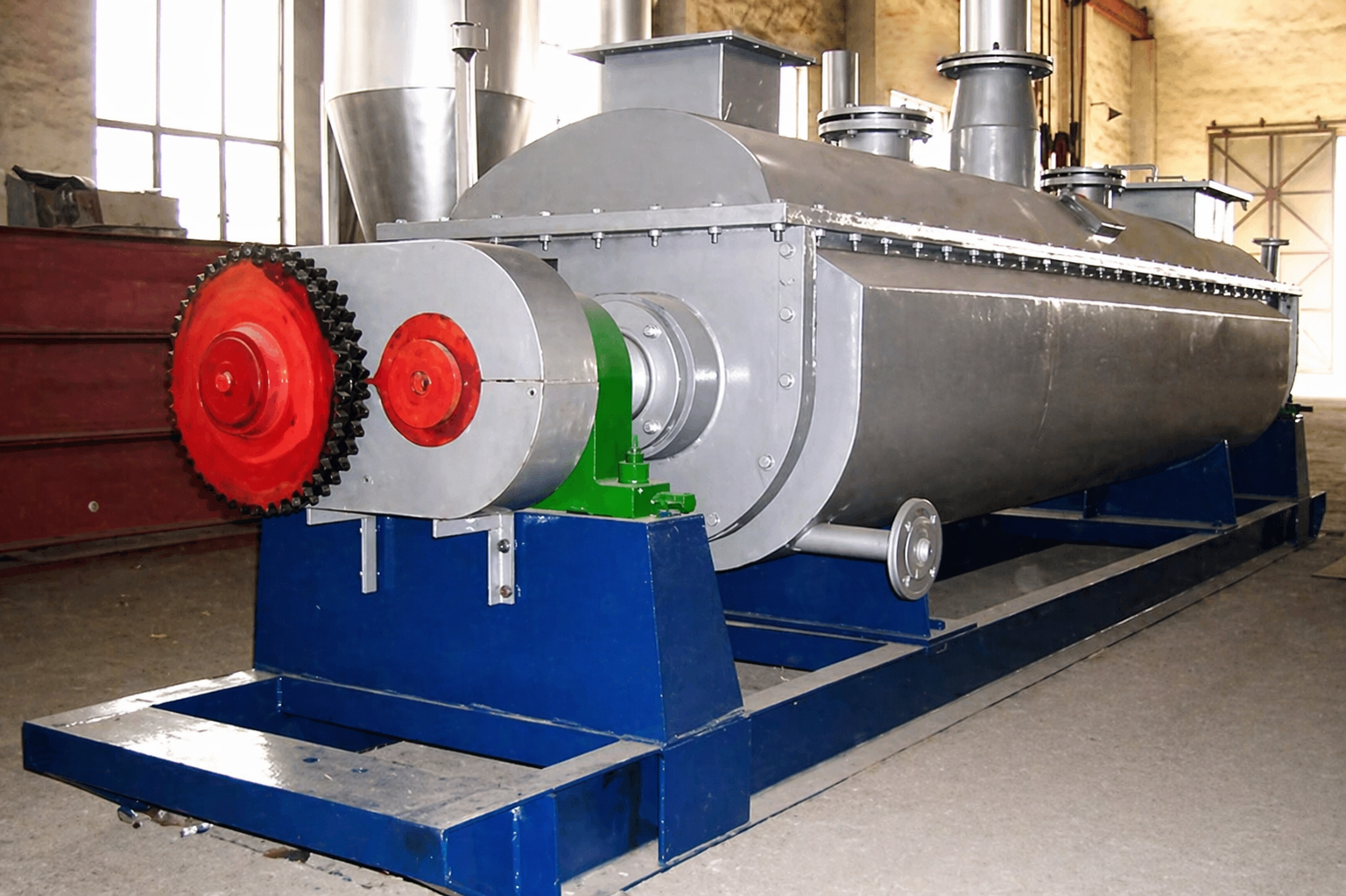
For seaweed processing applications requiring high throughput, robust handling of variable particle sizes, and lower capital investment compared to multi-deck belt dryers, the rotary drum dryer is a proven and reliable thermal drying technology. Kerone’s Drum Drying System for Seaweed is purpose-built industrial rotary drying system specifically engineered for the challenging moisture content, salt load, and biological properties of marine macroalgae and microalgae biomass. The drum dryer processes seaweed by tumbling and cascading it through a rotating cylindrical drum while exposing it to a controlled hot air or direct combustion gas stream, achieving rapid moisture evaporation across a wide range of inlet moisture conditions.Our Drum Drying System for Seaweed Applications are particularly well-suited for high-volume applications including seaweed meal for animal feed, biostimulant feedstock, and industrial-grade dried seaweed where moderate temperature sensitivity allows the use of higher drying temperatures for maximum throughput and energy efficiency.
Why Choose Kerone Drum Drying System for Seaweed Applications
Kerone’s Drum Drying System for Seaweed Applications are engineered with marine biomass-specific design features that address the unique challenges of drying seaweed in a rotary drum including the tendency of seaweed pieces to tangle and form dense mats that resist airflow, the high salt content that accelerates corrosion, and the need to balance high drying temperatures for throughput against potential Maillard browning and bioactive degradation at excessive temperatures. Kerone’s drum internals including lifter flights, breaker bars, and chain sections are specifically designed to prevent seaweed matting and ensure consistent cascading and airflow contact, delivering uniform drying without hot spots or clumping. The drum shell, flights, and supporting structure are all fabricated from SS304 or SS316 stainless steel with corrosion-resistant bearings and seals appropriate for the marine saline environment. Our drum dryers can be configured for direct-fired (gas or oil burner), indirect steam-heated, or hot air heat exchanger heating depending on product-grade requirements.
Types and Features of Drum Drying System for Seaweed Applications
Kerone’s Drum Drying System for Seaweed Applications are available in single-pass and triple-pass (concentric drum) configurations, with drum diameters from 0.8m to 3m and lengths from 5m to 20m, covering throughputs from 500 kg/hour to 10+ tonnes/hour of dried seaweed product. The triple-pass concentric drum design is particularly suited for seaweed processing due to its compact footprint and extended residence time. Key features include adjustable drum rotation speed (1–8 RPM) for residence time control, variable hot air temperature from 80°C to 250°C depending on application, integrated fine particle recovery cyclone and bag filter, variable-speed inlet feeding system, and automatic temperature and moisture control via PLC. Optional features include direct cooling sections for immediate discharge conditioning, integrated shredder for drum discharge size reduction, and energy recovery heat exchangers to improve overall thermal efficiency.
Key Features
High-throughput continuous rotary drying from 500 kg/hour to 10+ tonnes/hour in compact drum configuration
Single-pass and triple-pass concentric drum configurations for maximum throughput or compact footprint
Purpose-designed internal flights and breaker bars to prevent seaweed mat formation and ensure uniform drying
Variable drum speed and air temperature control for adjustable residence time and drying intensity
Integrated fine particle cyclone and bag filter for complete product recovery and emission compliance
Automatic temperature, speed, and moisture feedback control via PLC for consistent product quality
Powered by AI, ML & IoT
Future-Ready Engineering Driven by AI & IoT
Our advanced AI, ML, and IoT technologies, this solution delivers smarter automation, real-time insights, and predictive intelligence to enhance efficiency and drive future-ready growth.
Real-Time Monitoring & Control
Continuous tracking of process parameters with instant adjustments.
Predictive Maintenance
Intelligent fault detection to prevent failures before they occur.
Adaptive Process Optimization
Dynamic tuning of operations for maximum output and efficiency.
Cloud Dashboards & Analytics
Unified access to real-time insights and performance trends.
Energy & Resource Savings
Smarter utilization of energy to cut costs and reduce waste.
Secure IoT Connectivity
Encrypted data flow with seamless integration across plant systems.
Applications of Drum Drying System for Seaweed Applications
Kerone’s Drum Drying System for Seaweed Applications are extensively used in high-volume seaweed processing operations across multiple end-markets.
Typical applications include:
Seaweed meal for animal feed — high-throughput drying of seaweed biomass for aquafeed, poultry, and livestock feed ingredient production
Agricultural biostimulant feedstock — drying Ascophyllum nodosum and other species for solid seaweed biostimulant fertilizer production
Industrial seaweed drying — processing brown seaweed for hydrocolloid extraction feedstock or bio-based chemical production
Biofuel and biorefinery feedstock — drying algal biomass for pelletization or thermochemical conversion processes
Compost and soil amendment production — drying seaweed for incorporation into compost blends and organic soil amendments
Biomass co-firing fuel — drying high-volume seaweed harvest for use as a renewable energy fuel in industrial applications
Kerone’s Seaweed Drum Dryers provide a robust, high-throughput, and cost-effective drying solution for seaweed processors requiring reliable large-volume production capability. With marine-specific design features, flexible heating configurations, and precise process control, Kerone’s drum dryers deliver consistent drying performance across all seaweed species and application requirements. Whether you are drying seaweed for animal feed, biostimulants, industrial ingredients, or bioenergy applications, Kerone’s drum dryers offer the throughput, reliability, and operational efficiency to make your production economically competitive.
Seamless Export Connections Global & Local
Our Global Footprint in Industrial Excellence
Delivering world-class industrial and process solutions across countries with precision, innovation, and reliability.
Peru
Chile
Argentina
Mexico
Colombia
Brazil
USA
Canada
United Kingdom
France
Germany
Spain
Italy
Netherlands
Sweden
Switzerland
Poland
Portugal
Ireland
Czechia
Romania
Hungary
Austria
Greece
Kazakhstan
Uzbekistan
Turkmenistan
Algeria
Egypt
Nigeria
Kenya
South Africa
Saudi Arabia
UAE
Israel
Russia
India
China
Japan
South Korea
Thailand
Vietnam
Malaysia
Singapore
Indonesia
Philippines
Australia
New Zealand
Pan-India Presence. Local Expertise.
Raipur
Bilaspur
Panaji
Vasco da Gama
Gandhinagar
Ahmedabad
Surat
Chandigarh
Gurgaon
Shimla
Manali
Bengaluru
Mysore
Kochi
Pune
Mumbai
Thane
Navi Mumbai
Hyderabad
Chennai
Coimbatore
Kolkata
Lucknow
Jaipur
Udaipur
Jodhpur
Dehradun
Haridwar
Bhubaneswar
Product Gallery
Frequently Asked Questions (FAQ)
Drum dryers typically carry a lower capital cost per tonne of throughput and a smaller footprint, making them attractive for processors prioritizing volume over delicate quality preservation, such as animal feed or biostimulant feedstock production. Belt dryers cost more upfront but offer tighter temperature zoning, which matters for food-grade or nutraceutical seaweed where color and bioactive retention drive the sale price. The right choice depends on what the end product is worth: a drum dryer's higher throughput per dollar invested makes sense when the product commands a commodity price, while belt drying earns back its premium when the product sells into specialty food or pharma markets.
Drum dryers offer higher throughput per unit footprint, lower capital cost, simpler mechanical design, and better handling of variable and coarse particle sizes. Belt dryers offer better temperature control and product quality preservation for heat-sensitive seaweed species. The optimal choice depends on the specific application and product requirements.
Inlet hot air temperatures typically range from 120°C to 250°C for industrial-grade applications, with product temperatures remaining significantly lower due to evaporative cooling. For food-grade applications requiring bioactive preservation, Kerone recommends lower temperature indirect heating configurations.
Kerone's drum internals include purpose-designed flights, breaker bars, and chain sections that continuously break up and cascade seaweed pieces through the drying air stream, preventing mat formation and ensuring uniform airflow contact across all material in the drum.
Kerone's drum dryers typically achieve final moisture contents of 10–15% for standard applications, with extended residence time configurations capable of reaching 8–10% for products requiring lower moisture.
Yes, with appropriate inlet design. Fine granular seaweed can be processed effectively in drum dryers with reduced air velocity settings and integrated fine particle recovery systems (cyclone and bag filter) to prevent excessive product loss from the air exhaust.
Kerone fabricates all product-contact surfaces from SS304 or SS316 stainless steel, with corrosion-resistant bearings, shaft seals, and structural components appropriate for saline seaweed environments. The design life is a minimum of 15–20 years with proper maintenance.
Seaweed pieces are naturally fibrous and slightly sticky when wet, and as they tumble through a standard drum without adequate internal flights, they tend to clump into dense masses that the hot air stream cannot penetrate evenly. The result is a mix of over-dried surface material and under-dried cores within the same batch — a quality failure that is difficult to detect until the product is tested or, worse, until it spoils in storage. This is one of the most common reasons a generic rotary dryer designed for grain or mineral feedstock underperforms when repurposed for seaweed without purpose-built lifter flights and breaker bars.
The most damaging mistake is running standard carbon steel internals in a marine salt environment rather than stainless steel, which leads to accelerated corrosion of flights and bearing housings well before the structural drum shell shows wear. A second common error is operating at inlet air temperatures higher than the product can tolerate to chase throughput targets, which causes localized scorching that not only degrades product quality but also leaves residue that accelerates fouling of drum internals. Routine inspection of flight wear and bearing seal condition, on a schedule matched to actual operating hours rather than a generic calendar interval, catches most of these issues before they become costly repairs.
Fresh-harvested seaweed moisture content can vary significantly with season, tide conditions, and species, and a drum dryer running fixed speed and temperature settings regardless of inlet moisture will either under-dry high-moisture batches or over-dry low-moisture ones. Operators should adjust drum rotation speed and air temperature based on inlet moisture readings at the start of each batch or campaign, rather than relying on a single set-point tuned for an average condition. PLC-based systems with moisture feedback control reduce this burden by adjusting automatically, but plants relying on manual control need clear operating procedures tied to incoming moisture testing.
Triple-pass drums route the airflow through three concentric chambers instead of one straight pass, extending residence time within a compact footprint without lengthening the drum itself. For seaweed processors constrained by building height or floor space, this typically allows 30–40% more throughput from the same physical footprint compared to an equivalent single-pass drum, at the cost of slightly more complex internal maintenance access. Processors evaluating an upgrade should weigh the throughput gain against their actual production growth needs, since the added internal complexity is only worthwhile if the extra capacity will be used.
High-throughput drum drying generates fine particulate in the exhaust air stream from both seaweed dust and condensed organic vapors, which many jurisdictions now regulate even for biomass and food-processing operations. Integrated cyclone separation and bag filtration are standard for product recovery, but processors operating in areas with stricter air quality rules may need additional scrubbing or filtration to meet permit conditions. Heat recovery from the drum exhaust, where the waste heat preheats incoming air, also reduces both fuel consumption and the facility's overall carbon footprint, and is increasingly requested by processors supplying buyers with sustainability reporting requirements.
Kerone’s custom-designed heating and processing solutions are built to meet the demands of your growing operations. Whether you’re upgrading equipment, expanding production, or need a tailor-made solution


 Peru
Peru Chile
Chile Argentina
 Mexico
 Colombia
 Brazil
 USA
USA Canada
 United Kingdom
 France
 Germany
 Spain
Spain Italy
Italy Netherlands
 Sweden
 Switzerland
 Poland
 Portugal
 Ireland
 Czechia
 Romania
 Hungary
 Austria
 Greece
 Kazakhstan
 Uzbekistan
 Turkmenistan
 Algeria
 Egypt
Egypt Nigeria
 Kenya
Kenya South Africa
 Saudi Arabia
 UAE
UAE Israel
 Russia
 India
India China
China Japan
Japan South Korea
 Thailand
 Vietnam
 Malaysia
 Singapore
 Indonesia
 Philippines
 Australia
 New Zealand