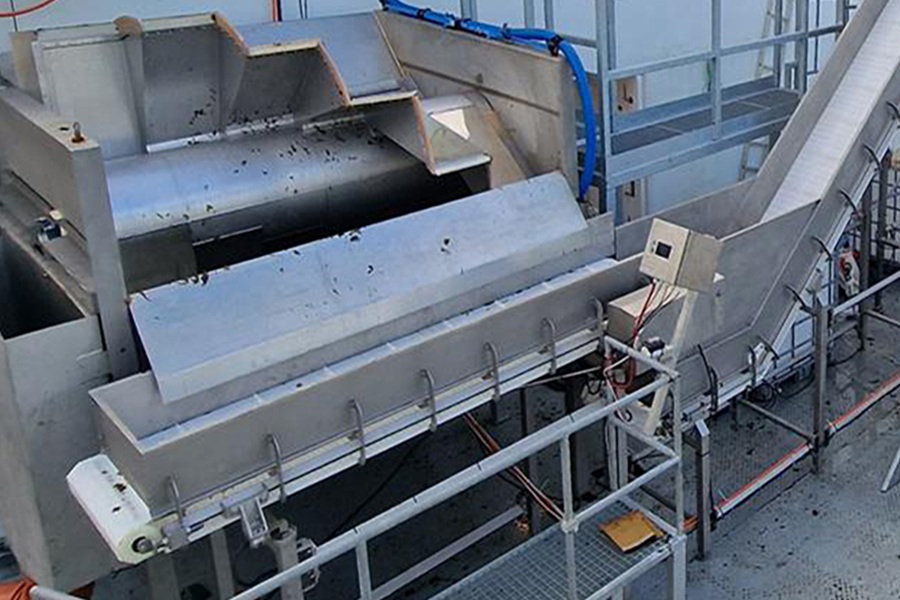
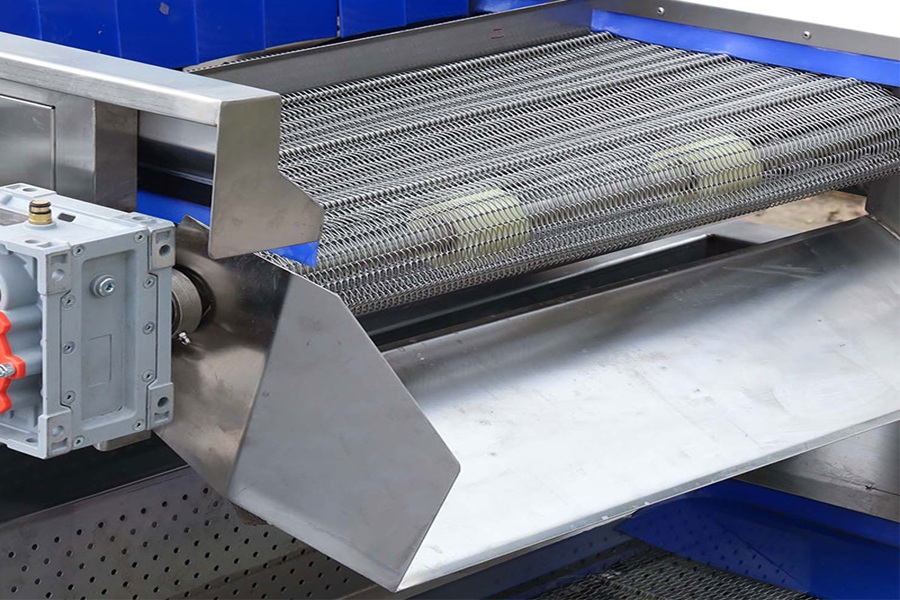
Blanching and iodine reduction are critical pre-treatment steps in the commercial processing of seaweed, particularly for species destined for food, pharmaceutical, and nutraceutical applications. Raw seaweed, especially brown algae such as Laminaria and Sargassum, naturally accumulates high concentrations of iodine and other mineral compounds that must be reduced to safe levels before the product can be sold for human consumption. Kerone’s Blanching/Iodine Reduction Systems are precision-engineered thermal processing units designed to achieve controlled heat treatment of fresh seaweed while simultaneously reducing iodine content to meet international food safety thresholds. The blanching process also deactivates enzymes, reduces microbial load, softens seaweed tissue for downstream processing, and helps preserve the natural green/brown coloration of the biomass. Kerone’s systems offer precise temperature control, uniform heat distribution, and adjustable residence times to ensure consistent results across high-volume continuous production environments.
Why Choose Kerone Seaweed Iodine Reduction and Blanching Equipment
Seaweed Iodine Reduction and Blanching Equipment stand apart because of their precise thermal engineering, which ensures that seaweed tissue is uniformly heated to the exact temperature required for effective iodine volatilization without causing excessive degradation of heat-sensitive bioactive compounds such as polysaccharides, pigments, and polyphenols. Kerone uses advanced counter-current or co-current hot water or steam blanching designs depending on the species and target specification, and each system is equipped with inline iodine monitoring capability to verify compliance with international standards such as EFSA, CODEX, and FDA guidelines. The systems are fabricated from food-grade stainless steel with CIP (Clean-in-Place) compatibility, ensuring hygiene compliance for food-grade production. Kerone also provides process development support to help clients determine optimal blanching time-temperature profiles for their specific seaweed species and end-product requirements.
Types and Features of Seaweed Iodine Reduction and Blanching Equipment
Seaweed Iodine Reduction and Blanching Equipments are available in continuous conveyor-belt blanchers, screw-conveyor blanchers, and immersion-tunnel blanchers depending on the seaweed species, throughput requirement, and physical form of the input material (whole fronds, cut pieces, or shredded biomass). Steam blanching and hot water blanching options are both available, with hot water blanching being particularly effective for iodine leaching since iodine is water-soluble and migrates into the blanching liquid under controlled thermal conditions. Each system features adjustable belt or screw speed to control residence time, multi-zone temperature regulation for staged heat application, effluent management to handle iodine-rich blanching water responsibly, and automatic temperature logging for regulatory compliance documentation.
Key Features
Precise multi-zone temperature control (40°C–100°C) for optimized iodine reduction and enzyme inactivation
Continuous or batch operation with adjustable residence time from 1 to 30 minutes to suit different seaweed species
Hot water or steam blanching options with counter-current heat exchange for improved energy efficiency
Food-grade SS316 construction with CIP (Clean-in-Place) functionality for rapid sanitation between batches
Inline temperature and iodine monitoring with data logging for regulatory compliance documentation
Water-efficient design with blanching water recycling and treatment options for responsible effluent management
Automatic conveyor or screw speed control with PLC-based recipe management for reproducible results
Compact modular design for easy integration into existing seaweed processing lines or new facility layouts
Powered by AI, ML & IoT
Future-Ready Engineering Driven by AI & IoT
Our advanced AI, ML, and IoT technologies, this solution delivers smarter automation, real-time insights, and predictive intelligence to enhance efficiency and drive future-ready growth.
Real-Time Monitoring & Control
Continuous tracking of process parameters with instant adjustments.
Predictive Maintenance
Intelligent fault detection to prevent failures before they occur.
Adaptive Process Optimization
Dynamic tuning of operations for maximum output and efficiency.
Cloud Dashboards & Analytics
Unified access to real-time insights and performance trends.
Energy & Resource Savings
Smarter utilization of energy to cut costs and reduce waste.
Secure IoT Connectivity
Encrypted data flow with seamless integration across plant systems.
Applications of Seaweed Iodine Reduction and Blanching Equipment
Kerone’s Seaweed Iodine Reduction and Blanching Equipments are extensively used in industrial seaweed processing facilities around the world.
Typical applications include:
Food-grade seaweed processing — reducing iodine to safe consumption levels for seaweed snacks, salads, seasonings, and sushi ingredients
Hydrocolloid production — pre-treating seaweed biomass before alginate, carrageenan, and agar extraction to improve gel quality and reduce mineral interference
Pharmaceutical ingredient production — ensuring iodine-compliant raw material for nutraceutical capsules, tablets, and liquid extracts
Animal feed production — reducing iodine content in seaweed meal for livestock and poultry applications where iodine thresholds are regulated
Seaweed powder manufacturing — pre-treatment step before drying and milling to achieve compliant mineral profiles in finished powders
Export-grade seaweed processing — meeting EU, US, and Asian regulatory iodine limits for cross-border trade of seaweed-based food products
Effective blanching and iodine reduction are non-negotiable steps in the production of safe, high-quality seaweed products for human consumption. Kerone’s Blanching/Iodine Reduction Systems provide the precise thermal control, regulatory compliance capability, and hygienic design that modern seaweed processing facilities require. By partnering with Kerone, processors can ensure that their products consistently meet international iodine safety standards while preserving the nutritional value and organoleptic properties of their seaweed. Kerone’s commitment to engineering excellence and food safety makes its blanching systems a trusted choice for seaweed processors targeting premium domestic and export markets.
Seamless Export Connections Global & Local
Our Global Footprint in Industrial Excellence
Delivering world-class industrial and process solutions across countries with precision, innovation, and reliability.
Peru
Chile
Argentina
Mexico
Colombia
Brazil
USA
Canada
United Kingdom
France
Germany
Spain
Italy
Netherlands
Sweden
Switzerland
Poland
Portugal
Ireland
Czechia
Romania
Hungary
Austria
Greece
Kazakhstan
Uzbekistan
Turkmenistan
Algeria
Egypt
Nigeria
Kenya
South Africa
Saudi Arabia
UAE
Israel
Russia
India
China
Japan
South Korea
Thailand
Vietnam
Malaysia
Singapore
Indonesia
Philippines
Australia
New Zealand
Pan-India Presence. Local Expertise.
Raipur
Bilaspur
Panaji
Vasco da Gama
Gandhinagar
Ahmedabad
Surat
Chandigarh
Gurgaon
Shimla
Manali
Bengaluru
Mysore
Kochi
Pune
Mumbai
Thane
Navi Mumbai
Hyderabad
Chennai
Coimbatore
Kolkata
Lucknow
Jaipur
Udaipur
Jodhpur
Dehradun
Haridwar
Bhubaneswar
Product Gallery
Frequently Asked Questions (FAQ)
Kerone's hot water blanching systems can typically reduce iodine content by 70–90% depending on the seaweed species, blanching temperature, water volume ratio, and residence time, bringing levels well within EFSA and CODEX recommended thresholds.
Hot water blanching is more effective for iodine reduction because iodine is water-soluble and leaches into the blanching liquid. Steam blanching achieves better enzyme inactivation with lower water usage but is less effective for iodine reduction.
Controlled blanching at optimal temperatures minimizes loss of heat-stable nutrients. Some water-soluble vitamins and minerals will leach into the blanching water, but the process is calibrated to balance iodine reduction with nutritional preservation.
Yes. Kerone designs blanching systems suitable for whole fronds, pre-cut strips, and shredded seaweed. The conveyor or screw configuration is selected based on the physical form of the input material.
Kerone provides integrated effluent management options including iodine precipitation, activated carbon adsorption, or biological treatment to handle iodine-rich blanching water in compliance with environmental regulations.
Typical blanching temperatures range from 60°C to 95°C depending on the species and target outcome. Temperature and residence time profiles are optimized during process development to achieve the desired iodine reduction and enzyme inactivation targets.
Yes. Kerone's hot water blanching systems use only water and heat — no chemical additives — making them fully compatible with organic certification requirements.
Kerone's blanching systems are equipped with CIP (Clean-in-Place) functionality, allowing rapid automated cleaning and sanitization, typically within 30–45 minutes, minimizing downtime between production runs.
Brown seaweed species such as Laminaria and Sargassum actively concentrate iodine from seawater as part of their natural biology, accumulating it at levels many times higher than the surrounding water and far exceeding what is found in terrestrial plants. This bioaccumulation is a survival mechanism for the algae but creates a food safety challenge for processors, since iodine intake above recommended thresholds can affect thyroid function in consumers. Because the degree of accumulation varies by species, harvest location, and even season, processors cannot assume a fixed iodine level and must treat each feedstock batch as requiring verification, which is why inline iodine monitoring during blanching is a standard feature rather than an optional add-on in Kerone's systems.
Iodine thresholds for seaweed-based food products differ between jurisdictions, with the EU operating under EFSA guidance, Codex Alimentarius providing international reference levels, and other markets such as the US and various Asian countries applying their own standards or relying on general food safety frameworks. These differences mean a processor targeting multiple export markets simultaneously may need to validate their blanching process against the most stringent applicable limit rather than a single standard. Kerone designs blanching systems with adjustable time-temperature profiles precisely because the required degree of iodine reduction is not universal, allowing the same equipment to be reconfigured for different target markets through process parameter changes rather than equipment redesign.
Longer blanching residence times generally achieve greater iodine reduction but also increase the leaching of water-soluble vitamins, minerals, and certain bioactive compounds into the blanching liquid. This creates a genuine processing tradeoff rather than a simple optimization, since maximizing iodine removal can come at the cost of nutritional value the processor may want to preserve for marketing purposes. Kerone's process development work typically involves establishing a time-temperature curve specific to each seaweed species that achieves regulatory-compliant iodine reduction while minimizing unnecessary nutrient loss, rather than defaulting to maximum possible blanching intensity, which would over-process the material and reduce its market value as a nutrient-dense food ingredient.
Counter-current blanching moves the seaweed and the blanching water in opposite directions through the system, which improves heat exchange efficiency and tends to produce more uniform iodine leaching because fresher material contacts progressively more iodine-rich water as it nears the point of maximum extraction. Co-current designs move both in the same direction, which can simplify mechanical design and control but generally requires either longer residence time or higher water volume to achieve comparable iodine reduction. The choice depends on production volume, energy cost sensitivity, and the specific iodine reduction target required for the target market. Kerone evaluates these factors against the client's species mix and throughput needs before recommending a configuration.
Blanching is almost always a pre-treatment step rather than a final process, since blanched seaweed still requires further handling to reach a finished product form. Common downstream steps include mechanical dewatering by screw press to remove the absorbed blanching water, drying to reduce moisture for shelf stability, and size reduction or milling if the target product is a powder or flake format. For hydrocolloid extraction applications, blanched seaweed proceeds directly into alginate, carrageenan, or agar extraction processes where the reduced iodine and mineral content actually improves gel quality. Kerone designs blanching systems with this downstream integration in mind, ensuring discharge format and moisture content align with whatever processing stage follows.
Kerone's blanching systems are built as modular conveyor-belt, screw-conveyor, or immersion-tunnel units specifically so they can be integrated into an existing processing line rather than requiring a complete facility rebuild. Retrofitting typically requires available floor space matching the unit's footprint, access to a steam or hot water utility supply, and an effluent handling pathway for the iodine-rich blanching water generated. Processors currently selling seaweed without iodine treatment, perhaps for animal feed or non-food markets, can add this module to access higher-value human food or pharmaceutical-grade markets without re-engineering their entire line, provided their existing material flow can accommodate the additional processing step.
Because iodine content varies by species, harvest location, and season, Kerone does not assume a generic blanching protocol will work for every client. Process development typically begins with bench or pilot-scale trials using the client's actual seaweed feedstock, testing different combinations of temperature, residence time, and water-to-biomass ratio while measuring resulting iodine levels against the target specification. This validated time-temperature profile then becomes the basis for the production-scale equipment's control parameters. Skipping this validation step is a common cause of underperforming blanching systems, since a protocol that works for one species or harvest region frequently does not transfer directly to another without adjustment.
Kerone’s custom-designed heating and processing solutions are built to meet the demands of your growing operations. Whether you’re upgrading equipment, expanding production, or need a tailor-made solution


 Peru
Peru Chile
Chile Argentina
 Mexico
 Colombia
 Brazil
 USA
USA Canada
 United Kingdom
 France
 Germany
 Spain
Spain Italy
Italy Netherlands
 Sweden
 Switzerland
 Poland
 Portugal
 Ireland
 Czechia
 Romania
 Hungary
 Austria
 Greece
 Kazakhstan
 Uzbekistan
 Turkmenistan
 Algeria
 Egypt
Egypt Nigeria
 Kenya
Kenya South Africa
 Saudi Arabia
 UAE
UAE Israel
 Russia
 India
India China
China Japan
Japan South Korea
 Thailand
 Vietnam
 Malaysia
 Singapore
 Indonesia
 Philippines
 Australia
 New Zealand