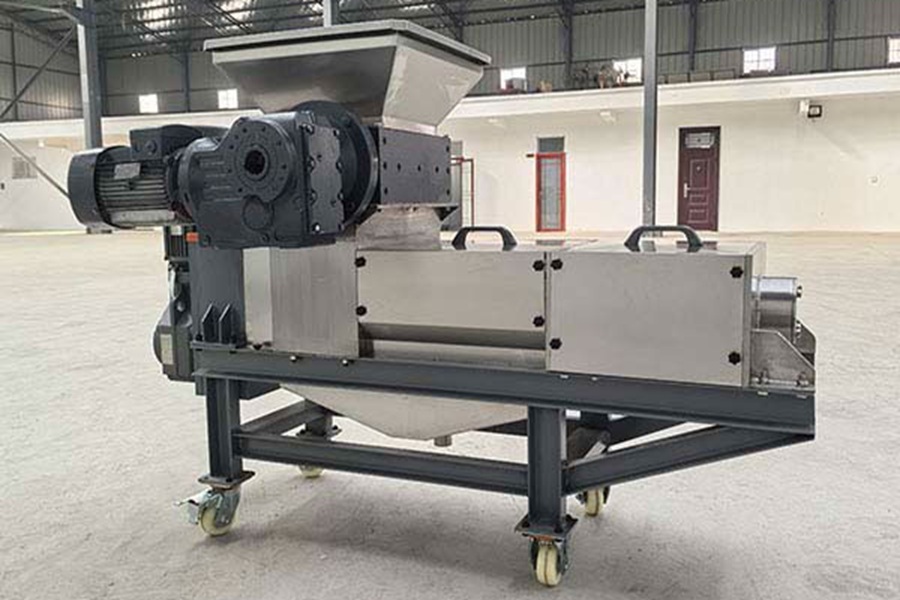
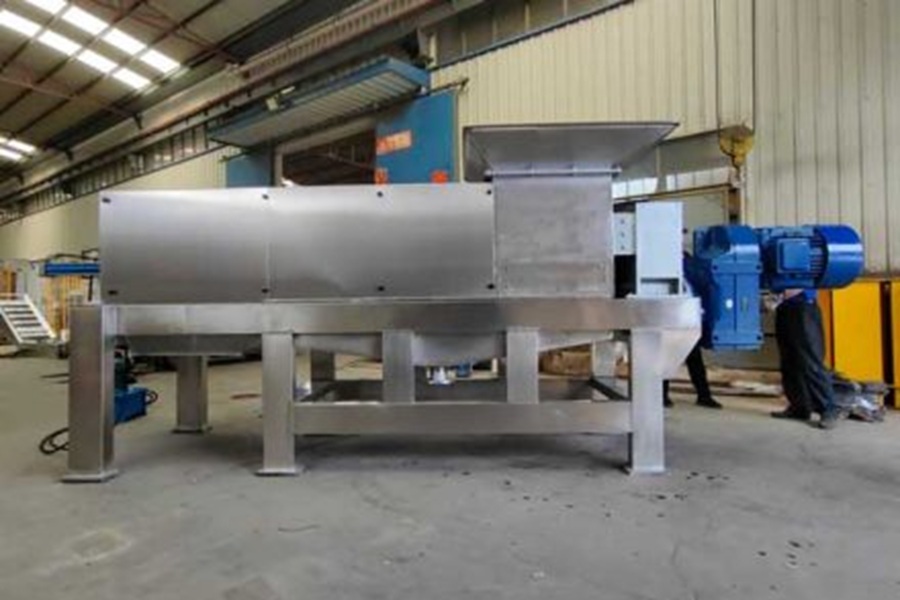
Seaweed and microalgae biomass typically contain 80–92% moisture after harvesting, making mechanical dewatering one of the most critical and energy-intensive steps in the processing chain. Efficient removal of free and loosely bound water before thermal drying dramatically reduces downstream energy consumption, processing time, and operational cost. Kerone’s Screw Press for Seaweed Dewatering is a purpose-engineered continuous mechanical dewatering system specifically designed to handle the unique physical and chemical characteristics of marine algal biomass — including its high water content, fibrous and mucilaginous texture, salt content, and variable particle size. Unlike generic industrial screw presses, Kerone’s Dewatering Press for Seaweed Applications are optimized for the low shear, high throughput, and hygienic operation requirements of food-grade and pharmaceutical-grade seaweed processing, delivering consistent cake dryness and liquor clarity across a wide range of seaweed species and processing conditions.
Why Choose Kerone Dewatering Press for Seaweed Applications
Kerone’s Screw Press systems for seaweed dewatering are designed with deep knowledge of the rheological behavior of marine algal biomass, which behaves very differently from terrestrial plant materials due to its high content of hygroscopic polysaccharides like alginate and carrageenan that can make mechanical dewatering challenging. Kerone’s engineering team optimizes screw geometry, screen aperture, press pressure, and shaft speed for each specific seaweed species and desired output moisture, ensuring maximum water removal without excessive shear that could disrupt the cell structure and release viscous polysaccharide gels that clog screens. The screw presses are built from corrosion-resistant SS316L stainless steel to withstand the saline environment, with food-grade seals, polished contact surfaces, and CIP cleaning capability for hygienic operation. Kerone also offers twin-screw press configurations for higher throughput applications and more challenging, high-viscosity seaweed species.
Types and Features of Dewatering Press for Seaweed Applications
Kerone’sDewatering Press for Seaweed Applications are available in single-screw and twin-screw configurations, with throughput capacities ranging from 500 kg/hour for small operations to 20+ tonnes/hour for large commercial plants. The systems feature variable-speed screw drives for adjustable pressing intensity, interchangeable screen sections with different aperture sizes for flexibility across species and applications, hydraulic or pneumatic back pressure control on the discharge cone, and integrated cake discharge conveyors. Optional features include heated pressing zones for improved dewatering of highly viscous species, integrated inline moisture measurement on the cake discharge, and automatic press liquor collection and routing systems. All screw press components in contact with the product are fabricated from food-grade SS316L with mirror-polished surfaces and crevice-free construction to meet the most stringent food and pharmaceutical hygiene standards.
Key Features
High-efficiency continuous mechanical dewatering reducing seaweed moisture from 90% to 60–70% in a single pass
Variable-speed screw drive with adjustable back pressure for optimized dewatering across different seaweed species
SS316L stainless steel construction with polished food-grade contact surfaces and CIP cleaning compatibility
Interchangeable screen sections with multiple aperture options for flexibility across different seaweed types and applications
Single-screw and twin-screw configurations available for throughputs from 500 kg/hour to 20+ tonnes/hour
Low-shear pressing design to minimize cell disruption and release of viscous polysaccharide gels from alginate-rich species
Integrated cake discharges conveyor and press liquor collection system for complete material handling
Compact footprint with easy-access inspection panels and tool-free screen removal for rapid maintenance and cleaning
Powered by AI, ML & IoT
Future-Ready Engineering Driven by AI & IoT
Our advanced AI, ML, and IoT technologies, this solution delivers smarter automation, real-time insights, and predictive intelligence to enhance efficiency and drive future-ready growth.
Real-Time Monitoring & Control
Continuous tracking of process parameters with instant adjustments.
Predictive Maintenance
Intelligent fault detection to prevent failures before they occur.
Adaptive Process Optimization
Dynamic tuning of operations for maximum output and efficiency.
Cloud Dashboards & Analytics
Unified access to real-time insights and performance trends.
Energy & Resource Savings
Smarter utilization of energy to cut costs and reduce waste.
Secure IoT Connectivity
Encrypted data flow with seamless integration across plant systems.
Applications of Dewatering Press for Seaweed Applications
Kerone’s Dewatering Press for Seaweed Applications are extensively used across multiple stages of seaweed and microalgae processing operations.
Typical applications include:
Pre-drying dewatering – reducing seaweed moisture content before belt or drum drying to minimize thermal energy consumption and drying time
Hydrocolloid extraction pre –treatment – mechanical pressing of pre-treated seaweed to separate polysaccharide-rich liquor from fibrous press cake
Biofuel feedstock preparation – dewatering algal biomass before anaerobic digestion, pyrolysis, or lipid extraction processes
Seaweed biostimulant extraction – pressing fresh Ascophyllum nodosum and other species to extract plant-growth-promoting liquid extract
Animal feed dewatering – reducing moisture in seaweed meal before drying or direct incorporation into feed formulations
Waste management and by-product recovery – dewatering seaweed processing effluent streams for solid waste reduction and by-product recovery
Effective mechanical dewatering is one of the highest-leverage investments in any seaweed processing operation, directly reducing drying energy costs, increasing throughput, and improving product quality. Kerone’s Screw Press for Seaweed Dewatering delivers the optimal balance of dewatering performance, operational reliability, and hygienic design that seaweed processors require.
Seamless Export Connections Global & Local
Our Global Footprint in Industrial Excellence
Delivering world-class industrial and process solutions across countries with precision, innovation, and reliability.
Peru
Chile
Argentina
Mexico
Colombia
Brazil
USA
Canada
United Kingdom
France
Germany
Spain
Italy
Netherlands
Sweden
Switzerland
Poland
Portugal
Ireland
Czechia
Romania
Hungary
Austria
Greece
Kazakhstan
Uzbekistan
Turkmenistan
Algeria
Egypt
Nigeria
Kenya
South Africa
Saudi Arabia
UAE
Israel
Russia
India
China
Japan
South Korea
Thailand
Vietnam
Malaysia
Singapore
Indonesia
Philippines
Australia
New Zealand
Pan-India Presence. Local Expertise.
Raipur
Bilaspur
Panaji
Vasco da Gama
Gandhinagar
Ahmedabad
Surat
Chandigarh
Gurgaon
Shimla
Manali
Bengaluru
Mysore
Kochi
Pune
Mumbai
Thane
Navi Mumbai
Hyderabad
Chennai
Coimbatore
Kolkata
Lucknow
Jaipur
Udaipur
Jodhpur
Dehradun
Haridwar
Bhubaneswar
Product Gallery
Frequently Asked Questions (FAQ)
Kerone's screw presses typically reduce seaweed moisture from approximately 85–90% (as received) to 60–70% cake moisture in a single pass, depending on the species and polysaccharide content. Twin-screw configurations can achieve 55–65% cake moisture for easier downstream drying.
Seaweed contains high concentrations of hygroscopic polysaccharides such as sodium alginate, carrageenan, and agar, which bind water tightly and create viscous gels when released during pressing. Kerone's low-shear press design minimizes polysaccharide release while maximizing free water removal.
Pre-shredding or cutting to pieces of 20–50mm significantly improves pressing efficiency and consistency by increasing the surface area available for water release. Kerone recommends integrating a shredder upstream of the screw press for most seaweed species.
Kerone addresses screen blocking through optimized screen aperture selection, controlled screw speed to manage residence time, and optional heated pressing zones that reduce polysaccharide viscosity and improve drainage. Self-cleaning screen configurations are also available.
Press liquor contains dissolved minerals, organic compounds, and bioactive molecules. Depending on the species and application, it can be further processed for liquid biostimulant production, biogas generation, or treated as effluent. Kerone provides guidance on press liquor utilization or treatment.
Kerone's seaweed screw presses are designed for low-maintenance continuous operation. Routine maintenance includes daily CIP cleaning, weekly screen inspection and lubrication of bearings, and periodic seal replacement. Kerone provides a detailed preventive maintenance schedule with each system.
Screw presses are most effective for macroalgae with fibrous structure. Microalgae with smaller cell sizes typically require centrifugation or decanting for primary dewatering before screw pressing can be effective. Kerone can advise on the optimal dewatering strategy for each microalgae species.
Kerone's seaweed screw press systems consume approximately 1.5–5 kWh per tonne of fresh seaweed processed depending on the scale, species, and desired output moisture, making them highly energy-efficient compared to thermal drying alone.
Alginate, carrageenan, and similar hygroscopic polysaccharides found in many commercially important seaweed species bind water molecules tightly within their gel-like molecular structure, resisting the mechanical force a screw press applies to squeeze out moisture. When excessive pressure or shear is applied to overcome this resistance, these polysaccharides can rupture from cell structures and form viscous gels that clog press screens, reducing throughput and dewatering efficiency. This is fundamentally different from dewatering terrestrial fibrous biomass like bagasse or wood chips, which release free water more readily under mechanical pressure. Kerone's low-shear press geometry is specifically engineered to maximize free water removal while minimizing the cell disruption that triggers this polysaccharide release problem.
Screen aperture size determines how much liquid can pass through relative to solid retention, with finer apertures generally producing clearer press liquor but at the cost of slower throughput and higher risk of blinding, where fine particles or released polysaccharide gel block the screen openings. Coarser apertures process faster and resist blinding better but may allow more fine solids to pass into the press liquor stream, reducing solids capture and producing a slightly wetter cake. The optimal aperture depends on the specific seaweed species' fiber structure and polysaccharide content, which is why Kerone offers interchangeable screen sections, allowing operators to test and adjust aperture selection for each species processed rather than committing to a single fixed configuration.
Twin-screw configurations apply more controlled, distributed pressure across a larger processing volume, which generally achieves better cake dryness, often reaching 55-65% moisture compared to 60-70% for single-screw units, while also supporting higher throughput for the same footprint. The added mechanical complexity and capital cost of a twin-screw system is generally justified for larger commercial operations where the throughput advantage and improved dewatering performance translate into meaningful downstream energy savings on subsequent thermal drying. Smaller operations or those processing less viscous, easier-to-dewater species often find single-screw units sufficiently effective without the added capital investment, so Kerone evaluates throughput targets and species characteristics together before recommending one configuration over the other.
Whole fronds can technically be processed through a screw press, but pre-shredding to roughly 20-50mm pieces significantly increases the surface area exposed to mechanical pressure, which improves both dewatering efficiency and consistency across a batch. Without pre-shredding, larger frond sections may pass through the press with uneven water release, since the press cannot apply uniform pressure to irregular, large pieces the way it can to consistently sized cut material. For most commercial-scale operations targeting predictable, consistent cake moisture, Kerone recommends integrating an upstream shredder ahead of the screw press, reserving direct whole-frond processing for smaller or less throughput-critical operations where the efficiency tradeoff is less significant.
Seaweed screw presses generally require more frequent screen inspection than typical fruit juice or oilseed presses, since the polysaccharide-rich, mucilaginous nature of seaweed creates a greater tendency for screen blinding and residue buildup compared to the more straightforward fiber and liquid separation occurring in fruit or oilseed pressing. Daily CIP cleaning is standard practice rather than optional, given the food-grade hygiene requirements and the material's tendency to leave gel-like residue on contact surfaces. However, the underlying mechanical maintenance, including bearing lubrication and seal replacement, follows a broadly similar schedule to other industrial screw presses, with the main additional burden being the more intensive cleaning and screen-clearing routine specific to seaweed's processing characteristics.
Microalgae cells are dramatically smaller than the multicellular fibrous structure of macroalgae seaweed fronds, lacking the structural fiber matrix that allows a screw press to mechanically squeeze water from larger plant material. Attempting to screw press microalgae biomass directly typically yields poor dewatering performance because there is no fibrous structure to provide the mechanical resistance a press relies on to separate liquid from solid. Centrifugation or membrane filtration are generally far more effective primary dewatering methods for microalgae due to their ability to separate based on particle size and density rather than mechanical fiber compression. Kerone advises clients processing microalgae toward these alternative technologies rather than attempting to adapt screw press equipment designed for macroalgae's fundamentally different physical structure.
Heated pressing zones reduce the viscosity of polysaccharide gels released during pressing, since viscosity for these hygroscopic compounds typically decreases as temperature rises, allowing the gel to drain through the press screen more readily rather than blocking apertures and reducing throughput. This is particularly relevant for species with very high alginate or carrageenan content, where ambient-temperature pressing alone may struggle to achieve target cake dryness without excessive screen blinding. The added energy cost of heating the pressing zone is generally modest compared to the throughput and dewatering performance gained, making this an option Kerone recommends specifically for the more challenging, high-viscosity species rather than as a standard feature applied universally across all seaweed types.
Kerone’s custom-designed heating and processing solutions are built to meet the demands of your growing operations. Whether you’re upgrading equipment, expanding production, or need a tailor-made solution


 Peru
Peru Chile
Chile Argentina
 Mexico
 Colombia
 Brazil
 USA
USA Canada
 United Kingdom
 France
 Germany
 Spain
Spain Italy
Italy Netherlands
 Sweden
 Switzerland
 Poland
 Portugal
 Ireland
 Czechia
 Romania
 Hungary
 Austria
 Greece
 Kazakhstan
 Uzbekistan
 Turkmenistan
 Algeria
 Egypt
Egypt Nigeria
 Kenya
Kenya South Africa
 Saudi Arabia
 UAE
UAE Israel
 Russia
 India
India China
China Japan
Japan South Korea
 Thailand
 Vietnam
 Malaysia
 Singapore
 Indonesia
 Philippines
 Australia
 New Zealand