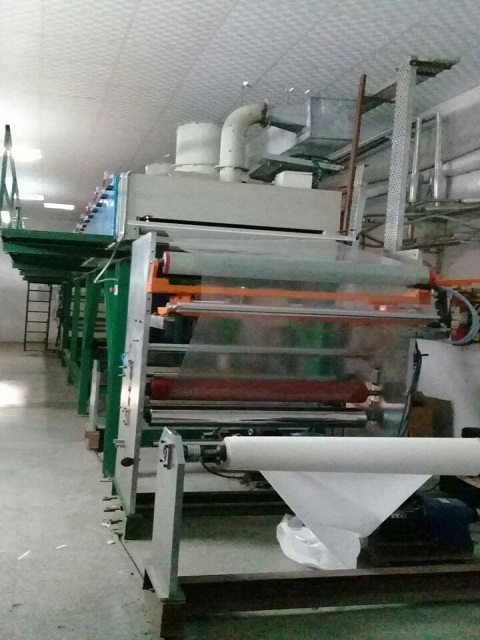
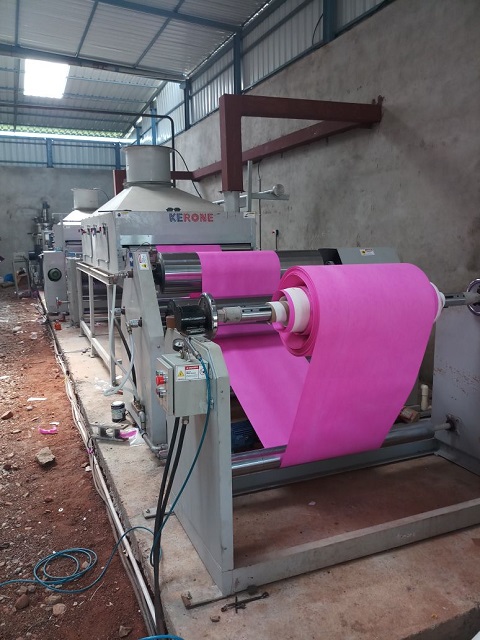
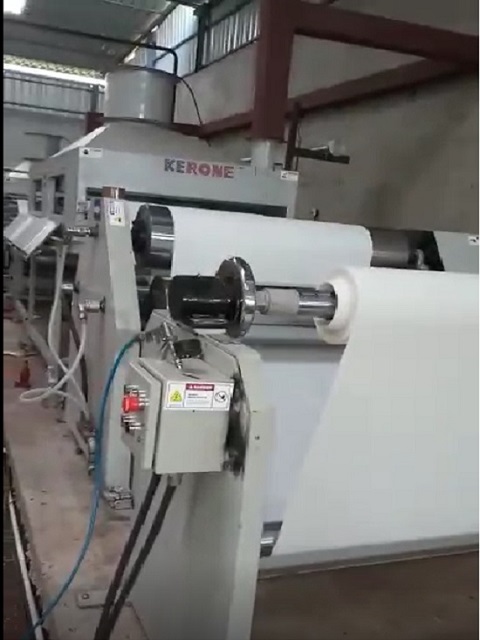
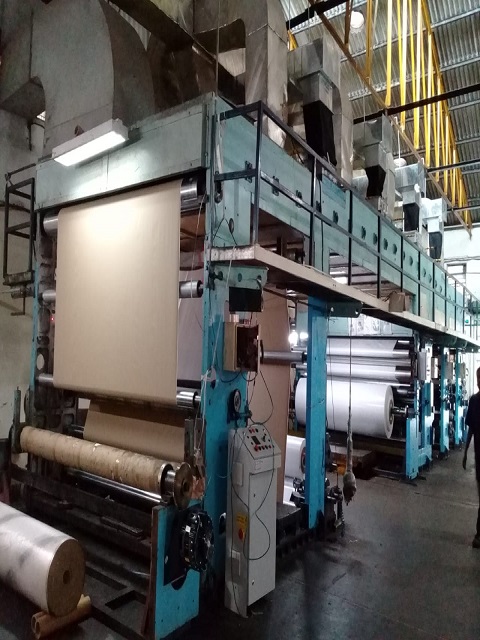
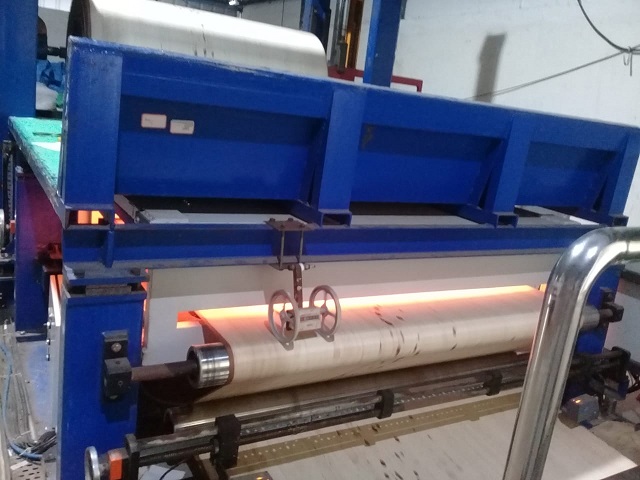
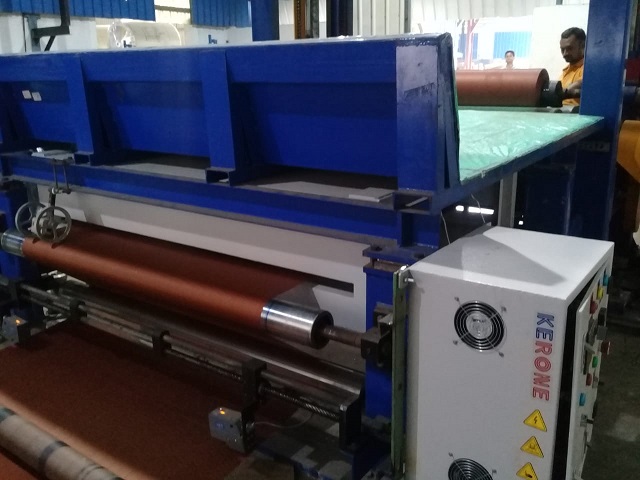
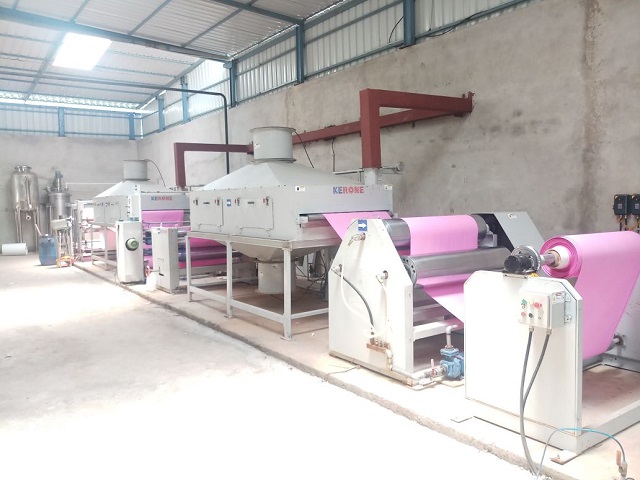
Kerone’s Coating Lines are engineered for high-precision deposition of liquids, pastes, emulsions, and functional materials onto a wide variety of substrates such as films, paper, foils, textiles, laminates, and engineered surfaces. These coating systems are designed for industrial-scale performance, delivering uniform layer thickness, superior surface quality, and exceptional repeatability. With decades of experience in thermal engineering, motion control, drying technologies, and custom automation, Kerone develops turnkey coating lines tailored to product chemistry, rheology, substrate behaviour, and end-use performance requirements.
Accuracy, efficiency, machine quality and output quality are not just word but are our commitment towards our profession. We always strive to achieve more than client satisfaction with our quality delivery and commitment towards every machine manufactured by us.
Kerone design and manufacture Custom coating solutions that can cater various needs of converting and coating, technology and methodology selected are as per the demand of substrate and desired output quality.
Why Choose Kerone Coating Lines
We are specialized in manufacturing and designing of various kinds of customize coating lines like lab / pilot scale or complete industrial/commercial machineries, since last 48 years we are helping our clients to answer their specialized need of coating or converting machines/lines. Our technical expertise and immense experience in the field of coating and converting enables us to produce solution that are desired or required for various industrial applications. Customised coating line/plants provided are entirely based on your plant set up.
Kerone integrates process engineering, coating mechanism selection, web handling, drying technology, and precision control systems into a single cohesive platform. A complete coating line from Kerone ensures defect-free coating, controlled airflow, advanced tension management, and optimized thermal profiles, enabling manufacturers to achieve micron-level uniformity and high throughput. The systems can incorporate solvent-based, aqueous, UV, hot-melt, or reactive chemistries, making them suitable for a wide range of industries from packaging to electronics. Kerone’s custom development approach results in lower downtime, reduced waste, improved coating accuracy, and enhanced operational efficiency.
Types and Features of Coating Lines
Kerone offers coating lines in various configurations including roll-to-roll coating lines, gravure coating lines, reverse roll lines, hot melt coating systems, slot-die lines, dip coating, and specialized engineering for functional coatings such as barrier layers, adhesive layers, conductive coatings, and nano-material coatings. Systems include unwinding, edge guiding, tension control, coating head system, precision drying/curing ovens, heat management, cooling zones, and rewinding sections. Coating lines can be designed for narrow web, wide web, and ultra-wide web requirements.
We provide various lab-scale, pilot-scale, and complete industrial-scale coating machines using different techniques such as Gravure Coating, Reverse Roll Coating, Knife-Over-Roll Coating, Air Knife Coating, Metering Rod (Mayer Rod) Coating, Slot Die Coating, Curtain Coating, Immersion / Dip Coating, Hot Melt Coating, Web Coating, customized coating lines / plants, and other custom coating solutions.
Available Coating Lines:
Lab-scale and Pilot-scale Coating Lines
Commercial-scale Coating Lines
Key Features
High-precision coating heads ensuring uniform coating thickness and surface quality.
Advanced web handling with closed-loop tension control for stable substrate movement.
Integrated drying systems (IR, hot air, microwave, UV) customized for coating chemistry.
Modular design supporting solvent-based, aqueous, and hot-melt formulations.
Complete automation with recipe control, inline measurement, and defect detection.
Energy-efficient thermal management with exhaust recovery and optimized airflow.
Customizable line speed, coating width, and oven design for diverse production demands.
Robust build quality ensuring long-term stability, accuracy, and minimal maintenance.
Powered by AI, ML & IoT
Future-Ready Engineering Driven by AI & IoT
Our advanced AI, ML, and IoT technologies, this solution delivers smarter automation, real-time insights, and predictive intelligence to enhance efficiency and drive future-ready growth.
Real-Time Monitoring & Control
Continuous tracking of process parameters with instant adjustments.
Predictive Maintenance
Intelligent fault detection to prevent failures before they occur.
Adaptive Process Optimization
Dynamic tuning of operations for maximum output and efficiency.
Cloud Dashboards & Analytics
Unified access to real-time insights and performance trends.
Energy & Resource Savings
Smarter utilization of energy to cut costs and reduce waste.
Secure IoT Connectivity
Encrypted data flow with seamless integration across plant systems.
Applications of Coating Lines
Kerone’s coating lines are used in industries requiring scalable, precise, and consistent coating operations. Typical applications include:
Battery electrodes, solar cell coatings, fuel cell membranes.
Kerone’s Coating Lines combine engineering precision with process innovation to deliver high-quality, high-speed coating solutions for diverse industrial applications. With superior thermal control, advanced automation, and highly customizable configurations, Kerone ensures manufacturers achieve consistent product quality, reduced operational costs, and long-term production reliability.
Seamless Export Connections Global & Local
Our Global Footprint in Industrial Excellence
Delivering world-class industrial and process solutions across countries with precision, innovation, and reliability.
Peru
Chile
Argentina
Mexico
Colombia
Brazil
USA
Canada
United Kingdom
France
Germany
Spain
Italy
Netherlands
Sweden
Switzerland
Poland
Portugal
Ireland
Czechia
Romania
Hungary
Austria
Greece
Kazakhstan
Uzbekistan
Turkmenistan
Algeria
Egypt
Nigeria
Kenya
South Africa
Saudi Arabia
UAE
Israel
Russia
India
China
Japan
South Korea
Thailand
Vietnam
Malaysia
Singapore
Indonesia
Philippines
Australia
New Zealand
Pan-India Presence. Local Expertise.
Raipur
Bilaspur
Panaji
Vasco da Gama
Gandhinagar
Ahmedabad
Surat
Chandigarh
Gurgaon
Shimla
Manali
Bengaluru
Mysore
Kochi
Pune
Mumbai
Thane
Navi Mumbai
Hyderabad
Chennai
Coimbatore
Kolkata
Lucknow
Jaipur
Udaipur
Jodhpur
Dehradun
Haridwar
Bhubaneswar
Product Gallery
Frequently Asked Questions (FAQ)
Coating lines handling solvent-based or flammable chemistries include explosion-proof electrical fittings in coating and drying zones, solvent vapor extraction and monitoring, fire suppression systems in oven sections, and emergency web-break detection that stops the line safely if substrate tension is lost. Operator safety features include interlocked guarding around nip rollers and unwind/rewind stations, emergency stop circuits accessible at multiple points along the line, and static discharge grounding for high-speed web handling where friction can generate static charge near flammable vapors. For aqueous and hot-melt coating lines, the explosion-proofing requirements are lighter, but thermal protection around drying ovens remains essential. Kerone designs safety systems to the specific chemistry and line speed of each project, since a slow lab-scale line and a high-speed commercial web line carry different risk profiles.
Lab and pilot-scale lines are sized for process development, formulation testing, and small production runs, typically running narrower web widths at slower speeds with easy reconfiguration between trials. Commercial-scale lines are built for sustained high-speed production with fixed process parameters optimized for a defined product range. Manufacturers developing a new coating formulation or entering a new substrate category should validate the process at pilot scale first, since trial-and-error at commercial speed wastes expensive material and production time. Once a formulation and process window are proven, scale-up to commercial equipment carries much lower risk because the coating mechanism, drying requirements, and tension profile are already understood. Kerone designs pilot lines to be dimensionally representative of commercial equivalents specifically to make this scale-up transition predictable.
Payback periods for a new coating line generally range from 1.5 to 4 years, influenced by production volume, the coating chemistry's material cost, and whether the line replaces outsourced converting or manual application. High-speed, high-volume lines for packaging films or technical textiles tend to pay back faster because material throughput per hour is substantial. Specialty or low-volume functional coating lines, such as those for electronics or energy storage applications, may have longer payback periods but are often justified by capability rather than pure cost savings, since the coating may be unavailable from any external supplier. Reduced material waste from precision coating heads, lower defect-driven scrap rates, and elimination of outsourcing fees are the primary contributors to faster payback once the line is in steady production.
A common error is selecting coating head technology based on familiarity rather than suitability for the specific viscosity, solids content, and target thickness of the formulation, leading to coating defects discovered only after installation. Underspecifying drying or curing capacity relative to desired line speed is another frequent issue, since the oven length and airflow must match the solvent or water removal rate required at full speed, not just at trial speed. Buyers sometimes overlook tension control requirements for thin or stretch-prone substrates, resulting in wrinkles or breaks once the line runs at production speed. Failing to test the actual production substrate and coating formulation together during the design phase, rather than relying on generic specifications, is the most consequential mistake, since substrate-coating interactions vary significantly between materials.
Modern coating lines reduce environmental impact through precision coating heads that minimize material overuse compared to older flood-coating or dip methods, solvent recovery and recycling systems that capture and reuse process solvents rather than venting them, and energy-efficient drying ovens with exhaust heat recovery that lower natural gas or electricity demand per unit of substrate processed. Water-based and UV-curable coating chemistries, where compatible with the application, eliminate solvent emissions entirely and reduce the line's regulatory compliance burden. Waste reduction also comes from tighter process control, which lowers the scrap rate from coating defects. For manufacturers under customer or regulatory pressure to demonstrate environmental performance, a precisely engineered coating line generates measurable efficiency gains that support sustainability claims beyond simple emissions compliance.
The mechanical structure, web handling system, and oven housings of a well-built coating line typically last 15 to 20 years with proper maintenance. Coating heads, depending on technology and the abrasiveness of the formulation being applied, may need refurbishment or replacement every 5 to 10 years. Rollers, bearings, and tension control components are wear items requiring periodic replacement on a shorter cycle tied to operating hours rather than calendar time. Control systems and drives often get upgraded before the mechanical platform reaches end of life, since automation technology advances faster than the underlying mechanical equipment wears out. Kerone designs structural frames and web paths conservatively so that control system modernization, rather than full line replacement, is the more common upgrade path for older installations.
A common misconception is that a single coating line configuration can handle any coating chemistry or substrate without modification, when in practice coating head selection, drying technology, and tension control all need to match the specific formulation and material. Buyers sometimes assume coating uniformity is solely a function of the coating head when web tension stability and substrate flatness contribute just as significantly to defect rates. Another misconception is that faster line speed is always better, when in reality drying and curing capacity often becomes the limiting factor, and pushing speed beyond what the oven can properly cure produces under-cured or defective product. Buyers also sometimes underestimate how much substrate-specific trial work is needed before a new formulation runs reliably at full production speed.
A coating line is an integrated system used to apply precise layers of liquids or functional materials onto flexible substrates in a controlled roll-to-roll process.
The substrate moves through web-handling units, receives the coating via selected coating technology, passes through customized drying/curing zones, and is rewound with uniform coating.
Aqueous, solvent-based, UV-curable, hot-melt, adhesive, barrier, conductive, and functional materials.
Packaging, electronics, textiles, specialty films, automotive, energy storage, and technical papers.
Yes, Kerone customizes coating heads, drying zones, web width, speed, automation level, and substrate compatibility.
Through precision coating heads, tension control, inline sensors, and controlled thermal zones.
Substrate type, coating viscosity, film thickness, production speed, and chemistry.
Regular cleaning of coating heads, tension rolls, sensors, and periodic calibration of control systems.
Kerone’s custom-designed heating and processing solutions are built to meet the demands of your growing operations. Whether you’re upgrading equipment, expanding production, or need a tailor-made solution
 Peru
Peru Chile
Chile Argentina
 Mexico
 Colombia
 Brazil
 USA
USA Canada
 United Kingdom
 France
 Germany
 Spain
Spain Italy
Italy Netherlands
 Sweden
 Switzerland
 Poland
 Portugal
 Ireland
 Czechia
 Romania
 Hungary
 Austria
 Greece
 Kazakhstan
 Uzbekistan
 Turkmenistan
 Algeria
 Egypt
Egypt Nigeria
 Kenya
Kenya South Africa
 Saudi Arabia
 UAE
UAE Israel
 Russia
 India
India China
China Japan
Japan South Korea
 Thailand
 Vietnam
 Malaysia
 Singapore
 Indonesia
 Philippines
 Australia
 New Zealand