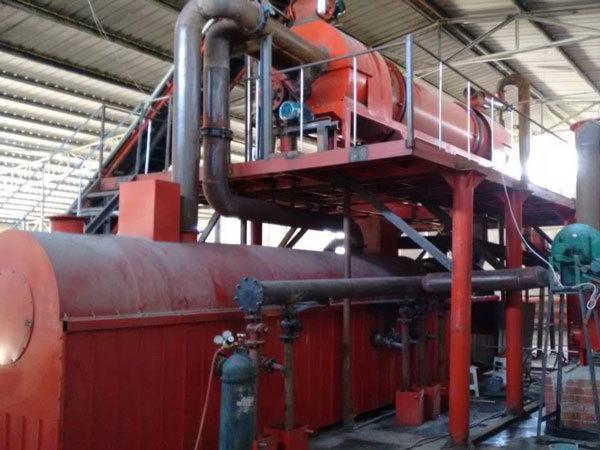
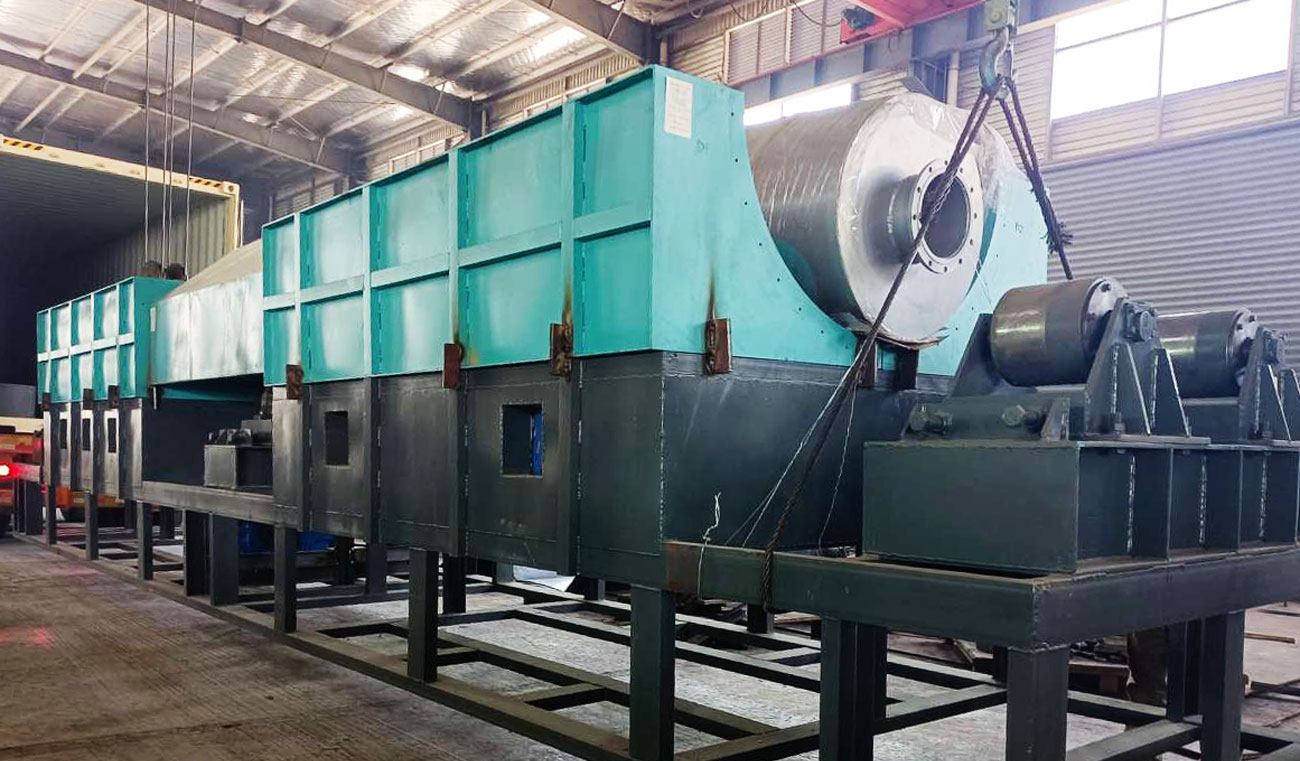
A Sludge Carbonization Plant is a state-of-the-art thermal treatment reactor that is built to transform different sludge, such as sludge in municipal sewage systems, industrial sludge, and organic waste, into useful carbonaceous products by a controlled pyrolysis process. This is a new technology that functions in the presence of limited oxygen or no oxygen at high temperatures, usually between 500°C and 700°C, which decomposes organic materials and converts wet, dangerous sludge into stable, carbon-rich biochar, syngas and bio-oil. The carbonization process is able to not only reduce the volume and weight of sludge by 90 percent but also to kill the pathogens, destroy any harmful compounds in the organics, and to extract energy out of waste products.
The solution of this sustainable waste management focuses on the critical environmental issues through transforming the harmful streams of waste into renewable energy sources or useful byproducts, which can be utilised as soil amendments, activated carbon feedstock, or fuel alternatives. Recent facilities such as sludge carbonization plants have advanced emission systems, automatic monitoring systems, and heat recovery systems, which make them a more environmentally responsible and cost-effective solution to reach the objective of zero waste without breaking the environmental regulations, which are becoming stricter and stricter.
Why Choose Kerone Sludge Carbonization Plant
The Sludge Carbonization Plant of Kerone is one of the best options to be considered by the organizations that want to have reliable, efficient, and environmentally friendly sludge management. As a manufacturer of thermal processing equipment, Kerone has over the decades been able to come up with the latest carbonization systems that have integrated the latest technology with strong engineering to provide a stable performance and the highest level of ROI. Our plants are specifically designed to deal with various types and capacities of sludge, with such sophisticated features as an automated feeding system, a high degree of temperature control, the ability to operate continuously, and an efficient safety mechanism.
The innovation aspect is demonstrated by Kerone in the energy-efficient design that uses the maximum amount of heat recovery, minimizes the use of auxiliary fuel and significantly reduces the cost of running the facility. The carbonization plants are designed with the best emission control systems that will guarantee the highest standards of environmental standards and result in high-quality biochar with high carbon content and calorific value. The real difference between Kerone and the rest is our holistic strategy, starting with the first consultation and plant design, right up to the installation, commissioning, training of the operators, and technical support, which makes sure the clients experience optimal performance and long-term sustainability of the waste management processes.
Types and Features of Sludge Carbonization Plant
Kerone has a variety of Sludge Carbonization Plants depending upon the needs of the operation and the sludge properties, such as batch-type carbonization plants being used in smaller facilities or research work, continuous carbonization plants being used in large-scale municipal and industrial processes and modular units being used to provide scalability and flexibility to increasing waste management demands. Our plants incorporate various types of reactors, including rotary kilns, fluidized beds and horizontal moving bed reactors, which have been optimized to suit various sludge characteristics and throughput needs.
Some important technological characteristics are indirect heating systems, which avoid contamination of the carbonized products; the incorporation of sludge pre-drying units, which are integrated with the main systems to enhance energy saving by eliminating moisture content prior to the carbonization process; an automated ash removal system, which makes sure that the process continues without interruption; and the use of sophisticated process control systems, which monitor all the process parameters such as temperature, pressure, residence time and the composition of gas.
The carbonization plants of Kerone are furnished with multi-stage exhaust gas treatment, which includes cyclones, scrubbers, and filters to control particulates and neutralise deleterious emissions to guarantee that the environment is under compliance and the workplace is safe. Its modular design concept enables ease of maintenance, replacement of parts and later add-on capacity, and the sturdy construction with high-grade refractory materials and corrosion-resistant alloys makes it last long and have very little downtime even under rigorous operation conditions.
Key Features
High Thermal Efficiency
It will include high-tech heat recovery technology that collects and recycles the thermal energy of hot gases and carbonized byproducts and will consume up to 70% less external fuel as well as cost significantly less to operate.
Automated Process Control
Features PLC-based control with touchscreen HMI interfaces and fully automated, intelligently designed control systems allow accurate monitoring and control of key parameters, including temperature profiles, retention time, feeding rates and oxygen concentrations, to achieve optimum carbonization.
Superior Emission Control
To sum up, it is important to state that the system is designed to avoid any adverse pollution to the environment, and the numerous gas cleaning facilities, such as thermal oxidizers, wet scrubbers, and activated carbon filters, guarantee to meet or even exceed international environmental standards on particulates, volatile organic compounds, and odorous substances.
Continuous Operation Design
Designed to run 24/7 and act as a redundant system, access to maintenance facilities is quick, and components can be hot swapped to optimize uptime and productivity and reduce production delays.
Quality Biochar Production
Manufactures high-quality biochar that has more than 60 percent of carbon content, high porosity, and high surface area, which can be applied in the fields of soil amendment, water filtration, construction materials, and active carbon production.
Comprehensive Safety Systems
It has several safety amenities, such as explosion-proof, automatic fire suppression systems, emergency shutdown systems, pressure relief valves, and constant gas occurrence, that provide safety to both equipment and staff.
Powered by AI, ML & IoT
Future-Ready Engineering Driven by AI & IoT
Our advanced AI, ML, and IoT technologies, this solution delivers smarter automation, real-time insights, and predictive intelligence to enhance efficiency and drive future-ready growth.
Real-Time Monitoring & Control
Continuous tracking of process parameters with instant adjustments.
Predictive Maintenance
Intelligent fault detection to prevent failures before they occur.
Adaptive Process Optimization
Dynamic tuning of operations for maximum output and efficiency.
Cloud Dashboards & Analytics
Unified access to real-time insights and performance trends.
Energy & Resource Savings
Smarter utilization of energy to cut costs and reduce waste.
Secure IoT Connectivity
Encrypted data flow with seamless integration across plant systems.
Applications of Sludge Carbonization Plant
Sludge Carbonization Plants developed by Kerone have a rich and wide application in various industries and sectors that require a sustainable waste management tool and a chance to recover their resources. Common uses are:
Municipal Wastewater Treatment Facilities: Recycling sewage material of urban wastewater treatment plants to help avoid the disposal problems, limit the reliance on landfills, and transform waste into renewable energy and other soil-boosting goods.
Pulp and Paper Industry: Converting paper mill sludge, de-inking sludge, and other biological treatment residues into energy to save costs on disposing of waste and to create biochar to be used in industries or as an alternative fuel.
Leather and Tanning Industry: The processing of waste generated by tanning salons and organic leather processing waste containing chromium to stabilize hazardous substances, extract valuable metals, and end up with carbonized waste used in safe disposal or for special purposes.
Food Processing and Agricultural Sector: To convert organic waste, food processing sludge, animal manure and agricultural residues into biochar with many nutrients that can be used to amend soils to enhance agricultural productivity and solve the waste management issues.
Pharmaceutical and Chemical Industries: Recycling the manufacturing wastes of pharmaceuticals, chemical wastes and waste containing active pharmaceutical ingredients, and toxic wastes in a controlled facility that facilitates total destruction of the active pharmaceutical ingredients and the dangerous chemicals.
Industrial Effluent Treatment Plants: Industrial effluents of different types, managing both the biological and chemical sludge involved in the treatment process, and converting waste streams into useful carbon products, in addition to mitigating the environmental risk.
The question of investing in a Kerone Sludge Carbonization Plant is a calculated investment in sustainability in the waste management system, environmental responsibility, and operational efficiency. The sludge disposal problem is being turned into a resource recovery, energy production and environmental compliance opportunity via our high-tech carbonization process. In selecting Kerone, you will have an assured partner who has a long-term history of having expertise in thermal processing technologies, who will be committed to providing tailor-made solutions to meet your specific needs and surpass the performance. It is not only that our sludge carbonization plants also resolve immediate issues of waste management, but also help contribute to the principles of recycling the circular economy by producing useful products, minimizing carbon footprints, and promoting sustainability. By using the complete support services of Kerone, the latest technology and focusing on constant improvement, your organization can attain long-term success in waste valorisation and contribute to a cleaner and more sustainable future.
Seamless Export Connections Global & Local
Our Global Footprint in Industrial Excellence
Delivering world-class industrial and process solutions across countries with precision, innovation, and reliability.
Peru
Chile
Argentina
Mexico
Colombia
Brazil
USA
Canada
United Kingdom
France
Germany
Spain
Italy
Netherlands
Sweden
Switzerland
Poland
Portugal
Ireland
Czechia
Romania
Hungary
Austria
Greece
Kazakhstan
Uzbekistan
Turkmenistan
Algeria
Egypt
Nigeria
Kenya
South Africa
Saudi Arabia
UAE
Israel
Russia
India
China
Japan
South Korea
Thailand
Vietnam
Malaysia
Singapore
Indonesia
Philippines
Australia
New Zealand
Pan-India Presence. Local Expertise.
Raipur
Bilaspur
Panaji
Vasco da Gama
Gandhinagar
Ahmedabad
Surat
Chandigarh
Gurgaon
Shimla
Manali
Bengaluru
Mysore
Kochi
Pune
Mumbai
Thane
Navi Mumbai
Hyderabad
Chennai
Coimbatore
Kolkata
Lucknow
Jaipur
Udaipur
Jodhpur
Dehradun
Haridwar
Bhubaneswar
Product Gallery
Frequently Asked Questions (FAQ)
Kerone Sludge Carbonization Plants are modelled to process a high diversity of sludge types, such as municipal sewage sludge, industrial wastewater sludge, paper mill sludge, tannery sludge, food processing waste, pharmaceutical residue and agricultural organic waste. The moisture content of sludge that can be fed into the plant is within the range of 20 percent to 80 percent, but feedstock having higher moisture content should be pre-dried to achieve higher energy efficiency and carbonization quality.
Products of the carbonization process are distributed as three main products, including biochar (solid carbonaceous residue consisting of 20-30% of the input mass in terms of weight), syngas (combustible gas mixture utilized in energy recovery), and bio-oil (condensable organic compounds). The resulting biochar is rich in carbon (60-80%), which can be useful as a soil amendment, in the production of activated carbons or in place of fuels. The syngas may be used to provide power to the plant or produce electricity, and bio-oil may be refined further to serve a range of chemical purposes.
Plants owned by Kerone are energy efficient in design with highly developed heat recovery systems, which retrieve thermal energy from exhaust gases and hot products. When the carbonization process has attained a steady-state running, the syngas produced will have the capacity to supply 60-80% of the thermal energy needed, and this will save a lot of external fuel consumption. There are also heat exchangers and insulation systems that reduce heat loss, and thereupon the majority of the operations are self-contained in terms of energy, as minimum supplementary fuel input is needed.
Sludge carbonization has many environmental benefits, such as huge volume reduction (80-90%), elimination of pathogens and other harmful microorganisms, destruction of persistent organic pollutants, lower emission of greenhouse gases than landfilling, contamination of groundwater, and the recovery of the energy of the waste. It also results in stable biochar, which is able to stabilize carbon in soil over long durations of time, which can help in mitigating climate change as well as enhancing the health and productivity of the soil.
Kerone creates plants that are easy to maintain, have access to components and have clear maintenance timetables. Examples of routine maintenance are checking the condition of the refractory linings on a regular basis, cleaning of heat exchangers and gas treatment systems, lubrication of moving parts and checking of temperature sensors and control systems. Major repairs like replacement of refractory are usually done after every 2-3 years of operation depending on the nature of operations. Kerone will offer intensive maintenance training, well-documented training, and easily accessible spare parts to ensure less downtime.
Installation and commissioning schedule will be based on the plant capacity and the conditions of the site. In the case of regular installations, it normally involves 6-12 months between design completion and working. This consists of civil work (2-3 months), installation of equipment (2-3 months), electrical and instrumentation (1-2 months) and commissioning and performance testing (1-2 months). Kerone collaborates with clients in the creation of realistic schedules and is able to hasten installation in emergency cases based on modular pre-fabrication and concurrent execution of tasks.
ROI depends on the price of your area to dispose of sludge, the energy prices, the market price of biochar, and the capacity of the plant. Payback periods of 3-7 years are generally possible by organisations. The financial gains are that the landfill tipping fees are eliminated or greatly decreased, income is brought by biochar sales, energy savings are achieved through the use of syngas, there is less cost of transportation as the volume will decrease and possible carbon credits. Kerone offers a specific level of feasibility studies and financial modelling to enable the clients to comprehend the particular benefits of their application in terms of economic benefits.
Yes, the Sludge Carbonization Plants of Kerone are designed to comply with or surpass global environmental regulations such as EPA regulations, European Union directives and local regulations on emission levels. Our facilities have advanced multi-stage systems of emission control, such as thermal oxidisers, scrubbers, and filters that are effective in controlling particulate matter, volatile organic compounds, NOx, SOx, and dioxins. We offer full-fledged emission testing, certification service and documentation to assure compliance with the regulations and tailor the emission control system to suit specific geographical needs.
Sludge carbonization happens inside a sealed, oxygen-limited chamber, so odorous compounds released during heating are captured rather than escaping into the surrounding air. Gas treatment stages, including scrubbers and thermal oxidizers, further break down odour-causing compounds before any exhaust is released. This closed-process design is a major reason sludge carbonization plants can often be sited closer to treatment facilities or communities than open sludge drying beds or lagoons, which tend to generate strong ongoing odour.
Heavy metals are not destroyed by carbonization since they are elements, but they do become concentrated and bound within the resulting biochar's mineral matrix, which can reduce their mobility compared with raw sludge. For sludge types known to contain elevated heavy metals or hazardous compounds, such as certain tannery or industrial effluents, the resulting biochar may need to be directed toward non-agricultural uses, like construction materials or controlled disposal, rather than soil application.
Yes, most sludge arrives from treatment processes with high water content, often well above what the carbonization reactor can efficiently handle. Mechanical dewatering, such as belt presses or centrifuges, typically reduces moisture to a workable range before the material enters the plant. Kerone's sludge carbonization systems can be paired with pre-drying units to further reduce moisture, since minimizing water content going into the reactor directly improves energy efficiency and throughput.
Yes, this is a common configuration, where the carbonization plant is installed adjacent to an existing municipal or industrial wastewater treatment works to process sludge as it is generated, without the need for offsite transport. Kerone's engineering team typically reviews your current dewatering equipment, sludge output volume, and available site space to design a system that connects smoothly into your existing treatment train and minimizes additional handling steps.
Sludge often contains a higher mineral and ash content than plant-based biomass, so the resulting biochar will have a greater inorganic fraction. Kerone's systems include automated ash removal to keep the process running without manual clean-out interruptions. Depending on composition, this ash-rich biochar can sometimes be used in construction materials or as a soil conditioner in specific applications, or it may require disposal per local regulations if contaminant levels are a concern.
Landfilling sludge risks groundwater contamination and takes up valuable land space, while incineration typically produces higher direct emissions and does not usually recover a useful solid product. Carbonization operates at lower temperatures than incineration, produces a stable biochar byproduct instead of just ash, and includes emission control systems that limit particulate and gas release. It also reduces sludge volume substantially, which lowers the ongoing burden on landfill capacity compared with untreated disposal.
Sludge can be more corrosive than typical dry biomass due to its chemical composition and residual moisture, so Kerone's sludge carbonization plants use corrosion-resistant alloys and protective linings in areas most exposed to acidic or reactive byproducts. Components like heat exchangers, gas ducts, and discharge systems are specified with this in mind during the design phase, which helps extend equipment life and reduce unplanned maintenance related to material degradation.
Kerone’s custom-designed heating and processing solutions are built to meet the demands of your growing operations. Whether you’re upgrading equipment, expanding production, or need a tailor-made solution
 Peru
Peru Chile
Chile Argentina
 Mexico
 Colombia
 Brazil
 USA
USA Canada
 United Kingdom
 France
 Germany
 Spain
Spain Italy
Italy Netherlands
 Sweden
 Switzerland
 Poland
 Portugal
 Ireland
 Czechia
 Romania
 Hungary
 Austria
 Greece
 Kazakhstan
 Uzbekistan
 Turkmenistan
 Algeria
 Egypt
Egypt Nigeria
 Kenya
Kenya South Africa
 Saudi Arabia
 UAE
UAE Israel
 Russia
 India
India China
China Japan
Japan South Korea
 Thailand
 Vietnam
 Malaysia
 Singapore
 Indonesia
 Philippines
 Australia
 New Zealand