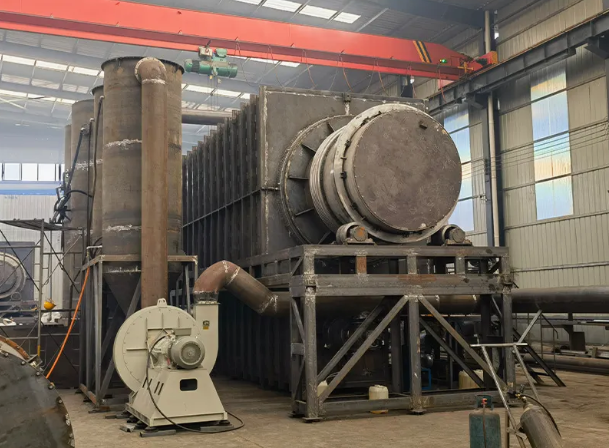
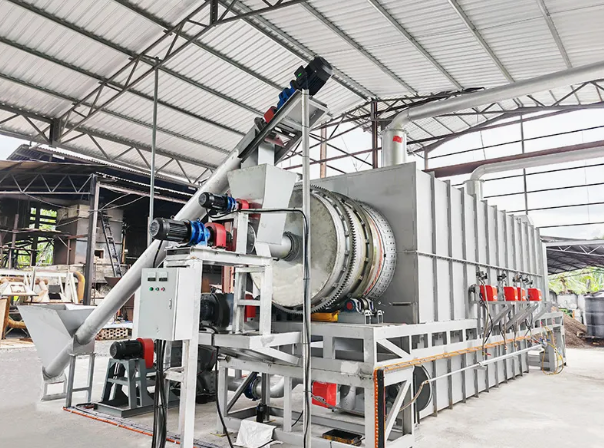
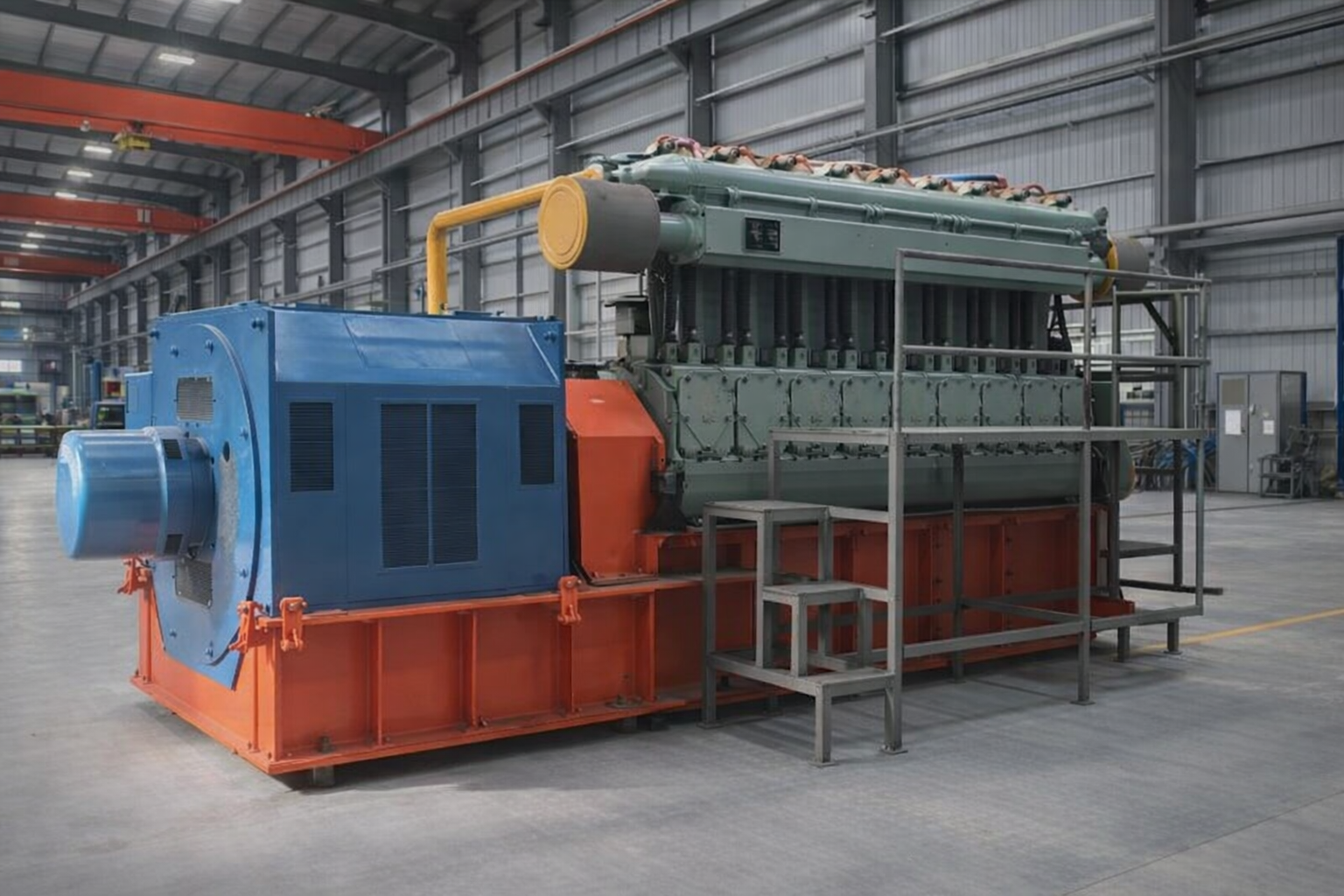
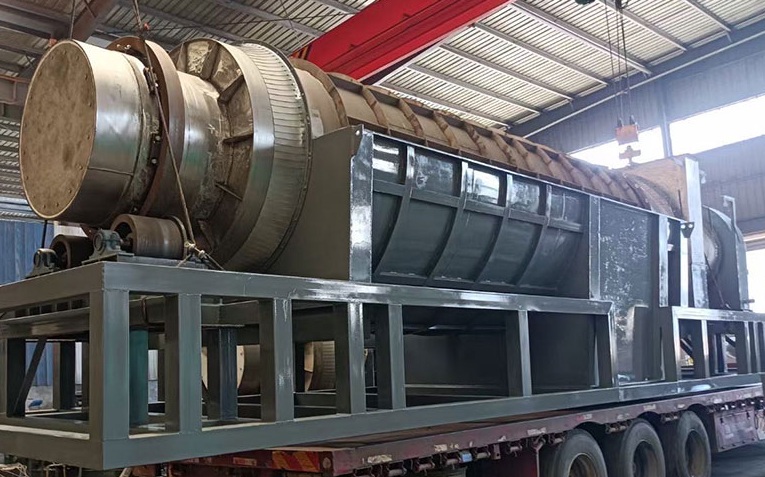
A Woody Waste Carbonization Plant is a sophisticated thermal processing technology which aims at transforming types of waste biomass materials composed of wood substances into useful products rich in carbon through controlled pyrolysis in the presence of a limited oxygen atmosphere. This new technology is able to convert wood waste materials like sawdust, wood chips, bark, branches, agricultural residues and forestry byproducts to high-quality biochar, activated carbon and wood vinegar, at the same time producing syngas which can be used to produce energy. Carbonization is at certain level of temperature, degrading complex organic structures of woody materials into stable carbon and giving out volatile compounds.
The Woody Waste Carbonization Plant of KERONE has futuristic thermal engineering, temperature control, and gas recovery systems that guarantee the greatest conversion ratio with minimum environmental degradation. Such a sustainable solution does not only resolve the increasing problem of disposing of the woody wastes but also generates various sources of revenue, as they will generate marketable carbon products and therefore it is a cost-effective and environmentally friendly option for industries that handle high volumes of woody waste.
Why Choose Kerone Woody Waste Carbonization Plant
The Woody Waste Carbonization Plant by KERONE is the best option in the industry because we have 50+ years of experience in the production of thermal processing equipment and we will never compromise on innovation, quality, and customer satisfaction. Carbonization plants are also designed with the most advanced automation systems and the best insulation materials, as well as strong construction, which makes the carbonization plant operate continuously, with few maintenance requirements and a long life.
KERONE is different in that we have a project implementation strategy that covers all aspects of the project as we consult and design the project to the stage of installation, commissioning, training of operators and provision of technical support throughout the life of the project. Our plants also have a high emission control system that is installed in accordance with the strict environmental standards, thus suitable to be installed even in the environmentally sensitive places.
KERONE’s commitment to energy efficiency is evident in our integrated heat recovery system, where we harvest and utilize the waste heat, reducing the cost of operation within the plants by a large margin and at the same time increasing overall the efficiency of the plants. We know that each client has specific needs; that is why we provide fully customizable solutions depending on the peculiarities of feedstock, production volumes and the final product. Having branches in various countries and a successful experience with the successful projects, KERONE has proven itself as a reliable partner to be used by the businesses that want to find the best and most efficient carbonization solutions that are sustainable.
Types and Features of Woody Waste Carbonization Plant
KERONE also builds different Woody Waste Carbonization Plants such as continuous carbonization, which is used in large-scale production operations of industries, Batch-type carbonization unit used in smaller-scale production needs or various feedstock processing, and mobile carbonization that is used in on-site processing during logging operations or mills. We describe our plants as having modular designs to enable easy capacity increase, state-of-the-art PLC-based control systems to accurately monitor and adjust the process, multi-stage combustion chambers to achieve optimal distribution of temperature, effective condensation units to collect wood vinegar, and in-built gas cleaning units, which ensure the process meets the environmental requirements.
The carbonization chambers are built with high-grade refractory materials that can resist very high temperatures and offer a great thermal insulation capacity and the feeding systems are made in such a way that they can handle different feedstock sizes and moisture content. The plants of KERONE have advanced gas recirculation technology that makes the fuel consumption more efficient through the use of combustible gases formed in the carbonization process, automated cooling systems that ensure the quality of the product and interfaces that are easy to use even with minimal technical training amongst the staff. Other characteristics are safety interlocks, emergency shutdown structures, dust collection systems and full instrumentation for real-time monitoring of process parameters.
Key Features
High Thermal Efficiency
Built-in heat recovery mechanism that recovers and reuses waste heat, which consumes less fuel by as much as 40 percent and the operational cost is greatly lowered.
Continuous Operation Capability
24/7 operation facility that will have automatic feeding and discharge facilities to enhance productivity and product uniformity.
Multi-Product Output
Since biogenic and wood vinegar can be produced concurrently with combustible gas, this generates two or more streams of revenue out of one waste.
Environmental Compliance
State-of-the-art emission control systems such as cyclone separators, scrubbers, and condensers that would guarantee the international environmental environment is not compromised.
Wide-range Feedstock Processing
Can work with a wide range of woody materials such as sawdust, wood chips, coconut shells, bamboo, rice husks and other agricultural residues with little to no pre-processing.
Intelligent Automation
The PLC control system with touchscreen HMI interface will allow the ability to precisely control the temperature, make mechanical adjustments to the process, and collect extensive data.
Striking Construction
Steel framework construction of high-temperature-resistant refractory lining, corrosion-resistant material and reinforced components that guarantee decades of reliable service.
Modular Scalability
Scalable design architecture which can add capacity in new modules without a total system upgrade to safeguard long term investment.
Powered by AI, ML & IoT
Future-Ready Engineering Driven by AI & IoT
Our advanced AI, ML, and IoT technologies, this solution delivers smarter automation, real-time insights, and predictive intelligence to enhance efficiency and drive future-ready growth.
Real-Time Monitoring & Control
Continuous tracking of process parameters with instant adjustments.
Predictive Maintenance
Intelligent fault detection to prevent failures before they occur.
Adaptive Process Optimization
Dynamic tuning of operations for maximum output and efficiency.
Cloud Dashboards & Analytics
Unified access to real-time insights and performance trends.
Energy & Resource Savings
Smarter utilization of energy to cut costs and reduce waste.
Secure IoT Connectivity
Encrypted data flow with seamless integration across plant systems.
Applications of Woody Waste Carbonization Plant
Woody Waste Carbonization Plants by KERONE are widely applied in various industries that are trying to find the solution to sustainable waste management and the production of value-added products. The common uses are:
Sawmill and Wood Processing Industries: Turning sawdust, wood shavings, bark and offcuts into biochar and activated carbon, which would get rid of disposal costs and give rise to profitable products.
Agriculture Sector: Conversion of crop residues, coconut shells, bamboo waste, and other agricultural remnants into biochar to be used in the amendment of soil as well as in capturing carbon.
Pulp and Paper Industry: Diverting waste streams of high lignin content and the residues of wood processing into carbonization producing activated carbon that can be used in water treatment.
Charcoal Production Plants: Commercial production of charcoal, briquettes and activated carbon for the local, industrial and overseas markets.
Waste Management Companies: Complete solutions for municipal woody waste, construction timber waste, and landscape maintenance waste and the addition of a contribution to the circular economy.
The Woody Waste Carbonization Plant by KERONE is a major paradigm shift in the manner of managing woody wastes in industries in that the industries that used to view the isolation of the woody waste as a disposal problem have turned it into a lucrative business. By investing in this new high technology, the businesses are not only attaining the targets of environmental sustainability, but they are also generating new revenue streams by manufacturing high-value carbon products. Energy efficiency and the capability of the plant to handle various feedstock materials, combined with a range of marketable products, will make it a quick payback and profitable in the long run.
Our carbonization plants are the choice of the progressive companies on the global market because of the quality engineering, constant innovation and the full support of customers offered by KERONE. It can be a small sawmill and you want to remove the waste disposal expenses or it could be a big industrial facility in need of applying the concepts of the circular economy; either way, the Woody Waste Carbonization Plant by KERONE will be an excellent combination of reliability, efficiency, and economic feasibility. Become part of the increasing clientele of satisfied clients that have turned their waste issues into competitive advantages through KERONE’s established carbonization technology.
Seamless Export Connections Global & Local
Our Global Footprint in Industrial Excellence
Delivering world-class industrial and process solutions across countries with precision, innovation, and reliability.
Peru
Chile
Argentina
Mexico
Colombia
Brazil
USA
Canada
United Kingdom
France
Germany
Spain
Italy
Netherlands
Sweden
Switzerland
Poland
Portugal
Ireland
Czechia
Romania
Hungary
Austria
Greece
Kazakhstan
Uzbekistan
Turkmenistan
Algeria
Egypt
Nigeria
Kenya
South Africa
Saudi Arabia
UAE
Israel
Russia
India
China
Japan
South Korea
Thailand
Vietnam
Malaysia
Singapore
Indonesia
Philippines
Australia
New Zealand
Pan-India Presence. Local Expertise.
Raipur
Bilaspur
Panaji
Vasco da Gama
Gandhinagar
Ahmedabad
Surat
Chandigarh
Gurgaon
Shimla
Manali
Bengaluru
Mysore
Kochi
Pune
Mumbai
Thane
Navi Mumbai
Hyderabad
Chennai
Coimbatore
Kolkata
Lucknow
Jaipur
Udaipur
Jodhpur
Dehradun
Haridwar
Bhubaneswar
Product Gallery
Frequently Asked Questions (FAQ)
The carbonization process normally takes place between 400°C and 800°C based on the intended final product. Higher temperatures (400-500°C) result in biochar that is of better quality in terms of the level of volatile content, whereas high temperatures (600-800°C) result in activated carbon that is of high quality in terms of adsorption qualities. The plants of KERONE provide a fine control of temperature that would maximize the product features in accordance with your unique needs.
The total time of carbonization process depends on the type of feedstock, moisture content and required product characteristics. Average times of batch systems are 6-12 hours per cycle, whereas continuous carbonization plants are steady-state processes; although they need a start-up time of about 3-4 hours, after which the finished goods are produced continuously.
The best moisture content of the feedstock is 8-15% with respect to efficient carbonization. KERONE will be able to work with materials that contain up to 20-25 % moisture content, but moisture content that is above 30 percent will also decrease the overall efficiency of the plant, so dry-cleaning plants will have to be integrated into the plant design, which we will be able to achieve.
The major products are biochar or charcoal (a solid carbon product that takes 25-35% of the feedstock weight), wood vinegar or pyroligneous acid (a liquid condensate finding applications in agriculture and industry) and combustible syngas (heat or power generation). Depending on process parameters and the feedstock characteristics, product ratios change.
Space requirements are determined by the capacity and configuration of the plant. A batch plant (500 kg/batch) with a small-scale size will occupy about 200-300 metres, whereas with large continuous systems (5-10 tons/hour) the size can be 1000-2000 metres of area, including feedstock storage, processing area, product storage and utilities. KERONE can offer layout drawings that are specific to your available space.
The main operating costs are labour, electricity, maintenance and additional fuel (assuming that it is needed to start it). Nevertheless, the designs of KERONE are energy efficient, whereby the self-generated syngas is used to heat, thereby cutting down on the cost of fuel by a significant margin. When properly designed, post-first-startup plants will be able to run on little outside energy, and the operating costs are often 15-25% of product revenue.
The KERONE Woody Waste Carbonization Plants have fully equipped emission control systems that have cyclone dust collectors, venturi scrubbers, condensation units and activated carbon filters to trap particulates, tar vapours and other emissions. Our plants are of international standards, such as EPA, EU, and local environmental standards, with all documents and test procedures.
Yes, wood pellets and other compressed biomass forms can be processed, and their uniform size and lower moisture content often make feeding and temperature control more consistent than with irregular raw offcuts. Kerone's feeding systems can be adjusted to handle a range of input forms, from loose sawdust to dense pellets, though very hard, compressed materials may need slightly longer residence times to carbonize fully through their denser structure.
Smaller, more uniform particles generally carbonize faster and more evenly than large chunks, since heat needs time to penetrate to the core of each piece. Most Kerone woody waste systems work well with particle sizes in the range of a few millimetres up to a few centimetres, depending on reactor design. Oversized material like whole branches or large offcuts usually needs chipping or shredding first to bring it into an efficient processing range.
Wood vinegar recovered from woody waste carbonization contains organic acids and phenolic compounds that many farmers use as a natural soil conditioner, foliar spray, or pest deterrent, often after dilution. Industrial buyers use it in applications like odour control, wood preservation, or as a raw material for further chemical processing. Quality and concentration can vary based on feedstock and process temperature, so testing a sample batch against your intended use is generally recommended before large-scale application.
Untreated construction wood waste can generally be processed, but wood that has been painted, chemically treated, or bonded with certain adhesives may release different compounds during carbonization that need additional emission handling. Kerone recommends sorting out treated or contaminated wood where practical, since clean, untreated material produces the most consistent and safely handled biochar and vinegar output. For sites with significant volumes of treated wood, discussing feedstock composition upfront helps in specifying appropriate gas treatment equipment.
Yes, denser hardwoods like oak or teak typically produce a denser, higher-calorific-value charcoal compared with softer woods like pine, which tend to burn faster and leave a lighter char. Lignin and resin content also influence smoke, yield, and burn characteristics. If your feedstock mix includes multiple wood species, expect some variation in output properties batch to batch, though Kerone's temperature control systems help minimize inconsistency as much as the feedstock allows.
The base carbonization process produces a char that can serve as a precursor for activated carbon, but full activation typically requires an additional processing step, either physical activation with steam or chemical activation with agents like phosphoric acid, to develop the high surface area needed for adsorption applications. Kerone can discuss add-on activation systems if your goal is producing activated carbon for water treatment, air filtration, or industrial purification rather than standard fuel-grade charcoal.
Traditional kilns offer little control over temperature or airflow, often leak significant smoke, and can take several days per batch with unpredictable yield. Kerone's woody waste carbonization plants use sealed reactors, automated temperature zones, and gas recovery systems that shorten cycle times, improve consistency, and capture byproducts like wood vinegar and syngas that traditional kilns simply lose to the atmosphere. The result is a cleaner process with a more reliable, higher-value product output.
Reliable operation depends on having enough dry feedstock buffered on-site to avoid gaps between deliveries, so covered storage bays or silos are commonly used to protect wood waste from rain and moisture pickup. Conveyor or front-loader systems typically move material from storage to the feed hopper. Kerone can help design a storage and handling layout sized to your plant's throughput, factoring in how often your wood waste supply arrives and how much buffer capacity makes sense for your operation.
Kerone’s custom-designed heating and processing solutions are built to meet the demands of your growing operations. Whether you’re upgrading equipment, expanding production, or need a tailor-made solution

 Peru
Peru Chile
Chile Argentina
 Mexico
 Colombia
 Brazil
 USA
USA Canada
 United Kingdom
 France
 Germany
 Spain
Spain Italy
Italy Netherlands
 Sweden
 Switzerland
 Poland
 Portugal
 Ireland
 Czechia
 Romania
 Hungary
 Austria
 Greece
 Kazakhstan
 Uzbekistan
 Turkmenistan
 Algeria
 Egypt
Egypt Nigeria
 Kenya
Kenya South Africa
 Saudi Arabia
 UAE
UAE Israel
 Russia
 India
India China
China Japan
Japan South Korea
 Thailand
 Vietnam
 Malaysia
 Singapore
 Indonesia
 Philippines
 Australia
 New Zealand