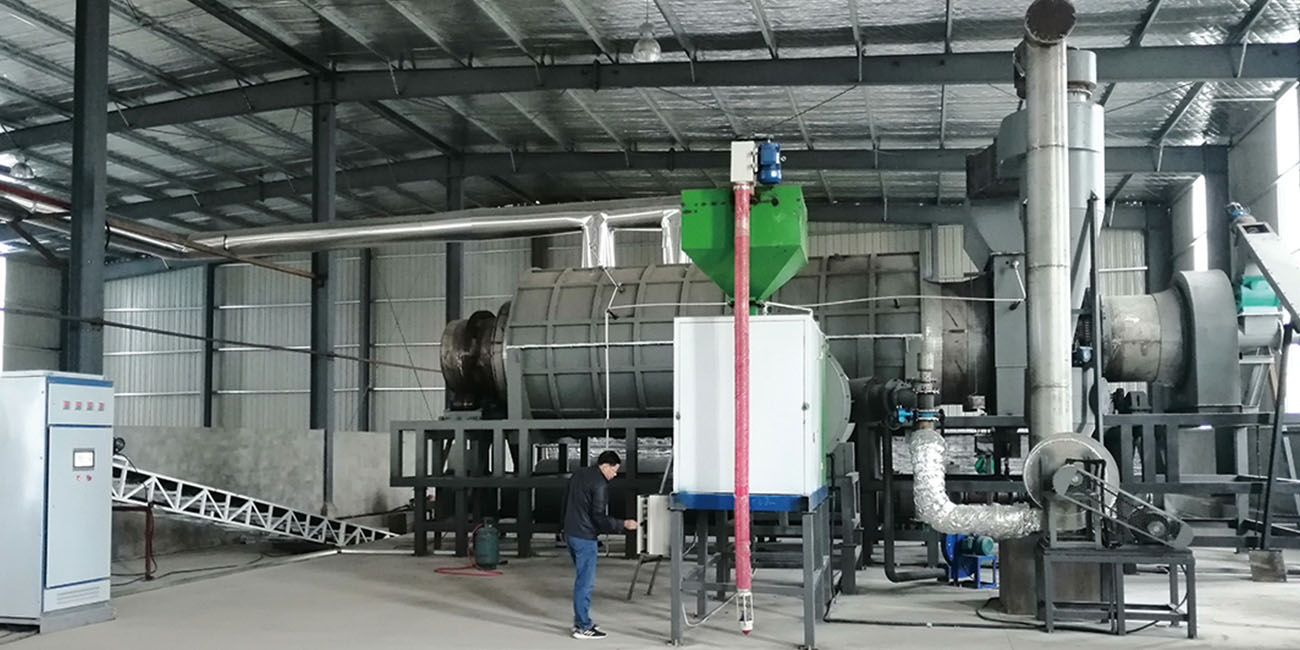
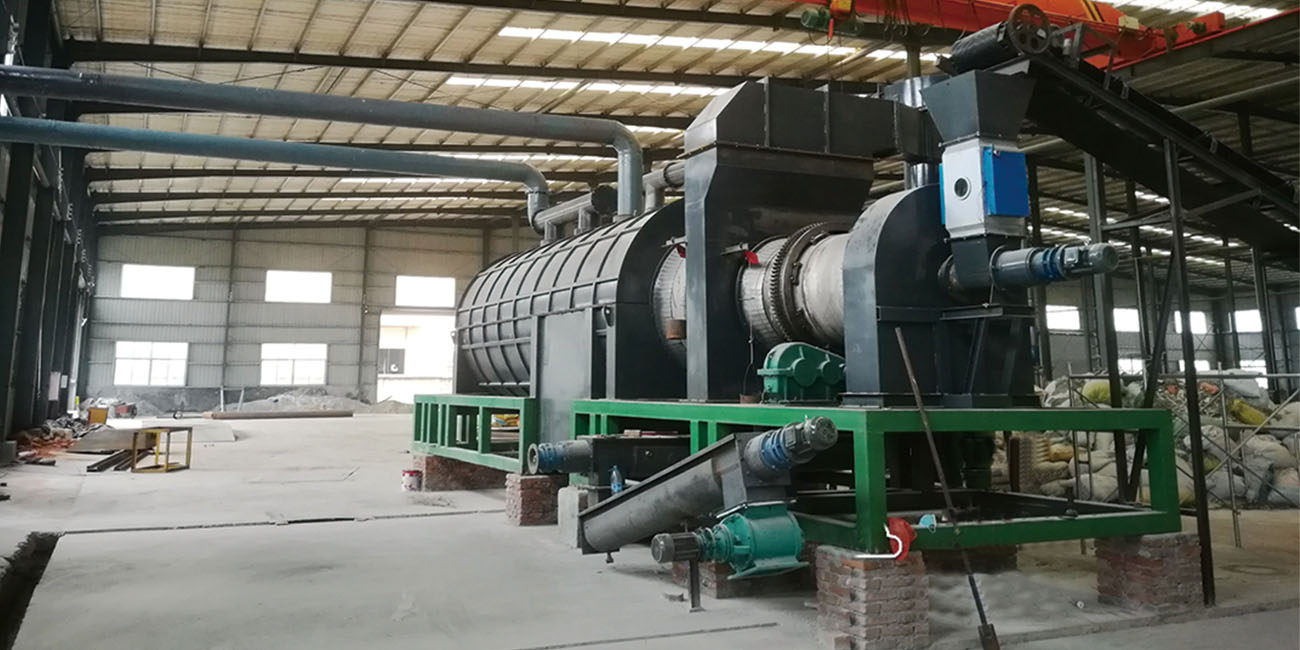
An Agricultural Waste Carbonization Plant is a modernized industrial plant, which is developed to transform different types of agricultural residues and biomass wastes into valuable carbonized products through controlled pyrolysis processes. This is a clean technology that recycles agricultural wastes like rice husks, coconut shells, corn cobs, sugarcane bagasse, wheat straws, and other organic wastes into quality biochar, activated carbon, and renewable sources of energy. Carbonization is performed in an oxygen limited or non-oxygen environment at high temperatures, normally between 300°C and 900°C, and involves degrading the complex organic compounds into carbon-rich solid matter and the release of combustible gases, which can be used to generate energy. These plants are a sustainable solution to agricultural waste, which will not only solve the environmental pollution due to the open burning of agricultural residue but also counter the increasing need of carbon-based products in the different industries. In addition to minimizing the emission of greenhouse gases, the technology is capable of generating an economic value through materials that would otherwise be treated as waste, which adds to the principles of a circular economy and sustainable agricultural practices.
Agricultural Waste Carbonization Plant by Kerone is a better option than the others as it is a viable and efficient waste-to-value conversion solutions provider with a high degree of reliability and environmental responsibility. Over a long history of being leaders in the manufacturing of thermal processing equipment, Kerone has designed the state-of-the-art carbonization systems which are characterized by the use of state-of-the-art engineering, sturdy construction, and intelligent automation to provide a consistent performance and high-quality products. We have very modern emission control systems on our plants, which are set up in a way that allows them to comply with the strict environmental rules and regulations whilst getting maximum energy out of the carbonization process. Kerone is also dedicated to customization, which implies that each plant is designed to deal with a particular type of agricultural waste, production needs, and guarantee maximum efficiency and ROI. We will provide a complete after-sales support, such as installation instructions, training of the operators and prompt maintenance services so that your carbonization plant is able to perform to its best capacity during the entire period of operation. Through Kerone, you will find yourself in a company that has a good reputation, has focused on innovation, quality, sustainability, and client success in all projects that we have ventured into.
Types and Features of Agricultural Waste Carbonization Plant
In terms of the type of feedstock, Agricultural Waste Carbonization Plants are available in different designs to meet the demands of other scales and operational sizes, such as continuous carbonization plants to provide large-scale volumes of carbonized products, batch-type carbonizers to handle smaller volumes and other types of feedstocks, and rotary kiln carbonizers to uniformly heat divergent biomass feed. Some of the advanced features that have been adopted in the modern carbonization plants are automated temperature control systems that maintain the optimum pyrolysis conditions, gas collection and combustion chambers that collect and use the volatile gases to generate heat on its own, high-quality insulation materials that reduce heat loss and enhance the efficiency of the processes, pollution control units like cyclone separators and scrubbers to help in ensuring clean emissions, automated third-level control systems called PLC that ensures that the processes are accurately monitored and controlled, multiple-step cooling systems that allow safe handling of the carbonized products, and The plants can also have pre-treatment area on material reduction in size and moisture level so that the feedstock has uniform quality to achieve the best carbonization outcomes.
Key Features
High Carbonization Efficiency
The design of the reactor will be of high efficiency so that all the material of agricultural wastes is converted to high-quality biochar with a carbon content over 80% to optimize the products and maximize the process efficiency.
Energy Self-Sufficiency
Combustion system and gas recovery Introduces volatile organic compounds emitted in the pyrolysis process and recycles them as fuel, which greatly decreases the external energy needs and cost of operation.
Environmental Compliance
It has multi-stage emission control units such as gas scrubbers, dust collectors and condensers that remove the toxic emissions and maintain compliance with international environmental standard provisions.
Flexible Feedstock Processing
Has the ability to process a variety of agricultural waste products such as rice husks, coconut shells, bamboo, wood chips, corn stalks, and a variety of crop residues without undergoing major changes.
Automated Process Control
Advanced PLC-based control systems which have touchscreen interfaces allow the temperature, residence time and other key parameters to be monitored and adjusted with accuracy to ensure uniform product quality.
Robust Construction
Constructed using refractory material of high grade and heat-resistance steels capable of surviving high temperatures of operation as well as operating in corrosive conditions, leading to a long life of service and low maintenance needs.
Continuous Operation Capability
Designed to operate 24/7 with an automated feeding and discharge system that allows maximum productivity and labour costs to be minimised without compromising on the quality of output.
Safety-Centric Design
It involves the integration of various safety elements such as pressure relief system, an emergency shutdown system, a temperature alarm, and a fire suppression system to safeguard people and equipment.
Powered by AI, ML & IoT
Future-Ready Engineering Driven by AI & IoT
Our advanced AI, ML, and IoT technologies, this solution delivers smarter automation, real-time insights, and predictive intelligence to enhance efficiency and drive future-ready growth.
Real-Time Monitoring & Control
Continuous tracking of process parameters with instant adjustments.
Predictive Maintenance
Intelligent fault detection to prevent failures before they occur.
Adaptive Process Optimization
Dynamic tuning of operations for maximum output and efficiency.
Cloud Dashboards & Analytics
Unified access to real-time insights and performance trends.
Energy & Resource Savings
Smarter utilization of energy to cut costs and reduce waste.
Secure IoT Connectivity
Encrypted data flow with seamless integration across plant systems.
Applications of Agricultural Waste Carbonization Plant
The Agricultural Waste Carbonization Plants by Kerone are widely utilized in various industries in search of the sustainable answers regarding waste management and the production of carbon products. They are commonly used in:
Soil Amendment and Agriculture: Biochar production to improve the agricultural soil quality in terms of water retention, nutrient availability and microbial activity, in addition to sequestration of carbon on the agricultural land as a measure to mitigate climate change.
Activated Carbon Manufacturing: This involves the production of activated carbon of premium grade using the agricultural waste to be used in water purification systems, in air filtration systems, in food processing, and in pharmaceutical industries.
Renewable Energy Generation: The biomass waste is converted to solid fuel with high calorific value to be used in the industrial boilers, power plants and heating systems to substitute the fossil fuel and carbon footprint.
Metallurgical Industry: Charcoal production, which is used in the smelting of the metals in small-scale smelting of iron and steel industries, foundries, and in the non-ferrous metal processing plant.
Chemical Industry: Producing the raw materials of specialty chemicals, such as silicon carbide, carbon disulphide, and other carbon-based industrial materials, which contain a lot of carbon.
Environmental Remediation: Developing biochar adsorbents in the treatment of contaminated soil, purification of wastewater and pollution control in the industrial and municipal environments.
The need to invest in an Agricultural Waste Carbonization Plant by Kerone can be described as a strategic choice which will deal with environmental threats, as well as establish significant economic opportunities. With the ongoing increase in the global recognition of sustainable practices and stricter regulations on burning agricultural waste, carbonization technology is a proven avenue of converting a liability into a profitable venture. The product diversity that carbonized products offer as a product, such as biochar to the agricultural sector, and as an activated product to the industrial sector presents the opportunity of numerous revenue streams and market resilience. Kerone is determined to excel in engineering with an appreciation of thermal processing needs coupled with our knowledge of the same, we have carbonization plants that provide excellent performance, reliability and investment worth. We do not only supply equipment, but also support the plant lifetime to make sure that your operation meets its productivity and sustainability objectives. Through the innovative technology, the enterprise would be involved in circular economy standards, minimize environmental effects, and be ahead of others regarding sustainable industrial practices and create valuable products by using what was once thought of as waste.
Seamless Export Connections Global & Local
Our Global Footprint in Industrial Excellence
Delivering world-class industrial and process solutions across countries with precision, innovation, and reliability.
Peru
Chile
Argentina
Mexico
Colombia
Brazil
USA
Canada
United Kingdom
France
Germany
Spain
Italy
Netherlands
Sweden
Switzerland
Poland
Portugal
Ireland
Czechia
Romania
Hungary
Austria
Greece
Kazakhstan
Uzbekistan
Turkmenistan
Algeria
Egypt
Nigeria
Kenya
South Africa
Saudi Arabia
UAE
Israel
Russia
India
China
Japan
South Korea
Thailand
Vietnam
Malaysia
Singapore
Indonesia
Philippines
Australia
New Zealand
Pan-India Presence. Local Expertise.
Raipur
Bilaspur
Panaji
Vasco da Gama
Gandhinagar
Ahmedabad
Surat
Chandigarh
Gurgaon
Shimla
Manali
Bengaluru
Mysore
Kochi
Pune
Mumbai
Thane
Navi Mumbai
Hyderabad
Chennai
Coimbatore
Kolkata
Lucknow
Jaipur
Udaipur
Jodhpur
Dehradun
Haridwar
Bhubaneswar
Product Gallery
Frequently Asked Questions (FAQ)
The biomass materials that can be processed with the help of Agricultural Waste Carbonization Plants are very diverse and include rice husks, wheat straw, corn stalks and cobs, coconut shells and fibres, palm kernel shells, sugarcane bagasse, cotton stalks, bamboo, wood chips, sawdust, coffee husks, peanut shells and other crop residues. The most important one is that the material must contain a low level of moisture (preferably under 20%) and must be of the required size to fit the feeding system.
The time required to carbonize is determined by the nature of the feedstock and the nature of the plant. The conventional batch-type systems achieve carbonization cycles of 6-12 hours each, and continuous carbonization facilities achieve material residence times of 2-4 hours in the running system. Up to constant ratio between the raw material feeding and the cooled biochar collection in continuous systems, the whole process may be continuous 24/7 once the plant is in steady-state operation.
Biochar synthesized in plants processing agricultural wastes in the carbonization process usually attains an average carbon content of between 70-85 % with respect to the type of feedstock, temperature, time of carbonization, and residence time. Increased temperatures (700-900°C) tend to generate biochar more rich in fixed carbon, whereas reduced temperatures (300-500°C) retain more volatile material and functional groups which are useful in some soil remediation procedures.
Yes, the modern carbonization plants that are installed in Kerone have energy recovery systems to trap the volatile gases emitted during pyrolysis and burn them. These gases can offer substantial heat energy which is recycled into the process and thus the system is self-sustaining to a large extent after it has started at the beginning. When feedstock properties and design of the plant are taken into consideration, external fuel may be cut down by 60-80%. in comparison with the systems without gas recovery.
Carbonization plants have several environmental advantages, such as destroying the open burning of agricultural wastes resulting in air pollution and greenhouse gas emissions, biochar uses in soils, decreased landfill wastes, generation of renewable solid fuels, and generation of products that can be used to treat contaminated soils and water. The regulated process also averts the emission of methane that is produced as a result of natural decomposition of organic waste.
Agricultural Waste Carbonization Plants Kerone have been designed to operate on a long-term basis with a lifespan of 15-20 years under normal conditions. Routine maintenance involves frequent checking of refractory linings (annually or even every bi-annually depending on intensity of usage), washing of gas ducts and emission control devices, lubrication of moving parts and replacement of wear parts like seals and conveyor parts. Good building and construction materials reduce the downtime and maintenance expenses.
Absolutely. Kerone focuses on specific solutions that are related to client needs. We can offer our carbonization facilities in different capacities, such as small plants that treat 500 kg/day to large industrial plants that treat 50 or more tons/day. We collaborate closely with the clients to learn about their feedstock supply, space limitation, production targets, and budget in order to develop the best solutions that would be most efficient and profitable.
Kerone offers an extensive after-sales service that includes on-site commissioning and performance testing, in-depth operator training on process operation and safety, regularly scheduled preventive maintenance and maintenance policies, a ready supply of spare parts, remote technical support in troubleshooting, periodic performance audits and upgrading recommendations to improve efficiency. Our technical service team also works round the clock to make sure your plant functions at its highest level throughout its service life, which is optimal, giving you a good payoff.
Raw crop residue rarely goes straight into the reactor. Most operations first pass rice husks, corn stalks, or bagasse through a shredder or hammer mill to get a uniform particle size, then through a dryer if moisture is above the target range. This pre-treatment step matters because uneven material causes inconsistent heating and lower biochar quality. Kerone's agricultural carbonization systems can include an integrated size-reduction and drying section, so feedstock arrives at the reactor already conditioned for steady, efficient pyrolysis without needing a separate processing line.
Both start from the same carbonized base, but activated carbon goes through an extra activation step, either steam or chemical, that opens up its pore structure and dramatically increases surface area. Biochar is typically used as-is for soil amendment or carbon storage, while activated carbon is refined further for filtration, purification, or adsorption applications. Kerone's agricultural waste carbonization plants can be configured to produce either output, depending on whether your priority is soil health products or industrial-grade adsorbent material.
Because the process runs in a sealed, oxygen-limited chamber rather than an open fire, most volatile compounds are captured rather than released into the air. Gas collection systems route smoke and vapors through condensers and scrubbers before any exhaust leaves the plant, which significantly cuts down on the smell associated with traditional open burning. Well-maintained seals, gaskets, and negative-pressure zones around the feeding and discharge points further limit odor escape during normal operation.
Freshly cut residue with high moisture content will slow the process and reduce energy efficiency if fed in as-is. Kerone recommends drying feedstock to below 20 percent moisture before carbonization, either through natural sun drying, mechanical dryers, or a pre-treatment module built into the plant. Processing overly wet material forces the system to burn more energy just evaporating water instead of carbonizing the biomass, which lowers biochar yield and can affect product consistency.
Quality checks typically look at fixed carbon content, ash percentage, pH, particle size, and surface area, depending on the intended application. Labs use methods like proximate analysis and sometimes BET surface area testing for biochar destined for filtration or activated carbon use. Kerone plants with PLC-based monitoring log temperature and residence time data throughout each batch or run, which helps operators correlate process settings with the resulting product properties and maintain consistent output over time.
Operators need to understand high-temperature equipment handling, gas system safety, emergency shutdown procedures, and basic troubleshooting for feeding and discharge systems. Kerone provides on-site training covering these areas along with hands-on practice on the specific plant configuration installed. Training typically includes recognizing warning signs like unusual pressure readings or temperature spikes, proper use of personal protective equipment, and correct response steps during an emergency shutdown or fire suppression activation.
Yes, this is a common approach for agricultural operations testing the market for biochar or activated carbon before committing to large-scale infrastructure. Kerone designs many of its agricultural waste carbonization systems with modular expansion in mind, so additional processing modules or a larger reactor can be added later without discarding the original investment. Starting small also lets operators fine-tune feedstock handling and product quality before scaling up.
Kerone’s custom-designed heating and processing solutions are built to meet the demands of your growing operations. Whether you’re upgrading equipment, expanding production, or need a tailor-made solution


 Peru
Peru Chile
Chile Argentina
 Mexico
 Colombia
 Brazil
 USA
USA Canada
 United Kingdom
 France
 Germany
 Spain
Spain Italy
Italy Netherlands
 Sweden
 Switzerland
 Poland
 Portugal
 Ireland
 Czechia
 Romania
 Hungary
 Austria
 Greece
 Kazakhstan
 Uzbekistan
 Turkmenistan
 Algeria
 Egypt
Egypt Nigeria
 Kenya
Kenya South Africa
 Saudi Arabia
 UAE
UAE Israel
 Russia
 India
India China
China Japan
Japan South Korea
 Thailand
 Vietnam
 Malaysia
 Singapore
 Indonesia
 Philippines
 Australia
 New Zealand