

Industrial Calcination – Process, Equipment, Challenges & Industrial Applications
Calcination is one of the oldest thermal processes used in manufacturing, and it is still one of the most important. Plant engineers and procurement managers rely on it to turn raw ores, minerals, and chemical compounds into usable industrial materials by driving off moisture, carbon dioxide, or other volatile components through controlled heating.
Industrial calcination is a thermal process where a solid material is heated to a high temperature, usually below its melting point, to bring about a chemical or physical change. Unlike simple drying, calcination changes the material at a molecular level, which is why it plays a central role in industries such as cement, lime, ceramics, chemicals, metallurgy, and battery materials.
This guide walks through how the industrial calcination process works, the equipment used to run it, the temperature ranges involved, the common problems plants run into, and how the right equipment choice affects product quality and operating cost. Along the way, we introduce the equipment types, rotary calciners, flash calciners, fluidized bed calciners, rotary kilns, tunnel kilns, and shaft kilns that make calcination possible at industrial scale.
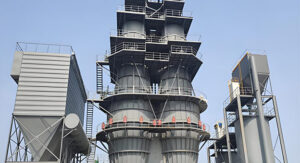
What is Industrial Calcination?
Industrial calcination is a process where solid raw materialiser heated to make big changes happen. This process is done in an oven called a furnace, kiln or calciner. The material is heated to a high temperature but not so high that it melts. This temperature is just right to make the material change. It still stays in its solid form.
The reason for doing calcination is different depending on the industry. For example, in the cement industry calcination is used to turn limestone into lime. This happens when carbon dioxide is released from the limestone. In the chemical industry calcination is used to make catalysts work better or to remove water from compounds. When making ceramics or battery materials calcination helps create the structure for the final product.
Calcination is not the same as drying. When you dry something, you are only removing the moisture from the surface. This happens at a low temperature and the material does not change chemically. Calcination on the other hand, is a big change that happens to the material. It breaks down parts of the material like carbonates or hydroxides and changes the material forever. This is a chemical change, not just a surface change. Industrial calcination is used to make these big changes happen to the material. It is an important step, in making many different products.
How Industrial Calcination Works
Regardless of which equipment is used, most industrial calcination processes follow the same basic sequence of stages. Understanding this flow helps in selecting the right equipment and in troubleshooting quality issues later.
- Material feeding: Raw material is fed into the calciner or kiln at a controlled rate, often after crushing or sizing to a consistent particle size.
- Thermal decomposition: At the target temperature, the chemical reaction takes place carbonates release CO2, hydrates lose bound water, or the crystal structure changes.
- Cooling: The calcined material is cooled in a controlled manner to prevent re-hydration, cracking, or unwanted reactions with air.
- Final discharge: The finished product is discharged, screened if needed, and moved to storage or the next process step, such as grinding or packaging.
In continuous plants, these five stages happen in one connected flow inside equipment such as a rotary kiln or rotary calciner. In batch plants, each stage is completed for one load of material before the next batch begins.
Industrial Calcination Process Step by Step
- Material Preparation – Raw material is crushed, screened, and sometimes blended to achieve a uniform particle size. Consistent sizing matters because uneven particles heat at different rates, which can lead to under-calcined or over-calcined material in the same batch.
- Feeding – Prepared material is fed into the calciner through a hopper, screw feeder, or belt conveyor. Feed rate is closely controlled, since overloading the equipment reduces residence time and heating uniformity.
- Controlled Heating – The material moves through defined heating zones. Temperature is monitored and adjusted at each zone so the material reaches the exact range needed for the reaction, without overshooting into sintering or melting territory.
- Chemical Transformation – This is the core of the process. Depending on the material, this stage removes chemically bound water, releases carbon dioxide, or restructures the crystal lattice, resulting in the calcined product.
- Cooling – The hot calcined material passes through a cooling zone or a separate cooler, such as a rotary cooler, to bring it down to a safe handling temperature while protecting the product from moisture pickup.
- Product Collection – The cooled material is collected, screened for particle size, and transferred to storage silos or downstream processing such as grinding, packaging, or blending.
Types of Industrial Calcination Processes
Industrial calcination is generally run in one of two operating modes: continuous or batch. The choice between them affects throughput, product consistency, labour needs, and capital cost.
| Factor | Continuous Calcination | Batch Calcination |
| Throughput | High, suited for large daily volumes | Lower, suited for smaller or varied volumes |
| Product consistency | Very uniform once the process is stable | Can vary batch to batch if not tightly controlled |
| Best fit | Cement, lime, alumina, large mineral plants | Specialty chemicals, R&D, low-volume materials |
| Startup and shutdown | Less frequent, more energy-efficient over time | Happens every cycle, more energy per unit of output |
| Typical equipment | Rotary kiln, rotary calciner, flash calciner | Batch type calciner, rotary retort furnace |
Continuous calcination processes suit plants that run the same material around the clock, since the equipment stays at a stable temperature and avoids repeated heating and cooling cycles. Batch calcination processes give more flexibility for plants that handle multiple products, smaller order sizes, or materials that need close monitoring during the reaction.
Industrial Calcination Equipment
Choosing the right calciner or kiln has a direct effect on product quality, fuel consumption, and maintenance cost. Here is an overview of the equipment types commonly used across calcination applications.
Rotary Calciner
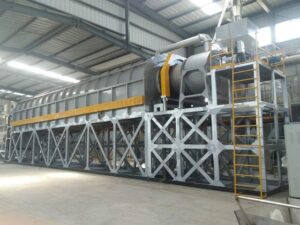 A rotary calciner is a kind of machine that uses heat to process materials. It is like a drum that rotates and the heat comes from the outside. The heat goes into the drum. Warms up the materials inside without actually touching them. This is good for jobs where we need to keep the air clean and not mix it with bad gases. The rotary calciner is useful for things like chemical powders, catalyst supports and specialty compounds. These are materials that need to be handled because they are sensitive to temperature and the air around them.
Applications: fine chemical powders, catalyst supports, specialty compounds where atmosphere control matters. Advantages: precise temperature control, low exhaust gas volume, good for heat-sensitive fine materials.
Flash Calciner
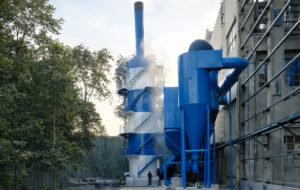 A flash calciner exposes finely ground material to hot gas for a very short time, often just a few seconds, which makes it a fast and fuel-efficient option for materials that calcine quickly, such as calcined clay used in cement blends.
Applications: calcined clay, fine powders needing rapid heat exposure, cement alternative binders. Advantages: very short residence time, tight temperature accuracy, lower fuel use per tonne for suitable materials.
Fluidized Bed Calciner
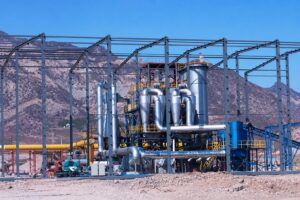 In a fluidized bed calciner, hot gas is passed upward through a bed of powder at a velocity that suspends the particles, creating a fluid-like state. This gives extremely uniform heat and mass transfer across every particle, which is valuable for fine powders that are hard to heat evenly in other equipment.
Applications: fine powders, catalysts, pigments, salts that need uniform calcination. Advantages: excellent temperature uniformity, efficient gas-solid contact, good scalability.
Rotary Kiln
 A rotary kiln is a long, inclined, rotating cylindrical shell that moves bulk material from the feed end to the discharge end through gravity and rotation. It is the workhorse of large-scale calcination, used across cement, lime, alumina, and metallurgical processing where high volumes and continuous operation are needed.
Applications: limestone and dolomite calcination, alumina production, ore roasting, pyrolysis of organic feedstocks. Advantages: high throughput, proven reliability at industrial scale, flexible fuel options
Tunnel Kiln
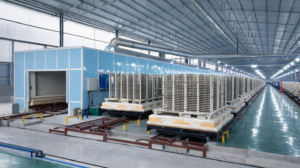 A tunnel kiln moves material through a long, fixed tunnel on cars or trays while passing through distinct pre-heating, firing, and cooling zones. This design is well suited for shaped or packaged products, such as refractory bricks or ceramic components, that need a steady, repeatable thermal profile.
Applications: refractories, ceramics, shaped calcined products. Advantages: consistent firing profile, good for products that cannot tumble freely.
Shaft Kiln
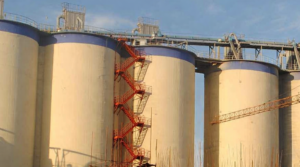 A shaft kiln is a vertical, fixed structure where material descends by gravity through preheating, calcining, and cooling zones while combustion air moves upward. Shaft kilns are compact and fuel-efficient for lump or nodular material such as limestone.
Applications: lime and dolomite calcination, smaller-capacity plants. Advantages: lower footprint, good heat recovery, lower capital cost than large rotary systems.
Choosing the Right Calcination Equipment
Selecting calcination equipment is not a one-size-fits-all decision. Plant engineers and procurement teams typically weigh the following factors before finalizing a system:
- Capacity: required daily or hourly throughput of calcined material.
- Material type: powder, granule, or lump, and how it behaves when heated.
- Residence time: how long the material must stay at temperature for complete reaction.
- Moisture content: affects preheating needs and energy consumption.
- Fuel availability: natural gas, LPG, biomass, coal, or electric heating.
- Automation level: manual controls versus PLC and SCADA-based automation.
- Temperature requirements: matching equipment design to the material’s calcination range.
Kerone’s engineering team works with plant engineers to evaluate these factors and recommend equipment sized to the actual process, rather than a generic catalogue unit.
Industrial Applications of Calcination
Chemical Industry
Calcination is used to activate catalysts, remove crystal water from compounds, and produce specialty chemical intermediates that require a precise thermal history.
Mineral Processing
Ores and minerals are calcined to remove volatile components before further processing, improving downstream extraction and reducing transport weight.
Cement
Limestone calcination is the foundation of clinker production, releasing carbon dioxide to form lime, which then combines with other raw materials to form clinker.
Ceramics
Calcination prepares raw ceramic powders by removing organic binders and adjusting particle characteristics before firing or sintering.
Battery Materials
Cathode and precursor materials for lithium-ion batteries go through precise calcination steps to achieve the correct crystal structure and particle morphology.
Metal Processing
Calcination supports ore roasting, reduction, and the preparation of metal oxides prior to smelting or refining.
Environmental Applications
Calcination is used in waste treatment and thermal destruction processes, helping stabilize certain waste streams before disposal.
Common Challenges in Industrial Calcination
Even well-designed calcination plants run into recurring operational issues. The table below outlines common challenges, their usual causes, and practical solutions.
| Challenge | Common Cause | Solution |
| Uneven heating | Inconsistent particle size or poor material distribution | Improve feed sizing and optimize rotation or bed design |
| Heat loss | Poor insulation or worn refractory lining | Upgrade insulation and schedule refractory maintenance |
| Dust generation | Fine particles carried by exhaust gas | Install proper dust collection and adjust gas velocity |
| Poor temperature control | Inadequate sensors or manual control | Add PLC-based automation with multiple monitoring points |
| High fuel consumption | Inefficient burner setup or heat loss | Optimize burner tuning and add waste heat recovery |
| Low product quality | Incorrect residence time or temperature profile | Recalibrate process parameters through trial runs |
| Ring formation | Material buildup on kiln walls due to partial melting | Adjust temperature profile and use anti-buildup linings |
| Residence time variation | Inconsistent feed rate or equipment wear | Stabilize feed rate and maintain rotation/incline settings |
Improving Calcination Efficiency
- Automation: PLC and SCADA systems keep temperature and feed rate within tight limits.
- Waste heat recovery: reusing exhaust heat for preheating reduces overall fuel demand.
- Temperature monitoring: multiple sensor points catch deviations before they affect product quality.
- Fuel optimization: matching burner settings and fuel type to the process reduces cost per tonne.
- Proper insulation: reduces shell heat loss and improves worker safety.
- Modern control systems: give operators real-time visibility and faster response to upsets.
- Preventive maintenance: scheduled refractory and mechanical checks avoid unplanned downtime.
Why Modern Calcination Technology Matters
Older calcination plants often run on manual controls and fixed heating profiles, which leaves little room for optimization. Modern calcination technology brings measurable gains in several areas: energy efficiency through better heat recovery and insulation, automation that reduces operator dependency and human error, reduced emissions through improved combustion control, higher productivity from stable and predictable operation, more consistent product quality batch after batch, and remote monitoring that lets engineers track performance and catch issues from outside the plant floor.
Why Choose Kerone for Industrial Calcination Systems?
Kerone Engineering Solutions Ltd. has been designing industrial thermal processing equipment since 1976, and its calcination systems are built around the specific material and process requirements of each client rather than a fixed catalogue design.
- Customized engineering solutions built around your material and capacity needs.
- A full equipment range, including Rotary Calciners, Flash Calciners, Fluidized Bed Calciners, Rotary Kilns, Tunnel Kilns, and Shaft Kilns.
- Related equipment such as the Batch Type Calciner, Rotary Retort Furnace, and Rotary Cooler for complete process lines.
- Turnkey plant solutions, from process design through installation and commissioning.
- Energy-efficient designs aimed at reducing fuel and power costs per tonne of output.
- PLC and SCADA integration for automated, repeatable process control.
- Installation and after-sales support, including refractory and mechanical maintenance.
Conclusion
Industrial calcination remains a core process across cement, minerals, chemicals, ceramics, battery materials, and metallurgy. Getting it right depends on more than just reaching a target temperature, it requires the right equipment, the right process design, and consistent monitoring to protect product quality while keeping operating costs under control.
Whether a plant needs a rotary calciner for fine powders, a rotary kiln for high-volume mineral processing, or a shaft kiln for compact lime production, matching the equipment to the material and the application is what separates an efficient plant from a costly one. Kerone works with plant engineers and procurement teams to design and deliver customized, energy-efficient calcination systems suited to the specific material and industry involved.
Frequently Asked Questions
What is industrial calcination used for?
It is used to remove moisture, carbon dioxide, or other volatile compounds from raw materials through controlled heating, producing materials like lime, calcined clay, and processed minerals used in cement, chemicals, and ceramics.
How is calcination different from roasting?
Calcination is usually carried out without excess air, focused on thermal decomposition of the material itself, while roasting involves reactions with air or other gases, often to convert sulphides or change oxidation states.
What temperature is needed for calcination?
It depends on the material. Gypsum calcines around 150°C to 250°C, while alumina and limestone typically need 850°C to 1,200°C.
What is the difference between a rotary kiln and a rotary calciner?
A rotary kiln is usually direct-fired and built for high-volume continuous processing, while a rotary calciner is typically indirectly heated, offering tighter temperature control and lower exhaust gas contact for fine or sensitive materials.
Is calcination a continuous or batch process?
It can be either. Continuous calcination suits high-volume, steady operations like cement and lime plants, while batch calcination suits smaller, varied, or specialty production runs.
What materials commonly go through calcination?
Common materials include limestone, gypsum, alumina, kaolin, dolomite, and various chemical compounds and catalyst precursors.
What causes ring formation inside a calciner or kiln?
Ring formation usually happens when part of the material begins to melt or soften due to a localized temperature spike, then sticks and builds up on the equipment wall.
How can a plant reduce fuel consumption in calcination?
Waste heat recovery, burner tuning, proper insulation, and automated temperature control are the most effective ways to cut fuel use without compromising product quality.
What equipment is best for fine powder calcination?
Fluidized bed calciners and rotary calciners are generally preferred for fine powders, since they offer uniform heat exposure and tighter temperature control than large rotary kilns.
Can calcination equipment be automated?
Yes. PLC and SCADA-based systems are widely used to control feed rate, temperature zones, and residence time, improving consistency and reducing manual intervention.
What industries rely most on industrial calcination?
Cement, lime, ceramics, chemicals, battery materials, and metallurgy are the industries with the heaviest reliance on calcination as a core processing step.
How does particle size affect the calcination process?
Larger or uneven particles take longer to heat through and can result in incomplete reaction at the core, while very fine particles heat faster but need better dust control.
What is a shaft kiln used for?
Shaft kilns are vertical, fixed kilns commonly used for lime and dolomite calcination in smaller or mid-capacity plants due to their compact footprint and good heat recovery.
How long does the calcination process take?
Residence time varies widely by material and equipment, ranging from a few seconds in flash calciners to several hours in some rotary kiln or shaft kiln applications.
How do I choose the right calcination equipment for my plant?
Start with your material type, required capacity, and target temperature, then work with an equipment engineering team like Kerone’s to match these needs to the right calciner or kiln design.
