Why Bulk Density Matters in Industrial Biomass Drying Systems
Every industrial biomass drying project begins with the same assumption: control the moisture content, and the dryer will perform as designed. In practice, two feedstocks with identical moisture levels can behave very differently inside the same rotary or belt dryer; one dries evenly within hours, while the other channels air, clumps together, or overheats at the surface while staying wet at the core. The variable most often left out of the conversation is bulk density. Rice husk, bagasse, sawdust, wood chips, and coconut shell all pack, flow, and interact with hot air differently, even when their moisture percentages match on paper. Bulk density affects how air moves through a bed of material, how efficiently heat transfers into individual particles, and how long material needs to stay inside the dryer to reach target moisture, all of which matter before pelletization, gasification, or industrial biochar production begin.
What Is Bulk Density?
The bulk density of biomass material is the weight of the material in a given space, including the spaces between the tiny pieces. This is usually measured in kilograms per meter. It is different from the density of a piece, which only measures the weight of that one piece and does not take into account the empty spaces around it. Two different materials can have the density for a single piece but have very different bulk densities depending on how they are packed together.
There are things that affect the bulk density of a material. The size and shape of the pieces determine how closely they can be packed. If the material is damp, it will be heavier. Might stick together. If the material is pressed down during storage or handling the empty spaces, between the pieces will be smaller. The type of material whether it is stringy, grainy or chopped up also makes a difference. This is important for engineers to know when they are choosing equipment to dry the biomass material.
Common Biomass Materials and Their Bulk Density
Industrial biomass feedstocks vary widely in how they pack and flow, and this variation carries directly into dryer performance. The table below outlines typical bulk density ranges for common materials processed in industrial drying systems and how each tends to behave once inside the dryer.
| Biomass | Approx. Bulk Density | Drying Characteristics |
| Rice Husk | Low | Requires controlled airflow |
| Bagasse | Very Low | High moisture retention |
| Sawdust | Medium | Uniform drying |
| Wood Chips | High | Longer drying cycle |
| Coconut Shell | High | Slow internal heat transfer |
| Corn Stover | Low | Lightweight and fibrous |
As the comparison shows, two lightweight, fibrous materials like bagasse and corn stover behave very differently from dense, structured materials like wood chips or coconut shell. Even within a single facility, seasonal changes in feedstock source can shift bulk density enough to affect drying performance, which is why it deserves attention alongside moisture content during process design.
Why Bulk Density Is Important in Industrial Drying
Airflow Distribution
Low-density materials, such as bagasse or corn stover, are lightweight and tend to float within the drying chamber, allowing hot air to bypass the bed rather than pass evenly through it. This air bypass leads to uneven drying, with some particles overexposed and others left damp. High-density materials, like wood chips or coconut shell, resist airflow more strongly and require carefully optimized air velocity to penetrate the bed without excessive pressure drop.
Heat Transfer Efficiency
Bulk density directly affects how heat penetrates a bed of biomass. Densely packed material limits the contact area between hot air and individual particles, reducing thermal conductivity through the bed and slowing internal heat transfer. Loosely packed material offers more surface contact but can lead to inconsistent heat distribution if airflow isn’t controlled, since heat may concentrate near the surface rather than reaching the core.
Residence Time
Denser materials take longer to move through a dryer and require extended residence time to reach target moisture levels, since heat must penetrate deeper into each particle. Lighter materials move through more quickly, sometimes too quickly for complete moisture removal. Because residence time directly determines how much moisture is actually removed, bulk density has a direct bearing on final product quality.
Dryer Throughput
Two identical dryers can produce very different outputs depending on the feedstock’s bulk density. A dryer sized for wood chips may underperform when fed bagasse, and vice versa, because the relationship between volume, weight, and airflow resistance changes with each material.
How Bulk Density Influences Dryer Design
Because bulk density affects airflow, heat transfer, and residence time, it also shapes the engineering decisions behind dryer selection and configuration.
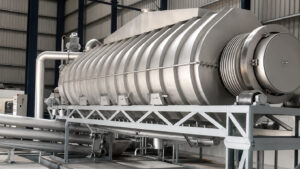
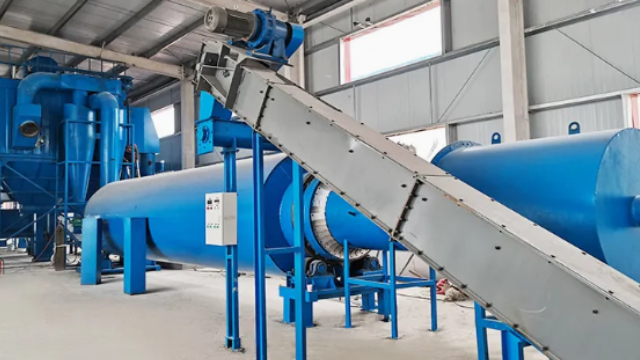
Rotary Dryer
Flight design and drum speed must be matched to the feedstock’s bulk density. Lighter materials need flights configured to lift and shower particles through the airstream without excessive carryover, while denser materials require adjusted fill levels and drum speed to ensure adequate residence time without overloading the drum.
Belt Dryer
Belt dryers depend on bed thickness and air velocity settings that vary with bulk density. A bed too thick for a dense material restricts airflow penetration, while a bed too thin for a light material wastes dryer capacity.
Flash Dryer
Flash dryers rely on particle suspension in a fast-moving airstream, making them best suited to low-density, fine materials that can be lifted and dried within seconds; denser particles may not suspend properly, leading to incomplete drying.
Paddle Dryer
Paddle dryers use mechanical agitation, and mixing efficiency depends on how the material’s bulk density affects flow and heat contact within the unit.
Selecting a dryer based solely on moisture content, without accounting for how a feedstock’s bulk density interacts with each of these mechanisms, often leads to operational inefficiencies once the system is running at scale.
The Link Between Bulk Density and Carbonization
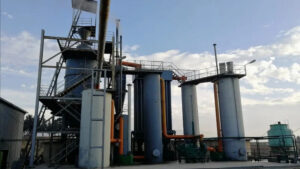
Drying performance has an effect on what happens later during carbonization especially when making biochar. When the weight of the material is taken into account during drying, the material that goes into carbonization has an even amount of moisture. This helps create a predictable carbonization process instead of different reactions happening in different parts of the batch.
When drying is not done properly and bulk density is ignored this problem continues into the carbonization process. More energy is needed to get rid of areas with moisture before the temperature needed for pyrolysis is reached. This means more energy is used and the amount of char produced is not as predictable. Consistent and controlled drying also helps with keeping the temperature steady during carbonization because there is need to fix problems with moisture levels. The result is a uniform quality of biochar from one batch to the next. The structure of the biochar the amount of fixed carbon and the heat it produces are all more predictable. In this way bulk density is not something to think about during drying it is something that affects the whole process of heating the material from when the material is prepared, to when the final biochar is made.
Practical Tips for Engineers
A few practical steps can help engineers account for bulk density before it becomes an operational problem:
- Measure bulk density before dryer selection, not after installation, to size equipment correctly from the start.
- Test moisture content and particle size together, since the two interact to determine how material packs and dries.
- Design for seasonal biomass variation, particularly for agricultural residues where bulk density can shift with harvest conditions.
- Adjust airflow settings based on feedstock characteristics rather than applying one standard configuration across materials.
- Conduct pilot-scale drying trials before full-scale implementation to validate assumptions about residence time and throughput.
How Kerone Supports Industrial Biomass Drying
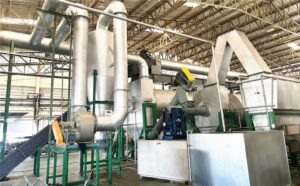
Industrial drying systems perform best when engineered around the specific feedstock they will process, rather than adapted from a generic design. That means accounting for feedstock characteristics, bulk density, moisture content, required capacity, and the intended end-use application, whether that’s pelletization, gasification, or biochar production.
Kerone has experience designing biomass dryers, rotary dryers, and complete biomass processing systems, including biochar production plants, built around these process-specific variables. Approaching drying system design with bulk density as a core input, alongside moisture content, helps ensure equipment performs as intended once it moves from pilot testing to full-scale operation.
Conclusion
Bulk density is a variable that’s easy to overlook in industrial biomass drying, since moisture content tends to dominate the conversation. But as this article has shown, bulk density directly influences drying efficiency, energy consumption, equipment selection, and carbonization performance with downstream effects on final biochar quality. Feedstocks that look similar on a moisture basis can behave very differently inside a dryer once bulk density is factored in.
Considering bulk density during feedstock preparation enables more efficient biomass processing, improved dryer performance, and consistent biochar production.
Frequently Asked Questions (FAQs)
Q1. Why can two feedstocks have the exact same individual particle weight but completely different bulk densities?
Individual particle weight only measures the solid matter itself. Bulk density factors in the void spaces between those particles when piled together. The shape and texture of the pieces dictate how tightly they interlock. Irregular shapes create more air pockets, which lowers the overall weight per cubic meter compared to uniform shapes that pack tightly together.
Q2. How does the initial moisture level of biomass artificially alter its bulk density?
Water adds significant mass. When a material absorbs moisture, water fills internal pores and coats the surface without changing the volume of the pile. Damp materials also tend to clump together, which alters the structural void spaces. This creates a misleadingly high bulk density reading compared to its bone-dry state.
Q3. Does the method of storing biomass before processing impact its drying efficiency?
Yes. When materials are stacked in deep silos or stored for long periods, gravity compresses the bottom layers. This compaction squeezes out the empty spaces between particles and increases the local bulk density. Material fed from the bottom of a pile will behave differently inside the dryer than uncompressed material from the top.
Q4. What is the “air bypass” effect in drying systems, and which materials are most vulnerable?
Air bypass occurs when hot air finds the path of least resistance around a material bed rather than passing through it. Lightweight and fibrous feedstocks like corn stover are highly susceptible. The forced air pushes the material aside or floats it, leaving some areas soaking wet while overbaking the edges.
Q5. Why do dense materials like coconut shells require extended residence times despite holding high heat?
Denser materials have less exposed surface area relative to their mass and fewer internal air pockets. Heat must conduct slowly from the outer crust all the way to a solid core. Rushing this process dries the surface but leaves the centre damp, requiring a much slower processing speed to ensure complete internal moisture evaporation.
Q6. How do engineers physically adjust rotary dryers to handle extremely lightweight biomass?
For light materials, the internal lifting blades (called flights) are customized to gently cascade the product rather than aggressively throwing it. The drum rotation speed and internal air velocity are also scaled back. This prevents the material from being sucked directly out of the exhaust stack before it has time to dry.
Q7. What dictates the optimal bed thickness on a belt dryer when processing varying densities?
It entirely comes down to airflow resistance. Dense materials choke air passage, so operators must spread them into very thin layers to allow hot air to penetrate. Conversely, light materials offer little resistance, so they can be piled into much thicker beds to maximize the carrying capacity of the belt without restricting the airflow.
Q8. Why are flash dryers generally a poor choice for heavy materials like wood chips?
Flash dryers operate by suspending particles in a high-speed vertical airstream, effectively drying them in seconds. Heavy materials lack the aerodynamic profile to stay airborne in this environment. They will simply fall out of the airstream or require an impractical amount of energy to keep suspended, resulting in incomplete drying.
Q9. How do paddle dryers overcome the challenges of tightly packed biomass?
Paddle dryers rely on mechanical mixing rather than blowing hot air through a stationary pile. The physical agitation constantly breaks up compacted materials, exposing new surfaces to the heated through and paddles. This active mixing negates the airflow resistance issues normally associated with high-density feedstocks.
Q10. Why must plant operators monitor seasonal changes in agricultural residues?
Agricultural byproducts change based on growing conditions, harvest timing, and weather. A wet harvest season or a slight change in crop variety can alter the fibrous structure of the stalks. This subtly shifts how the material packs together, requiring operators to frequently recalibrate their airflow and feed rates to maintain efficiency.
Q11. How does ignoring bulk density during the drying phase ultimately ruin biochar quality?
If bulk density is ignored, the material exits the dryer with a highly uneven moisture profile. When this inconsistent batch enters the carbonization reactor, the heating rates fluctuate wildly. Some areas burn to ash while others barely carbonize, destroying the structural uniformity and fixed carbon content of the final biochar product.
Q12. In what way does poor bulk density management inflate energy costs during pyrolysis?
Pyrolysis requires strict, steady temperature control. If damp pockets of material enter the reactor due to inefficient drying, the system must consume excess energy just to boil off that residual water before carbonization can even begin. This wastes fuel and extends the processing time unnecessarily.
Q13. Why might a facility process fewer tons per hour when switching from sawdust to bagasse?
Bagasse is incredibly lightweight and voluminous compared to sawdust. A dryer is strictly limited by its internal physical volume. Even if the furnace has the thermal power to dry more weight, the sheer size of the bagasse will fill the chamber to its physical maximum long before the target weight tonnage is reached.
Q14. Can altering the physical shape of a feedstock improve its drying performance?
Absolutely, Milling, chopping, or grinding fibrous materials changes how they interlock. Breaking down long stringy pieces into smaller uniform granules reduces empty void spaces and increases the bulk density. This creates a much more predictable bed of material that interacts evenly with the hot air.
Q15. What specific variables should engineers monitor during pilot-scale drying trials?
Pilot tests should track how a specific density behaves under various air velocities to find the exact threshold where air bypass begins. Engineers also monitor the precise time it takes for heat to penetrate the core of the particles, which dictates the final drum speed or belt speed required for the full-scale facility.
Q16. Why is repurposing generic drying equipment for a new project highly risky?
Generic dryers are usually tuned for an “average” moisture and density profile. If a new feedstock packs tighter or floats easier than the original design intended, the system will suffer from thermal inefficiencies, low output, or even product fires. Customizing the mechanical parameters to the exact bulk density prevents these costly operational failures.