
Industrial Medical Waste Incinerators for Hospitals – Types, Capacity & Selection Guide
Every hospital bed makes a lot of waste that cannot just be thrown into a bag and sent to a landfill. This waste includes bandages, used needles, tissue from operations and leftover medicine. All of these things can have germs that can hurt patients, staff and people who live nearby if we do not get rid of them properly.
For the people who buy things for hospitals and the biomedical engineers the big question is not whether to get rid of this waste; it is which kind of medical waste incinerator for hospitals or steam sterilization system is best for the hospitals waste, budget and what the rules say they have to do.
This guide breaks down both major treatment technologies so you know exactly what to specify when you request a quote.
Why Hospitals Can’t Treat Medical Waste Like Regular Trash
Healthcare facilities produce two kinds of waste. The first kind is like the trash we throw away at home. The second kind is called medical waste. This includes things like objects, materials that have blood on them and tissues from patients. If we do not treat medical waste, it can spread diseases and make the soil and water dirty.
Many organizations around the world like the Central Pollution Control Board in India, the U.S. EPA and the World Health Organization have rules about what to do with this waste. They say that regulated medical waste needs to be made safe at the place where it is produced or, at a facility before we can get rid of it.
There are two ways to make regulated medical waste safe. One way is to burn it, which is called destruction. The other way is to use steam to clean it, which is called disinfection or steam sterilization. Regulated medical waste is made safe through one of these two methods.
How Does Medical Waste Incineration Work?
Medical waste incineration is a high-temperature dry oxidation process that breaks waste down into ash and flue gas while destroying pathogens completely. The medical waste incineration process explained step by step:
- Loading: Segregated waste enters the primary chamber, often via an automated ram to limit handling.
- Primary combustion: Waste decomposes under oxygen-deficient, medium-temperature conditions (roughly 800–1000°C), converting organic matter into gas and ash.
- Secondary combustion: Flue gases pass into a secondary chamber where higher heat ensures complete oxidation, eliminating most visible smoke and odour.
- Emission control: Scrubbers and filters strip particulates and acid gases before exhaust release.
- Ash discharge: Sterile ash, a small fraction of the original volume, is collected for landfill disposal.
This is why incineration remains the only method that fully destroys pathological waste, chemotherapy residues, and certain pharmaceuticals that other treatments can’t safely process.
Types of Industrial Medical Waste Incinerators
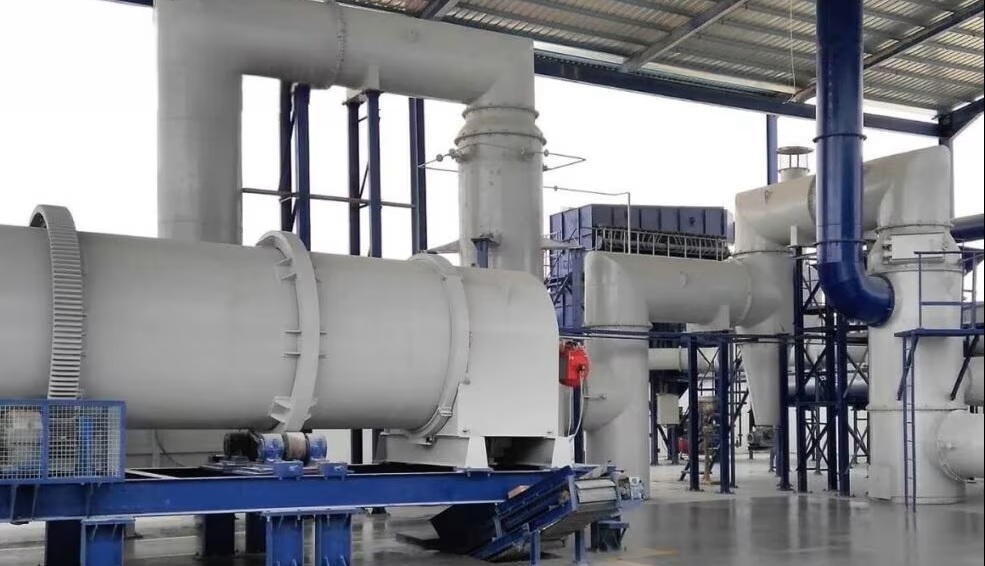
- Rotary kiln incinerators: A rotating chamber exposes mixed or hard-to-burn waste to heat uniformly, common at large regional facilities.
- Fluidized bed incinerators: Waste is injected into a turbulent heated bed for rapid, high-throughput combustion.
- Single-chamber incinerators: Simplest, most affordable; no secondary combustion stage, so emissions control is weaker.
- Double-chamber (pyrolytic) incinerators: The hospital industry standard. A primary pyrolytic chamber plus a post-combustion chamber ensures near-complete pathogen destruction with low emissions.
- Mobile/containerized incinerators: Trailer- or skid-mounted units for rural clinics, disaster response, or field hospitals.
What Is Steam Sterilization in Waste Management?
Steam sterilization, performed through autoclaving, disinfects rather than destroys. A steam sterilization autoclave for biomedical waste treatment plant application exposes sealed waste to saturated steam under pressure, raising internal temperature high enough to kill bacteria, viruses, and most spores.
Standard cycles run at 121°C (250°F) under roughly 15 psi, with bagged biohazard loads commonly needing 30 minutes or more in gravity displacement cycles; higher-temperature pre-vacuum cycles at 132–134°C can shorten exposure to a few minutes. Cycle parameters are validated with biological indicators to confirm sterilizing conditions reached the load’s core, not just the chamber wall. Waste is typically shredded afterward to reduce volume before landfill disposal.
Why Hospitals Choose Steam Sterilization
A commercial autoclave system for clinical waste sterilisation appeals to facilities wanting to avoid combustion emissions. Benefits include no flue gas or ash to manage, lower energy cost per cycle, simpler permitting in strict air-quality regions, and effective treatment for most general infectious waste: sharps, gloves, gowns and culture material. The trade-off: autoclaves cannot treat pathological waste, chemotherapy/cytotoxic drugs, or certain chemical waste, which require thermal destruction instead.
Incineration vs. Steam Sterilization
| Factor | Incineration | Steam Sterilization |
| Mechanism | Thermal destruction | Thermal disinfection |
| Handles pathological/chemo waste | Yes | No |
| Operating temperature | 800–1,200°C | 121–134°C |
| Emissions | Flue gas needs pollution control | Minimal air emissions |
| Volume reduction | Very high (ash only) | Moderate (post-shredding) |
| Best suited for | Large hospitals, pathology labs | Clinics, general infectious waste |
Many large hospital campuses run both: an autoclave for bulk general waste, and a smaller incinerator reserved for pathological and pharmaceutical waste that sterilization can’t legally treat.
A Brief History of Medical Waste Treatment Technology
Open burning and crude incineration dominated through much of the 20th century, simple but largely uncontrolled for emissions. As awareness of dioxin and particulate output grew through the 1980s and ’90s, regulators pushed manufacturers toward double-chamber pyrolytic designs with proper pollution control. Autoclave technology, long used for surgical instrument sterilization, was adapted for bulk waste treatment around the same period as a lower-emission alternative. Today, modular and remotely monitored systems let even small, rural facilities meet standards once available only to large urban hospitals.
Steam Sterilization for Rural and Remote Healthcare
Rural clinics often generate too little waste to justify a full incinerator but carry the same legal obligation to treat it safely. A modular steam sterilization unit for rural clinics fills this gap, is compact, simple to install without heavy civil work, and built to run on standard power rather than continuous fuel delivery.
How to Choose the Right Waste Treatment System
Before requesting a quotation, consider the following factors:
- Daily waste volume: Estimate the amount of medical waste generated each day, including peak loads.
- Waste type: Identify whether the waste includes infectious waste, sharps, pathological waste, or pharmaceutical waste.
- Special waste requirements: If your facility generates pathological or chemotherapy waste, an incinerator may be required to ensure safe disposal.
- Local regulations: Check your area’s emission standards and environmental regulations, as these influence system selection and approvals.
- Available utilities: Ensure you have the necessary fuel, electricity, and water supply to operate the selected system.
- Future expansion: Choose a system with enough capacity to accommodate future growth in waste generation.
A simple medical waste audit before purchasing will help you select the most suitable system based on actual requirements rather than assumptions.
Why Hospitals Choose Kerone
Kerone designs and manufactures thermal processing equipment built around the realities of healthcare waste, not generic industrial combustion. Our engineers size each system against your facility’s actual waste audit data, configure pollution control to match regional emission norms, and support installation through commissioning and operator training. Whether you need a double-chamber incinerator for a multi-specialty hospital or a modular autoclave for a rural health network, our team works directly with your biomedical and facilities staff to specify equipment that fits your compliance obligations and your budget, not just a catalogue model that’s close enough.
Frequently Asked Questions
1. What is the main difference between incineration and steam sterilization?
Incineration destroys waste through high-temperature combustion, reducing it to ash and flue gas. Steam sterilization disinfects waste using pressurized steam without combustion, leaving the physical waste largely intact (though usually shredded afterward). Incineration handles a broader range of hazardous waste; sterilization is limited to non-pathological, non-chemical infectious waste.
2. Which method is more cost-effective for small clinics versus large hospitals?
Small clinics generally find modular steam sterilization units more cost-effective due to lower fuel needs and simpler permitting. Large hospitals with pathological or chemotherapy waste streams typically need incineration capacity regardless of cost, often supplementing it with autoclaves for general waste to balance overall operating costs.
3. Does steam sterilization eliminate all types of medical waste pathogens?
Properly validated cycles eliminate the vast majority of bacteria, viruses, and fungi, and are validated against bacterial spores as the toughest indicator organism. However, sterilization doesn’t destroy chemical toxins, certain pharmaceutical compounds, or pathological tissue, which require incineration instead.
4. Can incinerators process pharmaceutical and chemotherapy waste?
Most properly designed double-chamber incinerators can process non-hazardous pharmaceutical waste and some chemotherapy (cytotoxic) waste at high temperatures, but this requires specific chamber temperatures and residence times. Always confirm with the manufacturer that a given model is rated for the exact waste category before processing it.
5. How long does a typical autoclave sterilization cycle take?
Standard cycles run around 30–60 minutes at 121°C for bagged biohazard waste, while higher-temperature pre-vacuum cycles at 132–134°C can shorten exposure time to several minutes, though heat-up, air removal, and exhaust phases add to the total cycle duration either way.
6. What emissions does a medical waste incinerator produce?
Incinerators produce flue gases containing particulates, acid gases, and trace pollutants, which is why secondary combustion chambers and pollution control systems are standard on modern double-chamber units. Regulatory bodies like the U.S. EPA set specific emission limits under dedicated hospital/medical waste incinerator standards.
7. Is steam sterilization considered more environmentally friendly than incineration?
Steam sterilization generally produces fewer air emissions since no combustion is involved, making it attractive where air-quality rules are strict. However, it cannot treat every waste category, so a facility’s overall environmental footprint depends on its complete waste mix, not just the treatment method for general infectious waste.
8. What is the average lifespan of an industrial incinerator?
Well-maintained industrial medical waste incinerators commonly operate for 10 or more years, with some manufacturers citing service lives well beyond that under proper maintenance and consistent operating loads. Actual lifespan depends heavily on usage hours, fuel quality, and refractory maintenance.
9. Do steam sterilization systems require less maintenance than incinerators?
Autoclaves generally have fewer moving parts and no combustion components, which often means simpler routine maintenance compared to incinerators with refractory linings, burners, and emission control systems. That said, autoclaves still require regular validation testing, gasket and door-seal checks, and water quality management to prevent scale buildup
10. What certifications should a medical waste incinerator manufacturer have?
Look for compliance with relevant national and international standards such as CE certification for burners and components, ISO quality management certification, and adherence to local pollution control board emission norms. A reputable manufacturer should document compliance for the specific country or state where the equipment will operate.
11. Can steam sterilization reduce the volume of medical waste for landfill disposal?
Yes. While sterilization doesn’t destroy mass the way incineration does, most treatment plants pair the autoclave with a shredder, which significantly reduces waste volume and renders it unrecognizable before landfill disposal.
12. What happens if medical waste is improperly incinerated?
Incomplete combustion from incorrect temperatures, insufficient residence time, or skipping the secondary chamber, can leave pathogens partially active in ash and release higher levels of particulates and toxic gases like dioxins into the air. This is why regulators mandate minimum chamber temperatures, residence times, and emissions monitoring for compliant operation.
13. How do regulations for medical waste treatment differ across countries?
Regulations vary widely: the U.S. EPA regulates incinerator emissions under the Clean Air Act through dedicated hospital/medical/infectious waste incinerator standards, India’s biomedical waste rules are governed by the Central Pollution Control Board, and the EU and UK operate under separate environmental permitting regimes. Always confirm current local requirements with your regulatory authority, since standards are updated periodically.
14. What is the difference between a single-chamber and double-chamber incinerator?
A single-chamber incinerator burns waste in one combustion zone with minimal secondary treatment of flue gases, making it more affordable but less effective at controlling emissions. A double-chamber (pyrolytic) incinerator adds a secondary post-combustion chamber that fully oxidizes gases from the primary chamber, significantly reducing smoke, odour, and harmful emissions, making it the standard choice for hospital-grade equipment.
15. Is it possible to combine incineration and steam sterilization in one facility?
Yes, and many larger hospitals and regional treatment plants do exactly this, running an autoclave for the bulk of general infectious waste while reserving a smaller incinerator for pathological, pharmaceutical, or chemotherapy waste that sterilization cannot treat. This hybrid approach often balances compliance, cost, and emissions more effectively than relying on a single technology.
