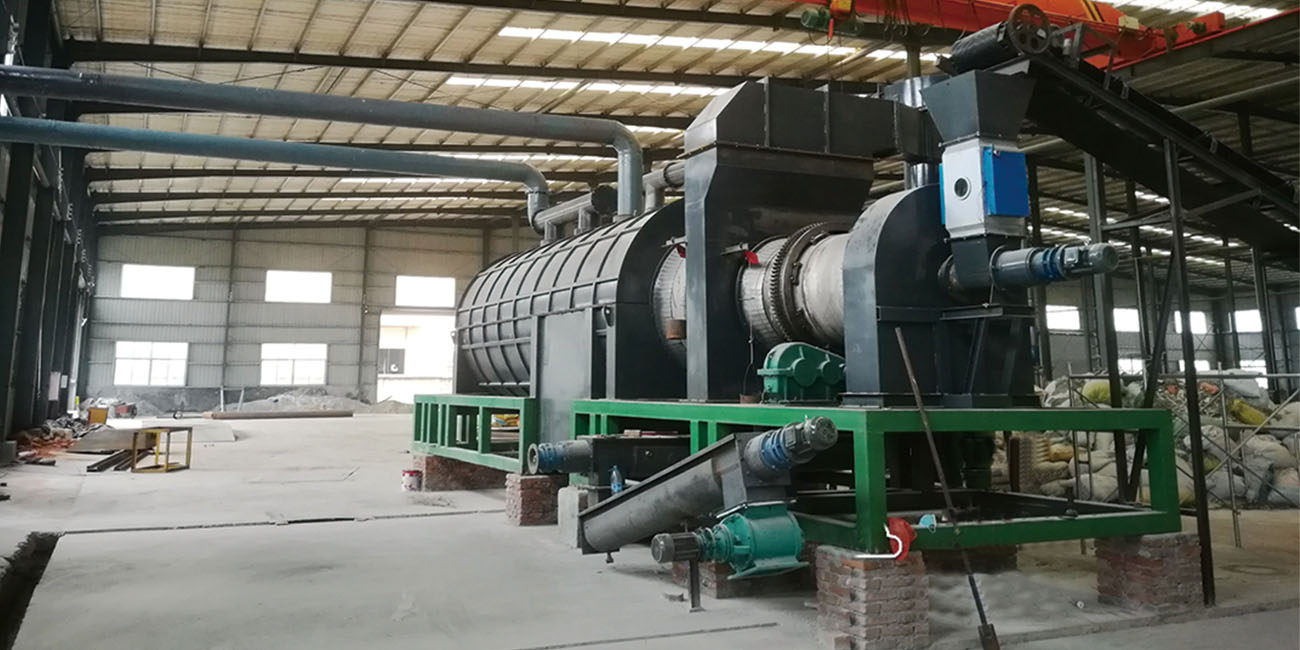
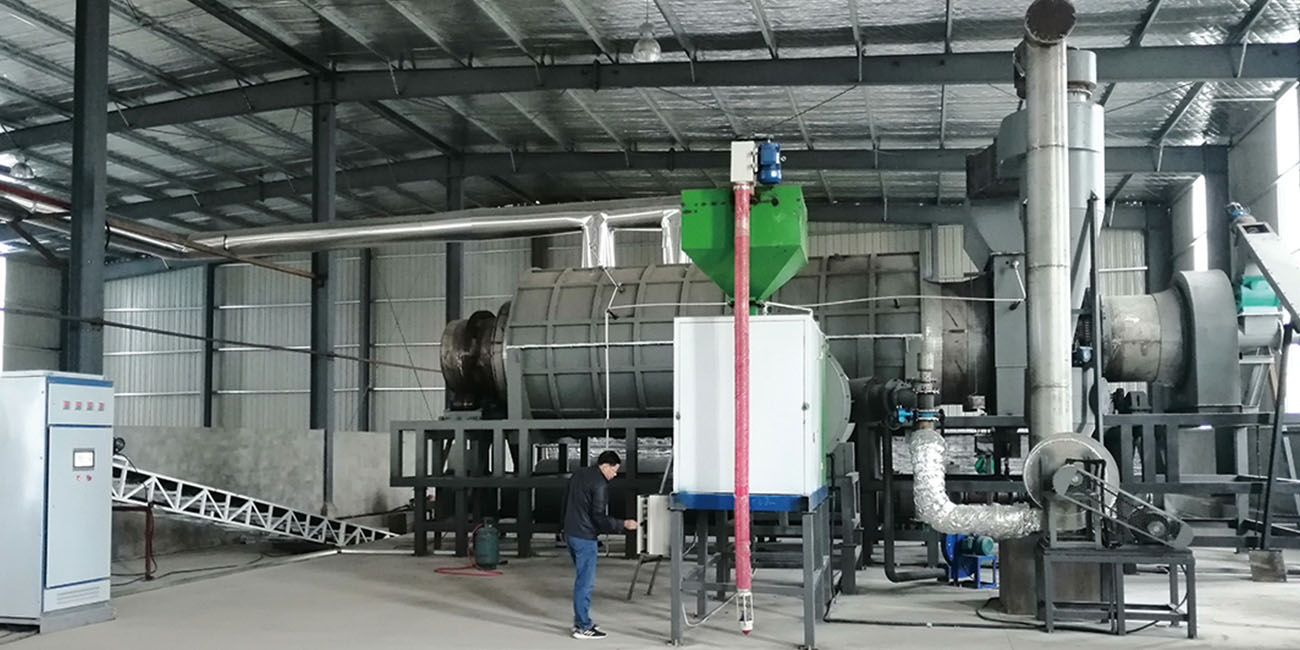
Carbonization plant is a modern industrial plant that converts organic substances into carbon-based products by controlling the thermal degradation of organic matter in the absence or restricted presence of oxygen. This is a thermochemical process called carbonization or pyrolysis that converts biomass, wood, agricultural residues, coconut shells and other carbonaceous materials into useful products such as charcoal, biochar, activated carbon and other by-products such as wood vinegar and tar. The process of carbonization can take place at a temperature between 400°C and 1200°C, depending on the nature of the end product and the raw material. In modern carbonization plants, temperature control, gas recovery and emission control technologies have been introduced that make sure to achieve efficient conversion with a minimum effect on the environment. The plants are important in waste-to-energy projects and biochar production in sustainable agriculture, as well as in producing industrial carbon products. The Carbonization process does not only result in high-quality of carbon materials but also helps in carbon sequestration and minimization of greenhouse gas emissions by inhibiting natural decomposition of organic waste. Continuous or batch processing facilities, automated feeding facilities and sophisticated monitoring equipment are built and installed in industrial carbonization plants to ensure that they operate under optimum conditions during the entire carbonization process.
Why Choose Kerone Carbonization Plant
The carbonization plants by Kerone are unique in the industry with outstanding engineering quality, energy conservation and their environmental sustainability. Kerone has decades of experience in thermal processing equipment and therefore it has developed and built carbonization plants that can produce high-quality products and at the same time maintain operational quality and cost-effectiveness. We have a high level of automation of the process control, which makes the output quality uniform. The construction of the plants of Kerone is strong and the refractory material and special alloys which endure the extreme heat and corrosive conditions are used, which have a long life and require minimum maintenance. Our engineers collaborate with the clients to design carbonization solutions that meet the requirements of particular raw materials, production scale, and final products. Kerone carbonization plants have been designed with extensive safety, pollution control equipment that meets the global environmental standards, and easy to use user interface. We also offer full turnkey services such as installation, training of the operators, and after-sales technical support services so that our customers gain maximum returns on their investments and integrate smoothly with their production systems.
Types and Features of Carbonization Plant
Kerone has a range of carbonization plants to suit the needs of different industries and they include continuous carbonization plants that are used in large volume production, batch type carbonization kilns used in small production or specialized use, rotary carbonization furnaces that can be used to handle loose materials in uniform manner and vertical carbonization retorts that are used to generate space efficiently. Our plants comprise modern design of horizontal moving bed carbonizers, fluidized bed carbonization system to process products fast and multi-stage carbonization units that enable them to process products sequentially at various temperature ranges to improve the quality of products. Every system has essentials such as automated temperature profiling, oxygen containing atmospheres to achieve accurate carbonization, effective gas collection and treatment systems, fast cooling mechanisms to maintain product quality and constant monitoring sensors to optimize the process. The carbonization plants of Kerone have modular construction to facilitate easy expansion, corrosion-resistant material to increase the life span of the plant, and smart control systems that facilitate remote monitoring and data recording to ensure that the quality is maintained and the process of the four-step carbonization process is optimized.
Key Features
Advanced Temperature Control Systems
The high-end temperature control systems with multi-zone heating abilities to provide the same carbonization in the chamber with PID controllers and real-time monitoring to maintain the same quality of products with varying feedstock materials.
Energy Recovery Integration
Smarter thermal recuperation systems that reuse and recapture exhaust gas thermal energy, using up to 40 per cent. less fuel and creating a substantial cost reduction in operation as well as a dramatic reduction in carbon footprint.
Automated Feeding and Discharge
Automated material loading quality systems with variable speed controls, automated loads and controlled discharge systems that ensure a continuity of the process and eliminate the need of manual labour.
Comprehensive Emission Control
Multi-stage pollution control systems such as cyclone separators, scrubbers, and afterburners which meet the strict environmental standards and at the same time generate some valuable by-products such as wood vinegar and tar.
Robust Construction with Premium Materials
The heavy structural construction using high temperature resistant refractory bricks, special alloys that are resistant to heat and advanced insulation material to sustain durability, thermal efficiency and a long life of equipment of more than 20 years.
Intelligent Process Automation
PLC based control systems having touchscreen HMI interfaces, programmable carbonization cycles, automated safety interlocks and data logging options to optimize the process and trace quality.
Flexible Capacity Options
Scalable designs ranging between small-scale production with 500kg/batch up to high-rates continuous with 10+tons/hour with the flexibility to meet specific production needs and expansion requirements.
Safety and Compliance Features
In-depth safety provisions such as over-temperature controls, automatic fire suppression, emergency shutdown, pressure relief, and adherence to the global standards of safety, consisting of CE, ISO and OSHA requirements.
Powered by AI, ML & IoT
Future-Ready Engineering Driven by AI & IoT
Our advanced AI, ML, and IoT technologies, this solution delivers smarter automation, real-time insights, and predictive intelligence to enhance efficiency and drive future-ready growth.
Real-Time Monitoring & Control
Continuous tracking of process parameters with instant adjustments.
Predictive Maintenance
Intelligent fault detection to prevent failures before they occur.
Adaptive Process Optimization
Dynamic tuning of operations for maximum output and efficiency.
Cloud Dashboards & Analytics
Unified access to real-time insights and performance trends.
Energy & Resource Savings
Smarter utilization of energy to cut costs and reduce waste.
Secure IoT Connectivity
Encrypted data flow with seamless integration across plant systems.
Applications of Carbonization Plant
Carbonization plants by Kerone are widely applied in the various industries to produce sustainably and valorise wastes. The multiple-use systems allow businesses to transform organic waste into useful carbon products and also help in environmental conservation. They are generally used in:
Activated Carbon Production: A quality activated carbon is manufactured using coconut shells, wood, and coal to be used in purification of water, air filtration, gold recovery, pharmaceutical manufacturing, and food and beverage industries.
Agricultural Biochar Production: Production of biochar in the form of soil amendments to improve fertility of soil, water retention, carbon sequestration, and sustainable farming in any organic farming and land reclamation project.
Charcoal and Barbecue Briquette Production: Production of high-quality charcoal and wood waste formed into briquettes to be used as domestic cooking fuel, in restaurants, and the export market.
Metallurgical Applications: Specialized carbon materials are produced to be used in the steel industry, such as carbon additives in the production of ferroalloy, decarburizes in the foundries and electrode substances in the electric arc furnaces.
Waste Management and Recycling: The municipal solid waste, agricultural residues, forestry waste, and industrial organic by-products are converted into valuable carbon products, relieving the burden on landfills and providing the possibility of the circular economy.
Chemical Industry Feedstock: Production of carbon-based raw materials used to produce chemicals, catalyst supports and use of carbon black as well as production of special carbon material used in battery manufacturing and use in advanced materials.
Investing in a Kerone carbonization plant is a strategic move towards sustainable production, waste reuse and profitable production of carbon products. Our carbonization systems offer the best technology, energy saving, and environmental sustainability to achieve superior performance and investment returns. You may want to convert agricultural waste into biochar, produce activated carbon to use in industries, or turn the wood residues into high quality charcoal. Either way, our carbonization plants will offer the dependability, effectiveness, and quality you require to achieve success in the current competitive market. Our all-inclusive support, tailored engineering services, and focus on innovation guarantee that your carbonization business processes will be as productive as possible, and the product quality and environmental standards will be the best. Collaborate with Kerone and turn organic substances into useful carbon products and make the industrial world more sustainable.
Seamless Export Connections Global & Local
Our Global Footprint in Industrial Excellence
Delivering world-class industrial and process solutions across countries with precision, innovation, and reliability.
Peru
Chile
Argentina
Mexico
Colombia
Brazil
USA
Canada
United Kingdom
France
Germany
Spain
Italy
Netherlands
Sweden
Switzerland
Poland
Portugal
Ireland
Czechia
Romania
Hungary
Austria
Greece
Kazakhstan
Uzbekistan
Turkmenistan
Algeria
Egypt
Nigeria
Kenya
South Africa
Saudi Arabia
UAE
Israel
Russia
India
China
Japan
South Korea
Thailand
Vietnam
Malaysia
Singapore
Indonesia
Philippines
Australia
New Zealand
Pan-India Presence. Local Expertise.
Raipur
Bilaspur
Panaji
Vasco da Gama
Gandhinagar
Ahmedabad
Surat
Chandigarh
Gurgaon
Shimla
Manali
Bengaluru
Mysore
Kochi
Pune
Mumbai
Thane
Navi Mumbai
Hyderabad
Chennai
Coimbatore
Kolkata
Lucknow
Jaipur
Udaipur
Jodhpur
Dehradun
Haridwar
Bhubaneswar
Product Gallery
Frequently Asked Questions (FAQ)
Kerone carbonization plants have the potential to handle a great range of organic materials such as wood chips, sawdust, bamboo, coconut shells, palm kernel shells, rice husks, wheat straw, corn stalks, nutshells, fruit pits, municipal solid waste, sewage sludge and other agricultural and forestry residues. The plant design can be optimised on the basis of your selected feedstock properties and moisture content.
The temperature of the carbonization process is usually any point between 400°C and 1200°C depending on the required final product. Medium temperatures (400-600°C) generate biochar to be used as an agricultural byproduct, whereas the high temperatures (800-1200°C) generate activated carbon and other industrial carbon items. Depending on the type of materials to be processed and the level of carbonization required, processing time ranges between 2-4 hours in batch processing to continuous processing in larger industrial units.
Kerone carbonization plants have a high energy recovery system, which recycles the heat in exhaust gases and the heat is reused through the process, which saves fuel by 30-40 percent than a conventional system. The gases of combustion that are generated in the carbonization process may also be used as fuel to partially energize the plant, further improving the energy consumption and lowering the operating expenses.
The yield of carbon is usually between 20-35 percent of the raw feedstock weight based on the composition of the raw material, moisture content and the carbonization environment. As an illustration, hardwood normally has a production capacity of 25-30 percent charcoal, whereas coconut shells have a potential capacity of 30-35 percent of carbon. We have been able to optimize our process so that we get the maximum yield without compromising on the specifications of the products.
Kerone carbonization plants have integrated pervasive emission control systems comprising of cyclone separators, wet scrubbers, and afterburners that trap the partaking matter, condense volatile organic substances, and burn the noxious gases. Such systems are in line with EPA, EU emission standards and local environmental regulations. The closed-loop design is also beneficial in the sense that it reduces the amount of smoke and odour emissions.
Kerone carbonization plants are built in such a way that they easy to maintain and with parts that are easy to access and well built. The main maintenance activities to be performed are weekly inspection of refractory lining, monthly cleaning of gas collection systems, quarterly replacement of seals and gaskets, as well as annual inspection of all structural elements. We will give comprehensive maintenance programs, parts and components in case of maintenance and technical service to guarantee the best operation and life of the plant.
Yes, Kerone focuses on the customer-specific carbonization solutions. We are able to change plant capacity, heating (electric, gas, or biomass-fired) and automation (high or low), material handling and product specifications. Our engineering department runs extensive feasibility analysis and material testing to develop the best system to meet your raw materials, production objectives and the location.
ROI usually takes between 2-4 years based on the cost of feedstock (particularly in the case of waste products), the local market prices of carbon products, production capacity and efficiency of the operation. Activated carbon PLCs that use waste materials as free or cheap feedstock and yield high-value products can tend to realize a rapid ROI. Kerone offers in-depth economic analysis and business planning services to enable their clients to maximize investment returns and find the most lucrative product combination to offer in their market.
Combustion burns organic material in the presence of excess oxygen, fully oxidizing carbon into CO2 and releasing all available energy as heat. Gasification uses a limited, controlled amount of oxygen or steam to partially oxidize the feedstock into a combustible syngas. Carbonization, by contrast, occurs in the absence or near-absence of oxygen and is designed to retain carbon in a solid form rather than converting it to gas or fully oxidizing it. This distinction matters because it determines the primary product: combustion produces only heat, gasification produces fuel gas, and carbonization produces a stable solid carbon product alongside smaller volumes of recoverable gas and liquid byproducts. Choosing the correct process depends entirely on whether the solid carbon product or the energy output is the primary commercial objective.
The distinguishing factor is primarily carbonization temperature and, for activated carbon, the addition of an activation step. Medium-temperature carbonization in the 400-600°C range produces a carbon-rich solid suitable as agricultural biochar without further treatment. Activated carbon requires higher carbonization temperatures, typically 800-1200°C, often combined with steam or chemical activation to develop the extensive internal pore structure and surface area needed for adsorption applications like water filtration or gold recovery. Feedstock selection also matters significantly, since coconut shell and certain hardwoods produce activated carbon with superior pore characteristics compared to softer biomass. Kerone's plant designs accommodate both temperature ranges, allowing producers to target either end market depending on feedstock and process configuration.
Different feedstocks carbonize at different yield rates and produce carbon with different physical properties. Dense hardwoods typically yield higher charcoal percentages and produce a harder, more saleable charcoal product than softer woods or agricultural residues. Coconut shells and certain nutshells are particularly prized for activated carbon production due to their dense, low-ash structure that develops excellent pore characteristics during activation. Agricultural residues like rice husk or straw generally yield lower-value carbon due to higher ash content but offer a low-cost or even negative-cost feedstock advantage. Kerone helps clients evaluate this tradeoff between feedstock cost and resulting product value during the project feasibility stage, since the most profitable feedstock is not always the one producing the highest carbon yield.
Wood vinegar, also called pyroligneous acid, is condensed from the volatile vapors released during carbonization and has established commercial applications as an organic pesticide, soil conditioner, and odor control agent in agriculture. Tar, the heavier condensable fraction, can be processed into industrial chemicals or used as a fuel. Recovering these byproducts requires multi-stage condensation and separation equipment integrated into the gas handling system, adding capital cost but creating additional revenue streams beyond the primary carbon product. Whether byproduct recovery makes economic sense depends on local market demand for wood vinegar and tar, which varies significantly by region, so Kerone evaluates this market context before recommending byproduct recovery infrastructure as part of the plant design.
Feedstock moisture directly affects carbonization efficiency, since energy must first be expended driving off water before carbonization reactions can proceed, reducing net carbon yield and increasing fuel consumption per tonne processed. For feedstocks with variable moisture, such as seasonally harvested agricultural residues, Kerone typically recommends integrating a pre-drying stage ahead of the carbonization chamber, using either dedicated drying equipment or waste heat recovered from the carbonization process itself. Automated moisture sensing at the feed inlet allows the control system to adjust residence time and temperature profile in response to incoming material condition, helping maintain consistent carbon output quality even when feedstock characteristics shift from batch to batch.
Refractory lining protects the structural shell of the carbonization chamber from the extreme temperatures and thermal cycling inherent to the process, and its condition directly affects both energy efficiency and equipment lifespan. Degraded refractory allows heat loss, increasing fuel consumption, and in severe cases can compromise structural integrity. Lining life depends on operating temperature, thermal cycling frequency, and feedstock characteristics, particularly the presence of corrosive or abrasive constituents like high-silica agricultural residues. Kerone recommends weekly visual inspection of refractory condition as part of routine maintenance, with full or partial relining typically required every several years of continuous operation, though this interval varies considerably based on operating intensity and feedstock type.
Kerone's carbonization plants scale from approximately 500 kg per batch for small or pilot-scale operations up to continuous systems processing 10 or more tonnes per hour for large industrial facilities. The scaling pathway typically progresses through batch kilns for initial market validation, to semi-continuous rotary systems for moderate volume, to fully continuous moving-bed or multi-stage units for maximum throughput. Each scale tier involves different capital intensity and operational complexity, and Kerone recommends clients validate product quality and market demand at smaller scale before committing to large continuous infrastructure, since the optimal process parameters identified at pilot scale transfer directly into the design basis for subsequent capacity expansion.
Kerone’s custom-designed heating and processing solutions are built to meet the demands of your growing operations. Whether you’re upgrading equipment, expanding production, or need a tailor-made solution

 Peru
Peru Chile
Chile Argentina
 Mexico
 Colombia
 Brazil
 USA
USA Canada
 United Kingdom
 France
 Germany
 Spain
Spain Italy
Italy Netherlands
 Sweden
 Switzerland
 Poland
 Portugal
 Ireland
 Czechia
 Romania
 Hungary
 Austria
 Greece
 Kazakhstan
 Uzbekistan
 Turkmenistan
 Algeria
 Egypt
Egypt Nigeria
 Kenya
Kenya South Africa
 Saudi Arabia
 UAE
UAE Israel
 Russia
 India
India China
China Japan
Japan South Korea
 Thailand
 Vietnam
 Malaysia
 Singapore
 Indonesia
 Philippines
 Australia
 New Zealand