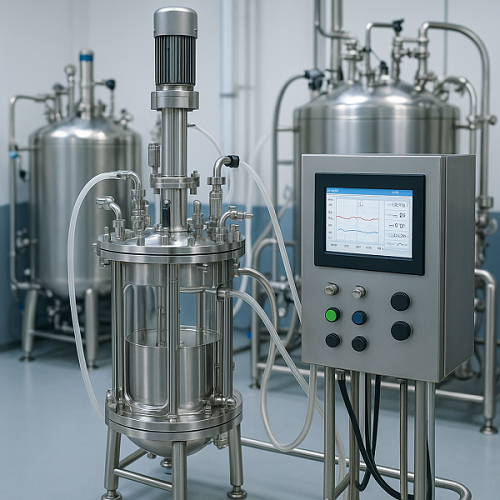
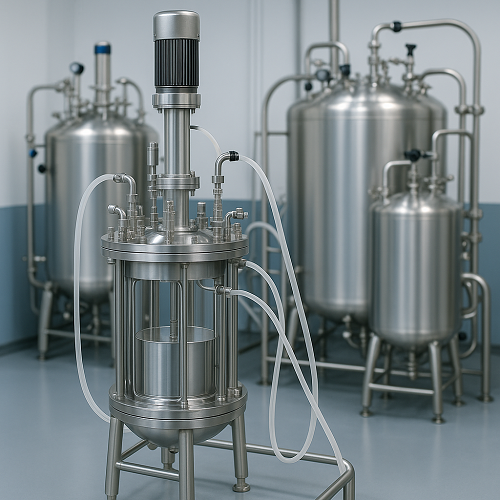
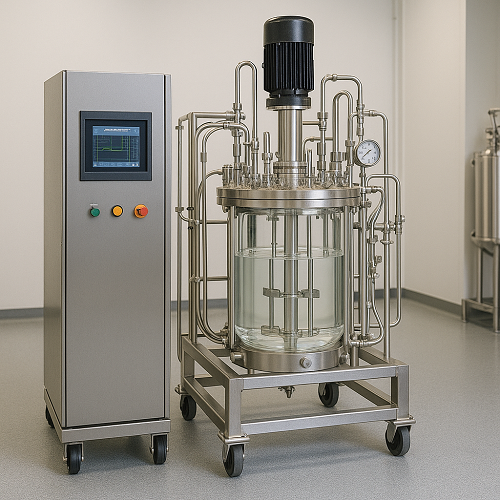
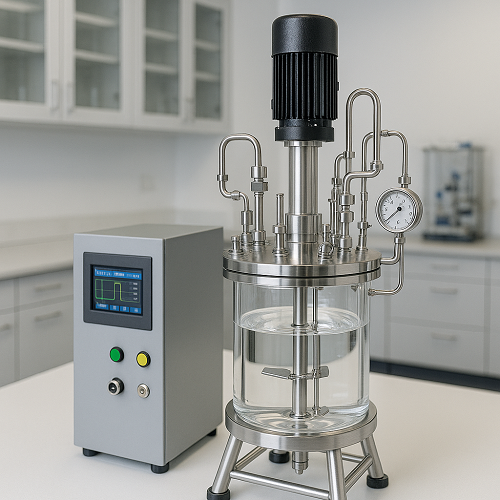
Kerone specializes in advanced bioreactors & fermenters solutions designed for precise thermal processing, controlled chemical reactions, and high-efficiency industrial operations. With decades of engineering expertise, Kerone builds customized systems that ensure uniform heating, reliable performance, and seamless integration into diverse industrial applications.
Why Choose Kerone Bioreactors & Fermenters
Kerone’s Bioreactors and Fermenters are distinguished by their superior engineering quality, exceptional sterility assurance design, and comprehensive process control capabilities that collectively ensure optimal biological productivity and product consistency. Kerone designs each system with a deep understanding of the specific microorganism or cell line requirements of the target process, ensuring that bioreactor geometry, agitation system design, aeration configuration, and control philosophy are all optimized for maximum yield and process efficiency. With full compliance to cGMP, ASME BPE, and relevant international bioprocessing standards, Kerone’s bioreactors and fermenters meet the stringent regulatory requirements of pharmaceutical and food-grade bioprocessing. Comprehensive factory acceptance testing, installation qualification, and ongoing technical support ensure that every Kerone bioreactor delivers its designed performance from first use throughout its operational life.
Types and Features of Bioreactors & Fermenters
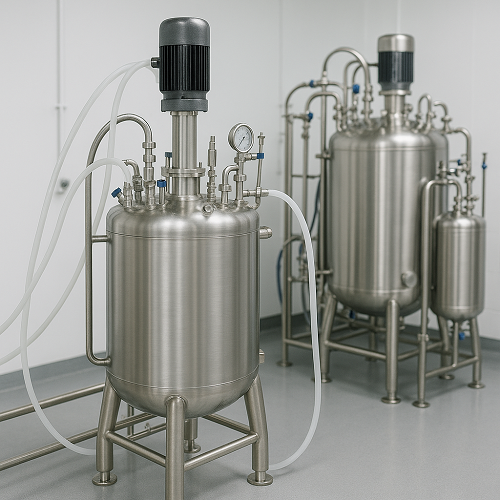
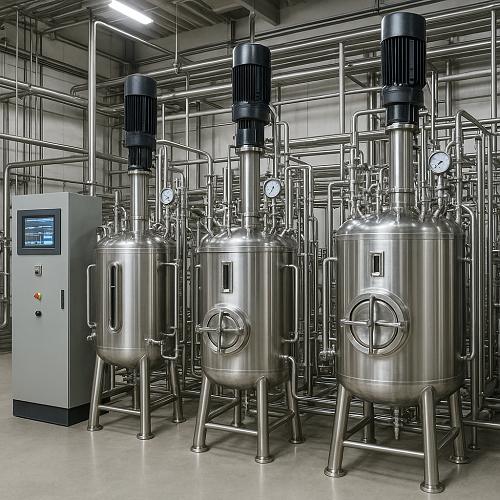
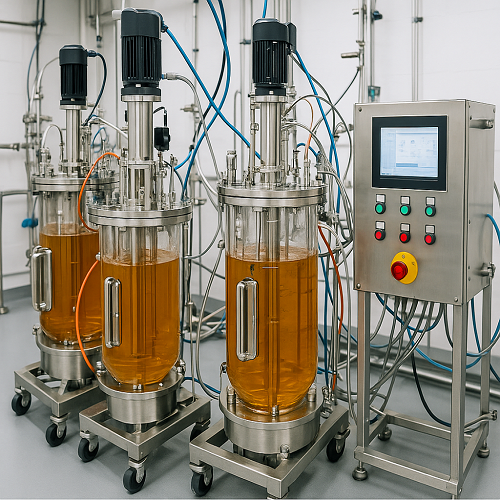
Kerone manufactures a comprehensive range of bioreactors and fermenters including stirred tank reactors (STR) with top-driven, bottom-driven, or magnetically coupled agitation, airlift bioreactors, loop fermenters, solid-state fermenters, and photobioreactors for algal cultivation. Vessels are available in working volumes from 1 liter to several hundred thousand liters. Key design features include electropolished 316L stainless steel construction for superior cleanability and corrosion resistance, CIP/SIP (clean-in-place/sterilize-in-place) capability, sanitary-design instrumentation ports, precision agitator seal assemblies, sparger systems for efficient oxygen transfer, integrated jacket systems for accurate temperature control, and advanced multi-parameter control systems with data logging and batch record generation.
Key Features
Precision temperature control and consistent heat distribution
Multiple heating modes: electric, gas-fired, infrared, or hybrid
Automated or semi-automated operation options
Customizable residence time, rotation speed, and airflow patterns
High durability for extreme temperatures and corrosive environments
Easy maintenance with modular design
Powered by AI, ML & IoT
Future-Ready Engineering Driven by AI & IoT
Our advanced AI, ML, and IoT technologies, this solution delivers smarter automation, real-time insights, and predictive intelligence to enhance efficiency and drive future-ready growth.
Real-Time Monitoring & Control
Continuous tracking of process parameters with instant adjustments.
Predictive Maintenance
Intelligent fault detection to prevent failures before they occur.
Adaptive Process Optimization
Dynamic tuning of operations for maximum output and efficiency.
Cloud Dashboards & Analytics
Unified access to real-time insights and performance trends.
Energy & Resource Savings
Smarter utilization of energy to cut costs and reduce waste.
Secure IoT Connectivity
Encrypted data flow with seamless integration across plant systems.
Applications of Bioreactors & Fermenters
Chemical processing and thermal decomposition
Metallurgical heat treatment and calcination
Ceramic, refractory, and catalyst material production
Biomass conversion and pyrolysis
Pharmaceutical and biochemical processing (for bioreactors)
Pilot-scale and laboratory research applications
Kerone’s advanced bioreactors & fermenters systems deliver consistent performance, high thermal efficiency, and maximum reliability. With fully customizable engineering and intelligent automation, Kerone ensures long-term operational stability and superior output quality.
Seamless Export Connections Global & Local
Our Global Footprint in Industrial Excellence
Delivering world-class industrial and process solutions across countries with precision, innovation, and reliability.
Peru
Chile
Argentina
Mexico
Colombia
Brazil
USA
Canada
United Kingdom
France
Germany
Spain
Italy
Netherlands
Sweden
Switzerland
Poland
Portugal
Ireland
Czechia
Romania
Hungary
Austria
Greece
Kazakhstan
Uzbekistan
Turkmenistan
Algeria
Egypt
Nigeria
Kenya
South Africa
Saudi Arabia
UAE
Israel
Russia
India
China
Japan
South Korea
Thailand
Vietnam
Malaysia
Singapore
Indonesia
Philippines
Australia
New Zealand
Pan-India Presence. Local Expertise.
Raipur
Bilaspur
Panaji
Vasco da Gama
Gandhinagar
Ahmedabad
Surat
Chandigarh
Gurgaon
Shimla
Manali
Bengaluru
Mysore
Kochi
Pune
Mumbai
Thane
Navi Mumbai
Hyderabad
Chennai
Coimbatore
Kolkata
Lucknow
Jaipur
Udaipur
Jodhpur
Dehradun
Haridwar
Bhubaneswar
Product Gallery
Frequently Asked Questions (FAQ)
Agitator seal assemblies need regular inspection since seal failure is one of the more common causes of unplanned bioreactor downtime, particularly in systems running frequent batch cycles with repeated heating and cooling. Sensor calibration for pH, dissolved oxygen, and temperature probes, should follow a fixed schedule rather than only being checked when a batch result looks off, since gradual sensor drift can silently affect multiple batches before being caught. Jacket and heat exchanger surfaces should be checked periodically for fouling, which reduces temperature control responsiveness over time. Kerone’s modular design philosophy is intended to make these maintenance points accessible without requiring full vessel disassembly, since maintenance downtime in a production fermentation facility carries a real throughput cost.
While pharmaceutical and biotech applications get the most attention, bioreactors are also central to food and beverage fermentation, including enzyme production, probiotic cultivation, and specialty ingredient manufacturing as well as industrial biotechnology applications like biofuel production, biopolymer synthesis, and biosurfactant manufacturing. Research institutions and university labs use smaller-scale units for process development and academic study. Each sector brings different priorities: food-grade fermentation emphasizes hygienic design and food safety compliance, while industrial biotech applications often prioritize cost-efficient scale and robustness over pharmaceutical-grade sterility assurance. Kerone configures construction materials, control sophistication, and compliance documentation differently depending on which of these end markets a system is built to serve.
Clean-in-place and sterilize-in-place mean the vessel can be cleaned and sterilized through automated, recipe-driven cycles without disassembly, using built-in spray devices, steam connections, and validated cycle parameters. This matters operationally because manual cleaning and autoclaving are slow, introduce human variability into sterility assurance, and become impractical at larger vessel sizes. With CIP/SIP, a bioreactor can move from one fermentation batch to the next within hours rather than requiring extended manual turnaround, while also generating documented, repeatable sterility records that pharmaceutical and food-grade operations need for batch release. The practical impact is higher vessel utilization and more consistent sterility assurance, both of which matter directly to production throughput and regulatory compliance.
The choice depends mainly on the microorganism or cell line’s sensitivity to shear stress and its oxygen demand. Stirred tank reactors offer the most flexible and well-understood mixing and aeration control, making them the default choice for most microbial and mammalian cell fermentations. Airlift bioreactors use gas sparging rather than mechanical agitation to circulate the broth, which suits shear-sensitive cultures like certain mammalian or plant cell lines that can be damaged by impeller blades. Loop fermenters are often chosen for high-oxygen-demand processes where efficient gas-liquid mass transfer matters more than gentle handling. Kerone evaluates the target organism’s growth kinetics and oxygen transfer requirements before recommending a configuration, since the wrong reactor type can limit yield regardless of how well the rest of the process is controlled.
Yes, Kerone provides fully customized designs tailored to your process, capacity, temperature range, and material type.
PLC, SCADA, remote monitoring, and IoT-based controls.
Chemical, metallurgical, ceramic, pharma, biotech, and research facilities.
Yes, systems can be engineered to handle extreme temperatures safely and efficiently.
Pressure and temperature interlocks are fundamental, since both sterilization cycles and certain fermentation processes generate conditions that need automatic limiting to prevent vessel damage or hazardous release. Overpressure relief valves and rupture discs provide a final mechanical safety layer independent of the control system. For processes generating flammable off-gases, certain anaerobic fermentations, for example explosion-proof electrical fittings and gas detection become necessary rather than optional. Emergency shutdown systems need to be accessible and capable of safely de-energizing agitation and heating without requiring an operator to approach a pressurized or hot vessel. These systems work together rather than as standalone features, since a fermentation process failure can escalate quickly without layered protection.
cGMP compliance affects nearly every design decision instrumentation needs validated calibration records, control software needs audit trails and electronic batch records, and the entire system needs documented qualification through installation, operational, and performance testing before it can be used for regulated production. ASME BPE standards specifically govern surface finish, weld quality, and component design to ensure cleanability and minimize dead legs where contamination can accumulate. Together, these standards mean a compliant bioreactor isn’t simply a vessel built from the right material; it’s a fully documented system with traceable design, fabrication, and qualification records. Kerone builds this documentation package alongside the physical system because retrofitting compliance documentation after fabrication is far more difficult than building it in from the start.
A frequent assumption is that one bioreactor configuration, once validated for a particular process, can be directly repurposed for a different organism or product without significant requalification. In practice, switching from, say, a bacterial fermentation to a mammalian cell culture process in the same vessel often requires changes to agitation intensity, sparger design, and even surface finish requirements, because the sensitivity and growth characteristics differ substantially. Another common misconception is that bigger automatically means better, oversized vessels running well below their designed capacity often have worse mixing and oxygen transfer characteristics than a properly sized smaller unit. Matching bioreactor design to the specific process, rather than assuming broad interchangeability, is what actually determines yield and consistency.
Continuous monitoring of dissolved oxygen, pH, temperature, and agitation through automated control loops removes the lag inherent in manual sampling and adjustment, catching deviations within seconds rather than at the next scheduled check. Predictive maintenance algorithms applied to motor load, vibration, or seal performance data can flag developing mechanical issues before they cause an unplanned batch failure mid-fermentation, which is far more costly than scheduled downtime. Cloud-connected dashboards also let process scientists and quality teams review trends across multiple batches to identify subtle drift in process performance that wouldn’t be obvious from any single run. For operations running frequent fermentation cycles, this shift from reactive to predictive management has a direct, measurable effect on batch consistency and yield.
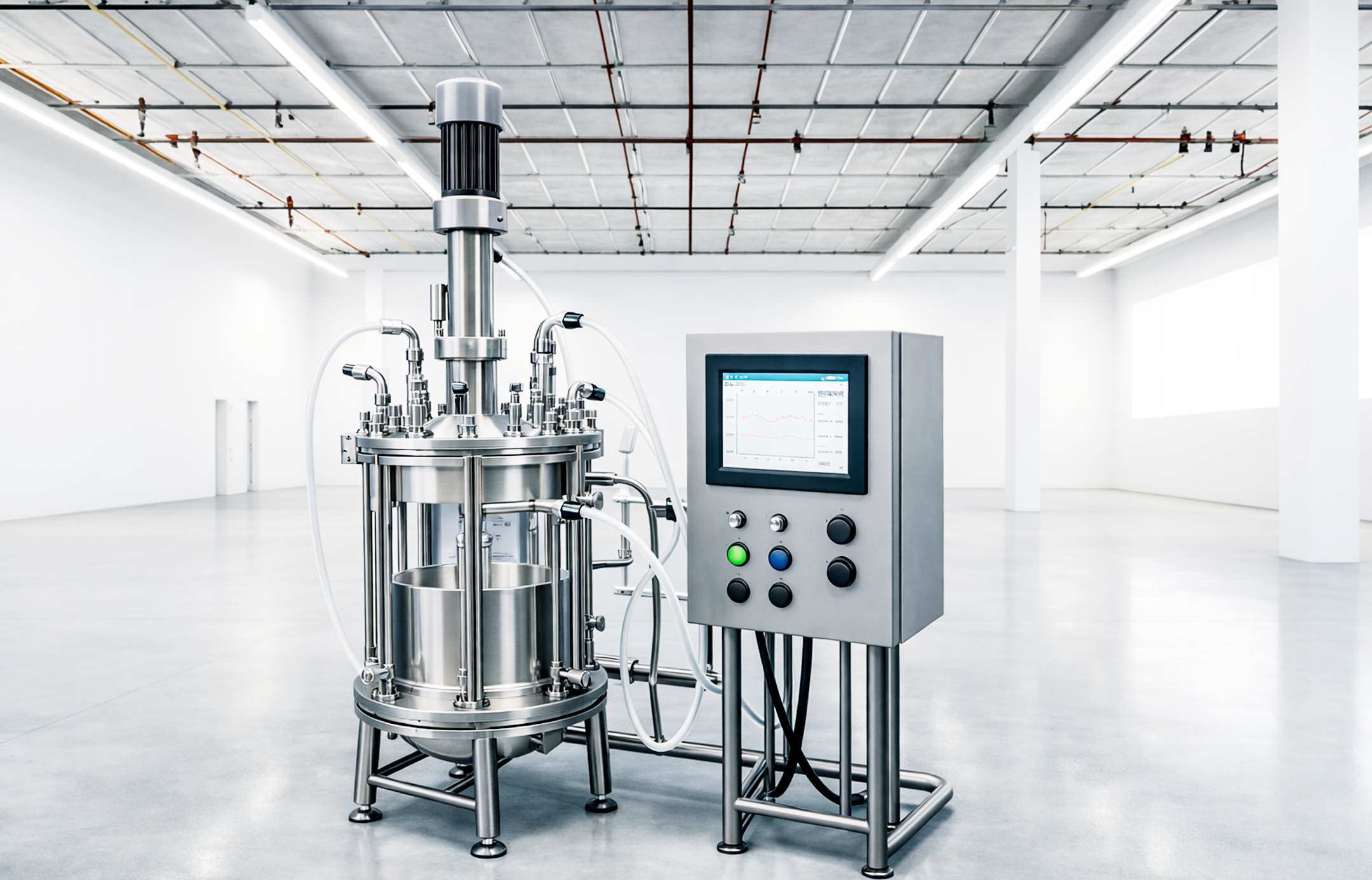
Kerone’s custom-designed heating and processing solutions are built to meet the demands of your growing operations. Whether you’re upgrading equipment, expanding production, or need a tailor-made solution





 Peru
Peru Chile
Chile Argentina
 Mexico
 Colombia
 Brazil
 USA
USA Canada
 United Kingdom
 France
 Germany
 Spain
Spain Italy
Italy Netherlands
 Sweden
 Switzerland
 Poland
 Portugal
 Ireland
 Czechia
 Romania
 Hungary
 Austria
 Greece
 Kazakhstan
 Uzbekistan
 Turkmenistan
 Algeria
 Egypt
Egypt Nigeria
 Kenya
Kenya South Africa
 Saudi Arabia
 UAE
UAE Israel
 Russia
 India
India China
China Japan
Japan South Korea
 Thailand
 Vietnam
 Malaysia
 Singapore
 Indonesia
 Philippines
 Australia
 New Zealand