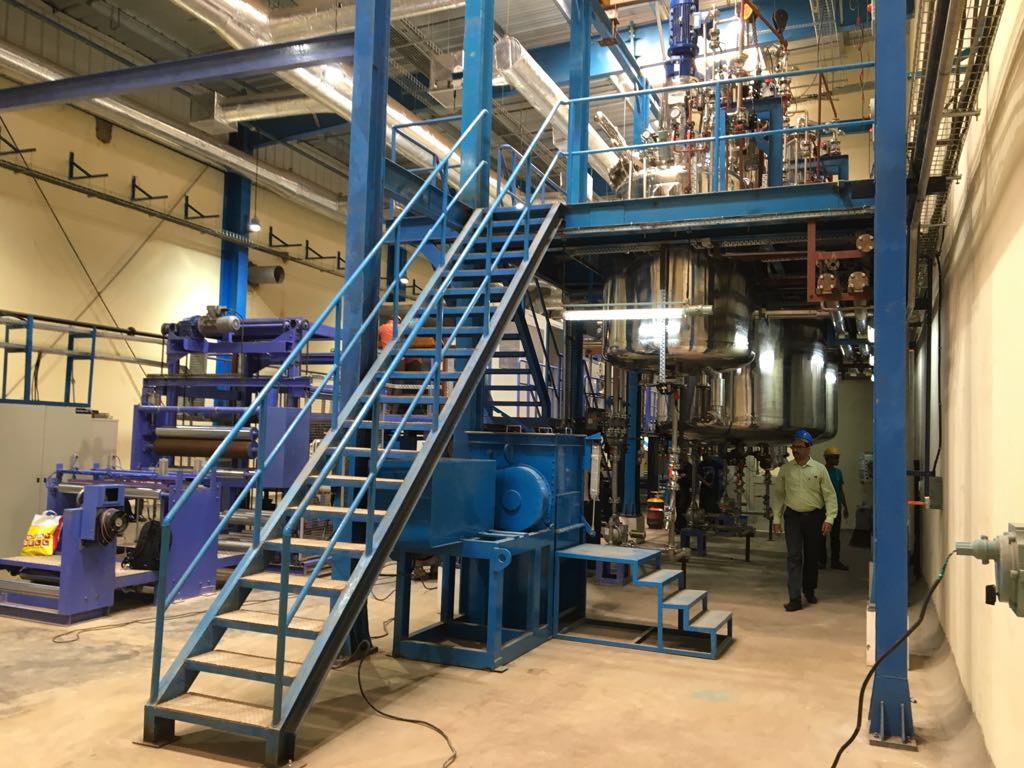
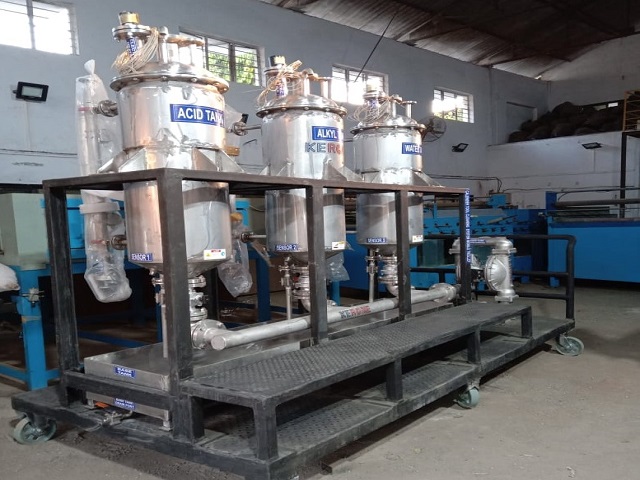
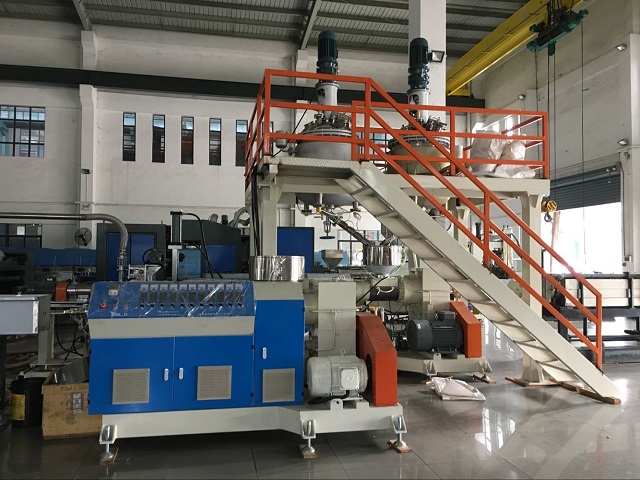
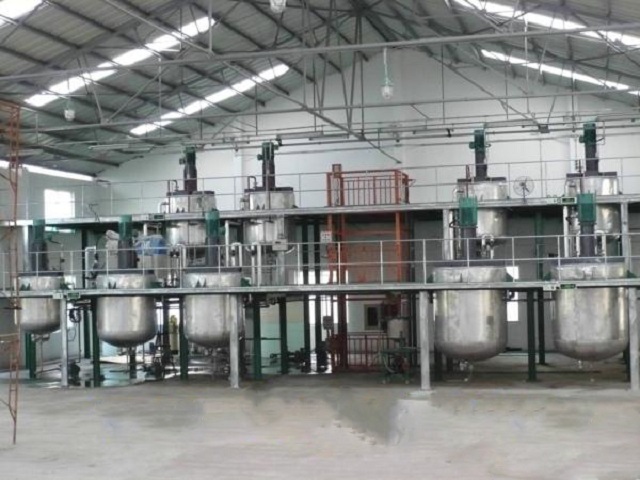
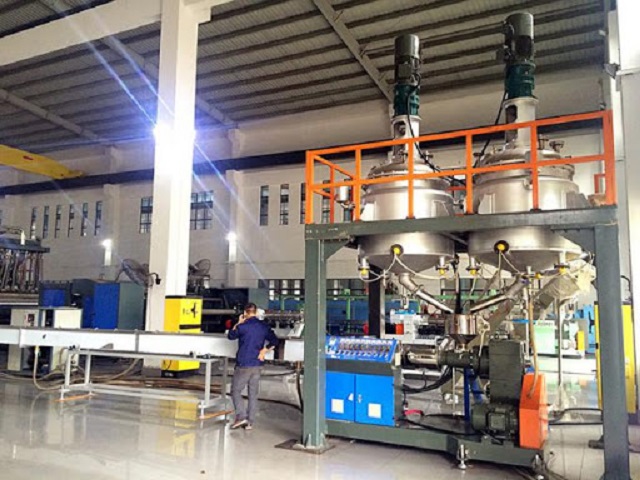
A Hot Melt Adhesive Mixing Plant is a specialized processing system designed for blending, compounding, and homogenizing hot melt adhesive formulations from raw polymer, resin, wax, and additive components. Kerone’s Hot Melt Adhesive Mixing Plants are engineered to deliver precise, repeatable mixing of adhesive components at controlled temperatures, ensuring consistent melt viscosity, adhesion properties, and performance characteristics in the final product. Our mixing plants are designed for both laboratory-scale formulation work and full-scale commercial production, featuring high-torque mixing systems, jacketed vessels, automated feeding, and comprehensive process control.
Why Choose Kerone Hot Melt Adhesive Mixing Plant
Kerone Engineering Solution Ltd. is engaged in offering a wide range of the premium quality of Hot Melt Adhesives Mixing Plant to our valuable customers. KERONE hot melt adhesives Plant are uniquely designed materials that are ideal for a variety of applications where simplified processing, streamlined manufacturing and/or end-product protection are required.
High bond strength, low application costs and processing safety are at the foundation of materials, which are widely used in markets as diverse as electronics, medical, automotive, furniture or food and beverage.
Types and Features of Hot Melt Adhesive Mixing Plant
Kerone Engineering Solution Ltd. is engaged in offering a wide range of the premium quality of Hot Melt Adhesives Mixing Plant to our valuable customers. KERONE hot melt adhesives Plant are uniquely designed materials that are ideal for a variety of applications where simplified processing, streamlined manufacturing and/or end-product protection are required.
High bond strength, low application costs and processing safety are at the foundation of materials, which are widely used in markets as diverse as electronics, medical, automotive, furniture or food and beverage.
Key Features
High-torque mixing drives capable of processing high-viscosity hot melt adhesives
Jacketed mixing vessels with precise temperature control for uniform melting
Automated raw material feeding with gravimetric or volumetric dosing
Variable speed mixing for adaptable shear intensity
Nitrogen blanketing available for oxidation-sensitive formulations
Easy-clean design with ball valve discharge and minimal dead zones
Integrated temperature monitoring and viscosity measurement
Scalable design from laboratory mixing to full production capacity
Powered by AI, ML & IoT
Future-Ready Engineering Driven by AI & IoT
Our advanced AI, ML, and IoT technologies, this solution delivers smarter automation, real-time insights, and predictive intelligence to enhance efficiency and drive future-ready growth.
Real-Time Monitoring & Control
Continuous tracking of process parameters with instant adjustments.
Predictive Maintenance
Intelligent fault detection to prevent failures before they occur.
Adaptive Process Optimization
Dynamic tuning of operations for maximum output and efficiency.
Cloud Dashboards & Analytics
Unified access to real-time insights and performance trends.
Energy & Resource Savings
Smarter utilization of energy to cut costs and reduce waste.
Secure IoT Connectivity
Encrypted data flow with seamless integration across plant systems.
Applications of Hot Melt Adhesive Mixing Plant
Kerone’s Hot Melt Adhesive Mixing Plants are extensively used by adhesive manufacturers and R&D facilities for compounding and producing a wide range of hot melt adhesive formulations.
Typical applications include:
Food, chemical, pharmaceutical, and mineral industries
Pharmaceutical
Textile
Paper and Printing
Food and brewage processing
Dairy and Dairy products
Plastic and Rubber
Ceramics
Chemical
Automobile
Kerone’s hot melt adhesive mixing plant solutions deliver unmatched quality, safety, and operational performance. Each system is tailored to meet production targets while ensuring energy savings, reliability, and long-term industrial value.
Seamless Export Connections Global & Local
Our Global Footprint in Industrial Excellence
Delivering world-class industrial and process solutions across countries with precision, innovation, and reliability.
Peru
Chile
Argentina
Mexico
Colombia
Brazil
USA
Canada
United Kingdom
France
Germany
Spain
Italy
Netherlands
Sweden
Switzerland
Poland
Portugal
Ireland
Czechia
Romania
Hungary
Austria
Greece
Kazakhstan
Uzbekistan
Turkmenistan
Algeria
Egypt
Nigeria
Kenya
South Africa
Saudi Arabia
UAE
Israel
Russia
India
China
Japan
South Korea
Thailand
Vietnam
Malaysia
Singapore
Indonesia
Philippines
Australia
New Zealand
Pan-India Presence. Local Expertise.
Raipur
Bilaspur
Panaji
Vasco da Gama
Gandhinagar
Ahmedabad
Surat
Chandigarh
Gurgaon
Shimla
Manali
Bengaluru
Mysore
Kochi
Pune
Mumbai
Thane
Navi Mumbai
Hyderabad
Chennai
Coimbatore
Kolkata
Lucknow
Jaipur
Udaipur
Jodhpur
Dehradun
Haridwar
Bhubaneswar
Product Gallery
Frequently Asked Questions (FAQ)
Kerone uses sigma blade, planetary, Z-blade, rotor-stator, and twin-screw extruder technologies depending on formulation viscosity and shear requirements.
Yes, Kerone designs mixing plants across a wide viscosity range, from low-viscosity pressure-sensitive adhesives to high-viscosity structural hot melts.
Yes, Kerone's mixing vessels can be equipped with nitrogen blanketing systems for formulations sensitive to oxidation or moisture.
Mixing plant capacities range from 10-liter laboratory mixers to large production vessels exceeding 2,000 liters.
Yes, Kerone offers fully automated mixing plants with PLC control, recipe management, automated raw material dosing, and batch reporting.
We integrate inline viscosity meters, temperature sensors, and sampling ports to allow real-time quality monitoring and process adjustment.
Packaging and case sealing represent one of the largest volume applications, where hot melt adhesives need fast set times to keep up with high-speed packaging lines. Bookbinding and graphic arts applications demand specific flexibility and aging characteristics so bound pages don’t crack over time. Nonwoven hygiene products like diapers and feminine care items use hot melt adhesives extensively for construction and elastic attachment, requiring formulations that stay flexible and skin-safe. Automotive and furniture assembly applications often need higher heat-resistance formulations than packaging-grade adhesives. Each application drives different formulation requirements, which is why mixing plants serving multiple adhesive markets need broad temperature range, viscosity handling, and additive dosing flexibility rather than a single fixed process configuration.
Discharge valves and ball valve seats need regular inspection since repeated exposure to hot, viscous adhesive gradually wears sealing surfaces, eventually causing leaks or incomplete drainage that leaves residual material in the vessel. Heating jacket performance should be periodically verified against actual batch temperature ramp data, since scale buildup or fouling on jacket surfaces reduces heat transfer efficiency well before it becomes obvious through a visible fault. Agitator drive seals and bearings need scheduled lubrication and inspection, particularly in plants running high-viscosity formulations that place greater mechanical load on the drive system. Kerone’s easy-clean vessel design with minimal dead zones is intended to reduce the maintenance burden from material buildup, but scheduled inspection still matters more than relying solely on equipment design.
Hot melt adhesive processing requires sustaining elevated temperatures for extended mixing cycles, so heat loss through vessel walls and piping directly translates into continuous energy waste if not properly insulated. Well-designed jacketed vessels with quality insulation maintain target temperature with less continuous heating input, reducing both energy consumption and the temperature overshoot risk that comes from compensating for heat loss with excess jacket temperature. Piping and valve insulation matters too, since uninsulated transfer lines can cause the adhesive to cool and thicken during transfer, leading to flow problems or requiring supplemental trace heating that adds further energy cost. Kerone designs thermal insulation as a core specification rather than an optional add-on, since the energy savings compound significantly over continuous, multi-shift production.
Beyond standard hot-surface burn risk, hot melt adhesive mixing introduces specific hazards around pressure buildup if molten material becomes trapped in a sealed section during a process upset, and around combustible dust or vapor risk depending on the specific resin and additive chemistry being processed. Nitrogen blanketing systems, while primarily used to prevent oxidation, also reduce certain fire risks associated with processing reactive or oxidation-sensitive formulations at elevated temperature. Pressure relief provisions on the vessel and discharge piping provide a mechanical safety backstop independent of the control system. Emergency stop accessibility matters particularly here, since an operator responding to an upset condition needs to halt heating and agitation without approaching the heated vessel directly.
Drum melters are designed primarily to melt pre-formulated adhesive supplied in solid form, not to compound a formulation from raw resin, wax, and additive components, so they’re not a substitute when a manufacturer needs to develop or produce its own formulation rather than purchase finished adhesive. Extrusion-based compounding lines handle continuous high-throughput blending well but offer less precise control over batch-specific formulation changes and residence time than a dedicated batch mixing vessel. A purpose-built mixing plant sits between these options, offering the formulation flexibility that drum melters lack and more batch-level process control than continuous extrusion compounding typically provides. The right choice depends on whether the priority is formulating new adhesive chemistry or processing an already-finalized formulation at high volume.
Depending on the specific resin, wax, and solvent-carrying additive chemistry being processed, certain formulations can generate combustible dust during solid material handling or flammable vapor during heating, which brings the installation under hazardous area classification requirements such as ATEX in markets where this standard applies. Electrical equipment, including motor drives and control panels located near potential vapor or dust sources, typically need explosion-proof or intrinsically safe ratings in these cases. Ventilation system design also needs to account for vapor generation rates specific to the formulations being processed rather than a generic ventilation allowance. Manufacturers should have their specific formulation chemistry reviewed against applicable hazardous area standards early in the plant specification process.
A properly specified mixing vessel built with adequate wall thickness, quality jacket construction, and stainless steel or appropriately coated carbon steel construction can remain in reliable service for well over a decade of continuous multi-shift operation, provided maintenance schedules for seals, bearings, and heating elements are followed consistently. The agitator drive and seal assembly typically requires component-level servicing or replacement before the vessel itself does, since these are the highest-wear elements under continuous high-viscosity mixing load. Vessel lifespan is also affected by formulation chemistry; highly corrosive additive packages can accelerate wear on internal surfaces compared to standard hot melt formulations. Realistic lifespan expectations should factor in formulation chemistry alongside basic operating hours when planning capital investment.
Scalability in hot melt adhesive mixing is usually achieved by adding parallel mixing vessels rather than replacing an existing unit, since batch mixing throughput scales more efficiently through additional vessel capacity than through enlarging a single vessel beyond its practical mixing geometry limits. Kerone designs control systems and material handling infrastructure with this expansion path in mind when a customer indicates future growth plans, ensuring the recipe management and automation platform can incorporate additional vessels without a complete control system overhaul. Utility capacity, particularly heating capability and raw material storage and feeding, needs early planning if expansion is anticipated, since these systems are more disruptive to expand after the fact than the mixing vessels themselves.
Kerone’s custom-designed heating and processing solutions are built to meet the demands of your growing operations. Whether you’re upgrading equipment, expanding production, or need a tailor-made solution

 Peru
Peru Chile
Chile Argentina
 Mexico
 Colombia
 Brazil
 USA
USA Canada
 United Kingdom
 France
 Germany
 Spain
Spain Italy
Italy Netherlands
 Sweden
 Switzerland
 Poland
 Portugal
 Ireland
 Czechia
 Romania
 Hungary
 Austria
 Greece
 Kazakhstan
 Uzbekistan
 Turkmenistan
 Algeria
 Egypt
Egypt Nigeria
 Kenya
Kenya South Africa
 Saudi Arabia
 UAE
UAE Israel
 Russia
 India
India China
China Japan
Japan South Korea
 Thailand
 Vietnam
 Malaysia
 Singapore
 Indonesia
 Philippines
 Australia
 New Zealand