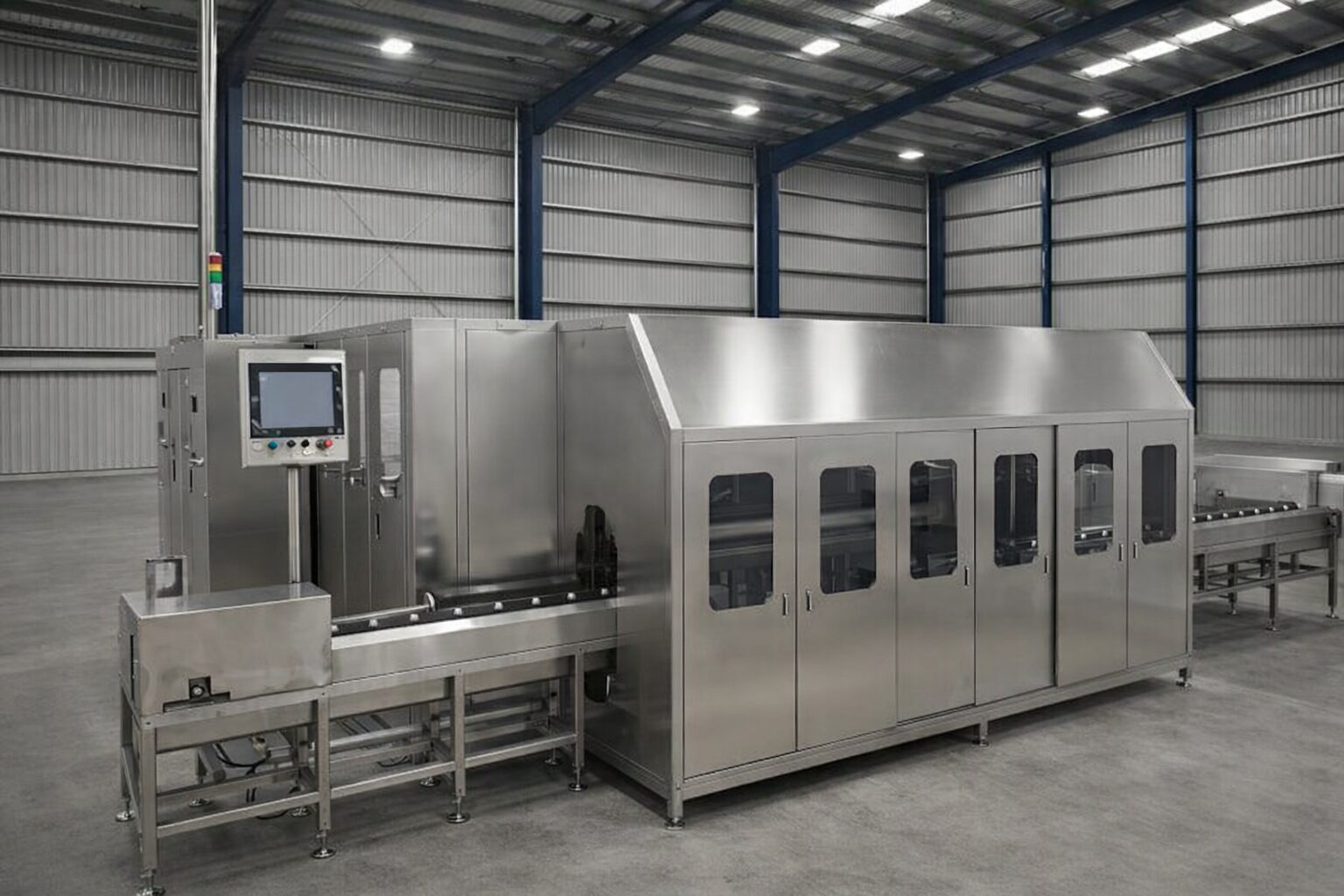
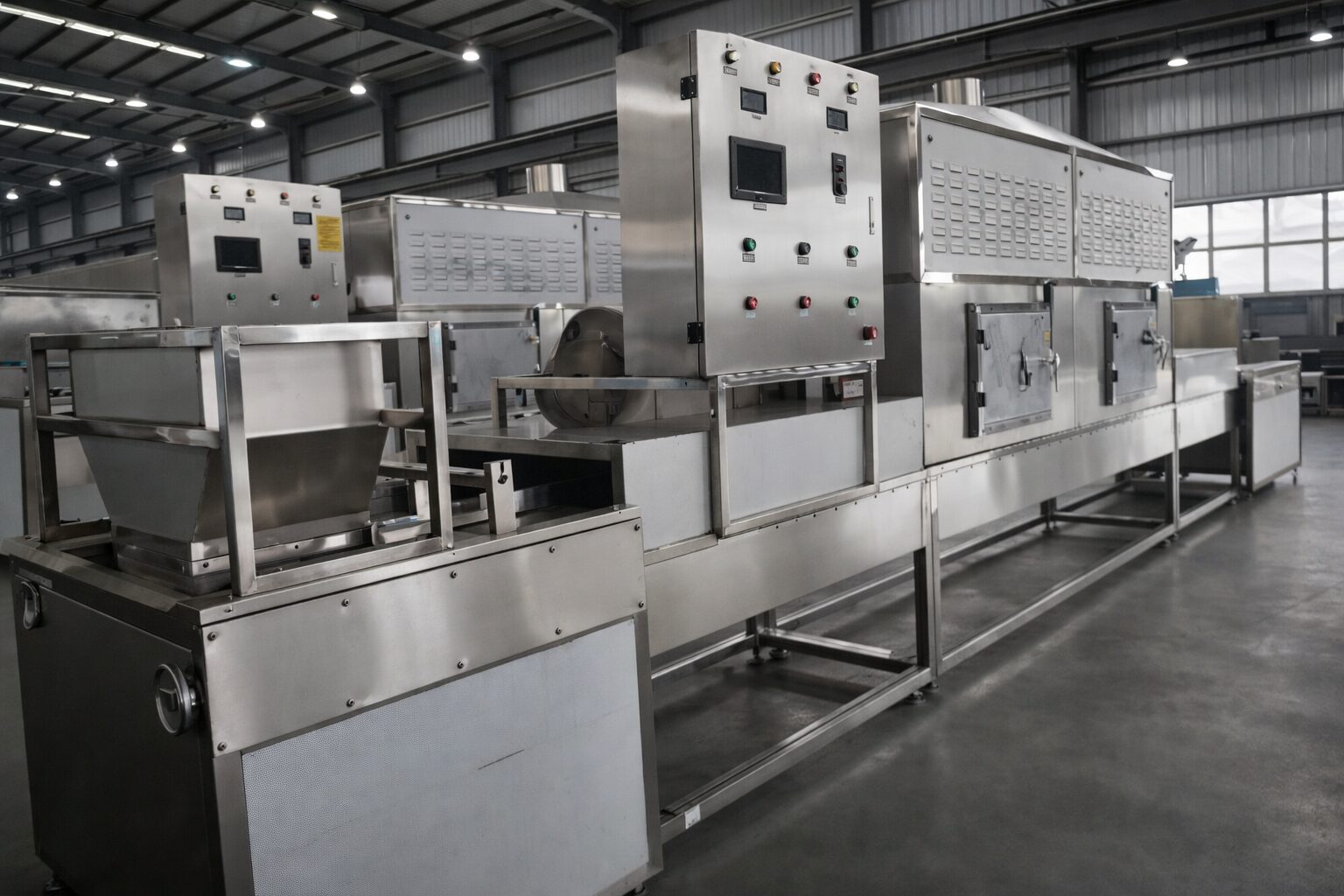
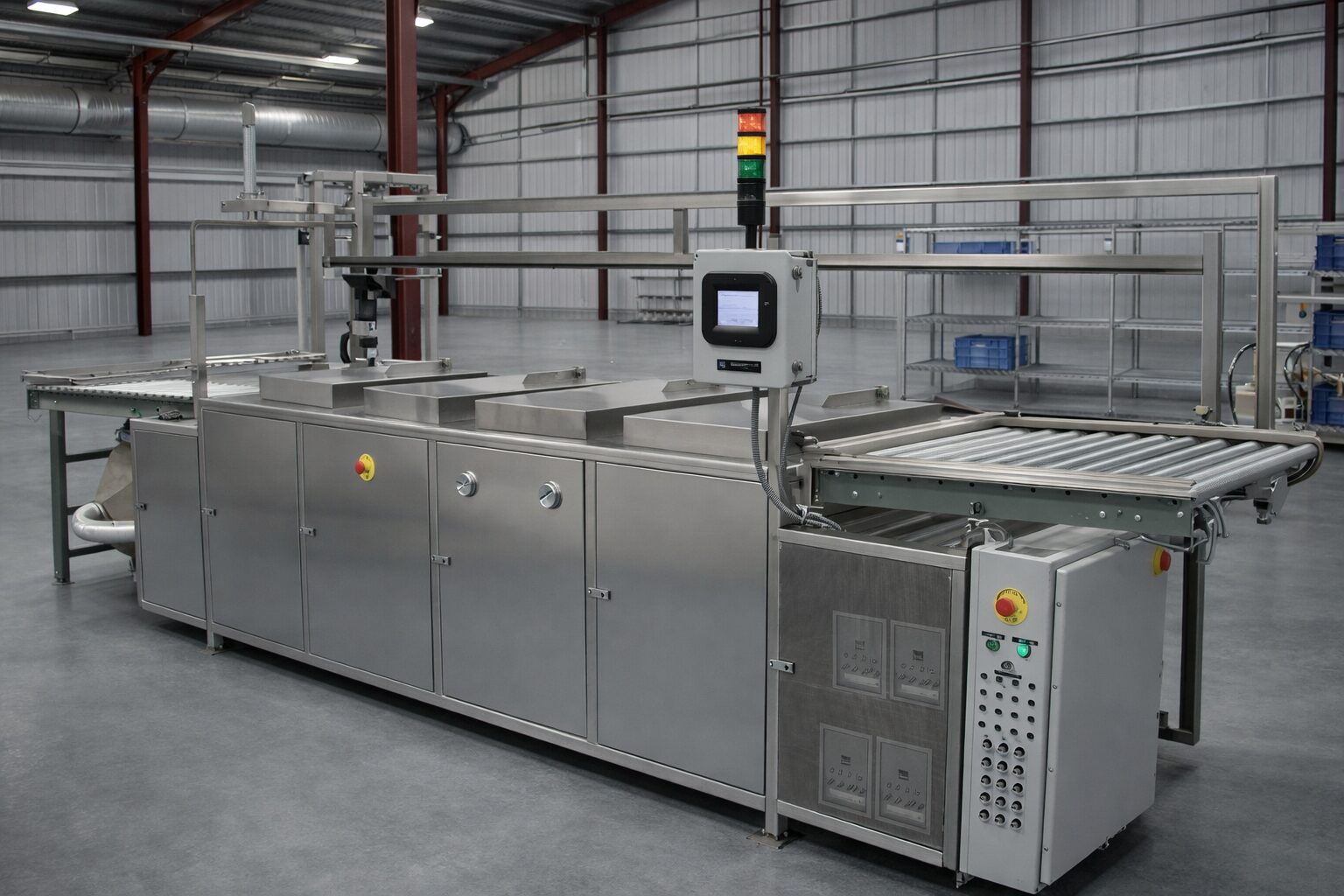
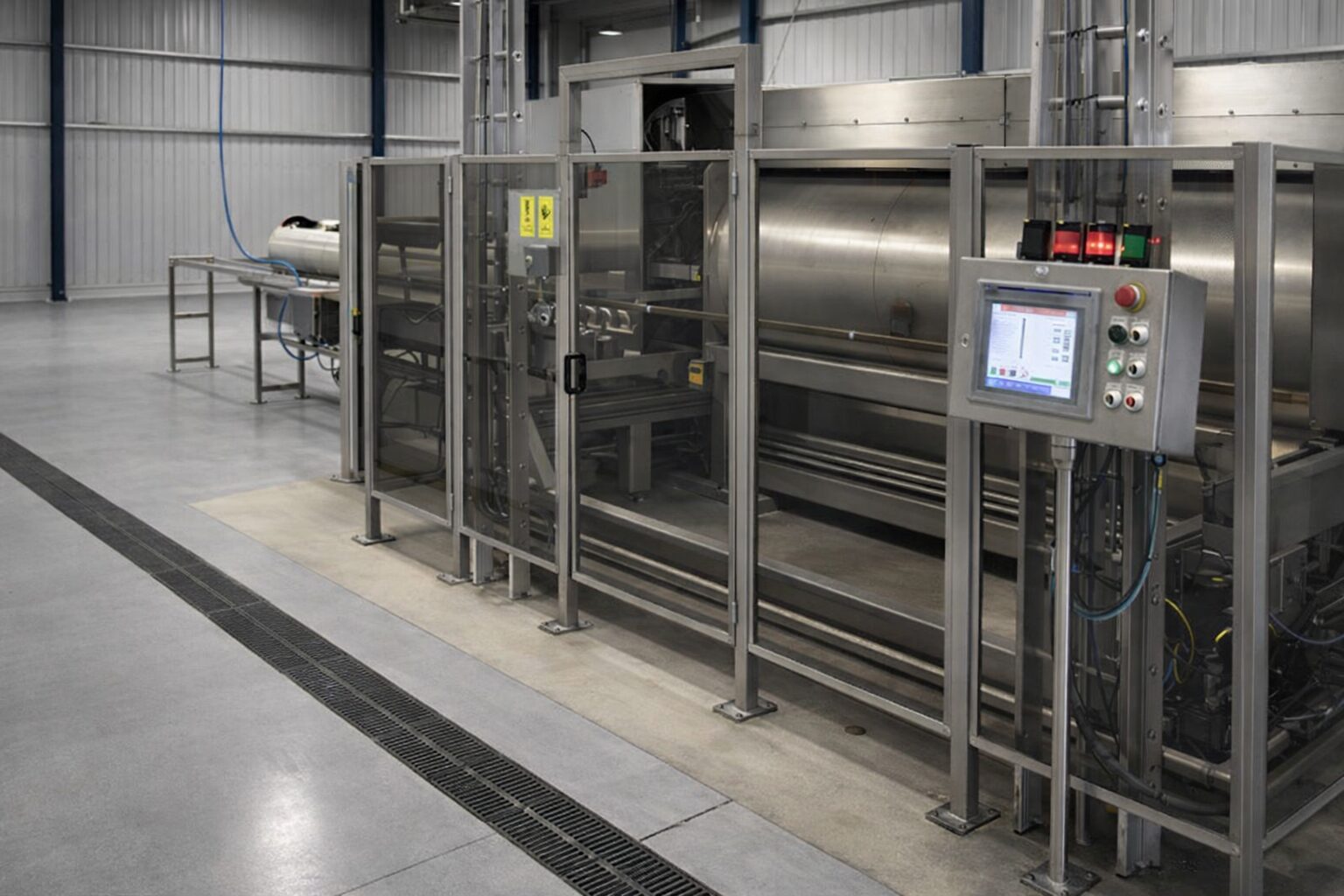
Kerone designs advanced non-thermal processing technology solutions engineered for high performance, energy efficiency, and consistent industrial productivity. With over 48 years of engineering excellence, Kerone provides customized systems tailored to material characteristics, production
Non-Thermal Processing Technology represents a new generation of advanced processing solutions designed to ensure microbial safety and product stability without the application of high temperatures. Unlike conventional thermal methods such as pasteurization or sterilization, non-thermal techniques preserve the natural taste, texture, color, and nutritional integrity of food and pharmaceutical products.
Kerone integrates cutting-edge technologies such as High-Pressure Processing (HPP), Pulsed Electric Fields (PEF), Cold Plasma Treatment, and UV-based sterilization to deliver efficient microbial inactivation while maintaining product freshness. These technologies are widely adopted in modern food and beverage processing due to their ability to extend shelf life naturally, reduce dependency on chemical preservatives, and meet strict international safety standards.
By focusing on minimal thermal exposure, Non-Thermal Processing ensures enhanced product quality, improved consumer acceptance, and sustainable production practices.
capacity, and industry-specific operational requirements. Each system ensures precision, reliability, and long-term sustainability.
Kerone stands at the forefront of industrial process innovation, delivering fully customized Non-Thermal Processing systems tailored to specific product and production requirements. Our solutions are engineered for high performance, energy efficiency, and seamless integration into existing manufacturing lines.
Kerone’s systems are designed with advanced automation, intelligent monitoring, and precise control mechanisms that guarantee consistent results across batch and continuous operations. With strong compliance to global food safety and pharmaceutical standards, our technology ensures reliable microbial inactivation while maintaining optimal product integrity.
By Choosing Kerone, Industries Benefit From:
Enhanced product quality and improved nutritional retention
Reduced operational costs through energy-efficient systems
Sustainable processing with minimal environmental impact
Scalable solutions ranging from small-scale to large industrial operations
Types and Features of Non-Thermal Processing Technology
Non-Thermal Processing Systems:
Kerone offers a comprehensive portfolio of Non-Thermal Processing systems designed to meet diverse industrial needs:
High-Pressure Processing (HPP): Utilizes ultra-high pressure to eliminate pathogens and spoilage microorganisms without heat, making it ideal for juices, meats, and ready-to-eat foods.
Pulsed Electric Field (PEF): Applies short bursts of high voltage to disrupt microbial cell membranes, suitable for liquid food processing and enhanced extraction efficiency.
Cold Plasma Systems: Employ ionized gas at low temperatures for surface sterilization of food products, packaging materials, and medical equipment.
UV-Based Sterilization: Uses controlled ultraviolet radiation for effective microbial reduction in water, beverages, and pharmaceutical applications.
All Systems Are Engineered With:
Advanced PLC-based automation with HMI interfaces
Precise process parameter control
Hygienic stainless-steel construction
Energy optimization modules
Batch and continuous processing capability
Easy maintenance with modular design
Key Features
Minimal or zero thermal damage to products
Significant extension of shelf life without preservatives
High efficiency in microbial and enzyme inactivation
Superior retention of vitamins, minerals, and bioactive compounds
Energy-efficient and environmentally friendly operation
Fully automated PLC-based control with data logging
Scalable and modular industrial design
Reduced processing time with high throughput capacity
Powered by AI, ML & IoT
Future-Ready Engineering Driven by AI & IoT
Our advanced AI, ML, and IoT technologies, this solution delivers smarter automation, real-time insights, and predictive intelligence to enhance efficiency and drive future-ready growth.
Real-Time Monitoring & Control
Continuous tracking of process parameters with instant adjustments.
Predictive Maintenance
Intelligent fault detection to prevent failures before they occur.
Adaptive Process Optimization
Dynamic tuning of operations for maximum output and efficiency.
Cloud Dashboards & Analytics
Unified access to real-time insights and performance trends.
Energy & Resource Savings
Smarter utilization of energy to cut costs and reduce waste.
Secure IoT Connectivity
Encrypted data flow with seamless integration across plant systems.
Applications of Non-Thermal Processing Technology
Kerone’s Non-Thermal Processing Technology systems are extensively used across multiple industries to enhance product safety, extend shelf life, and maintain superior product quality.
Typical applications include:
Fruit and vegetable juice processing
Dairy product preservation
Ready-to-eat food sterilization
Meat and seafood processing
Pharmaceutical sterilization
Functional beverage production
Kerone’s non-thermal processing technology solutions deliver long-term reliability, superior efficiency, and high-quality output. Each system is engineered with innovation, safety, and sustainability at its core, enabling industries to achieve optimized productivity and reduced operational costs.
Seamless Export Connections Global & Local
Our Global Footprint in Industrial Excellence
Delivering world-class industrial and process solutions across countries with precision, innovation, and reliability.
Peru
Chile
Argentina
Mexico
Colombia
Brazil
USA
Canada
United Kingdom
France
Germany
Spain
Italy
Netherlands
Sweden
Switzerland
Poland
Portugal
Ireland
Czechia
Romania
Hungary
Austria
Greece
Kazakhstan
Uzbekistan
Turkmenistan
Algeria
Egypt
Nigeria
Kenya
South Africa
Saudi Arabia
UAE
Israel
Russia
India
China
Japan
South Korea
Thailand
Vietnam
Malaysia
Singapore
Indonesia
Philippines
Australia
New Zealand
Pan-India Presence. Local Expertise.
Raipur
Bilaspur
Panaji
Vasco da Gama
Gandhinagar
Ahmedabad
Surat
Chandigarh
Gurgaon
Shimla
Manali
Bengaluru
Mysore
Kochi
Pune
Mumbai
Thane
Navi Mumbai
Hyderabad
Chennai
Coimbatore
Kolkata
Lucknow
Jaipur
Udaipur
Jodhpur
Dehradun
Haridwar
Bhubaneswar
Product Gallery
Frequently Asked Questions (FAQ)
Non-thermal processing is an advanced preservation method that inactivates microorganisms and enzymes without applying high temperatures, thereby maintaining product quality and nutritional value.
It reduces microbial load and enzyme activity, preventing spoilage and significantly increasing product shelf life without the need for chemical preservatives.
Yes, it generally consumes less energy compared to traditional thermal methods due to reduced heating and cooling requirements.
It is widely used in food, beverage, dairy, pharmaceutical, and nutraceutical industries.
Yes, Kerone systems are designed to comply with international food safety and pharmaceutical regulatory standards.
In many applications, especially heat-sensitive products, non-thermal processing can effectively replace or complement conventional pasteurization methods.
Yes, Kerone provides fully automated PLC-based systems with monitoring, data logging, and precise process control.
Yes, it effectively retains vitamins, minerals, flavor, color, and texture, offering superior product quality compared to heat-based processing.
High-Pressure Processing inactivates microorganisms by physically disrupting cell membranes and denaturing proteins through extreme isostatic pressure, typically in the range of 400 to 600 megapascals, applied uniformly to a sealed package regardless of its shape. Pulsed Electric Field treatment instead applies short, high-voltage electrical pulses that create pores in microbial cell membranes through a process called electroporation, which is generally more effective on liquid or pumpable products passed between electrodes than on solid, packaged items. The mechanism difference also affects suitable applications: HPP works well on pre-packaged solid and semi-solid foods like juices, guacamole, and ready-to-eat meats, while PEF is more commonly applied to liquid streams such as juices or liquid egg before packaging.
Products with significant air pockets or low moisture content generally don't respond well to High-Pressure Processing, since the technology relies on water-based pressure transmission and trapped air can compress unevenly or cause packaging deformation. Dry products like grains, spices, or powders are typically unsuitable for HPP or PEF for this reason, and are better served by alternatives like cold plasma surface treatment. Products requiring full structural texture change, such as cooking raw meat to a cooked texture, cannot be achieved through non-thermal methods since these technologies inactivate microorganisms without the protein denaturation and structural change that thermal cooking provides. Buyers should evaluate non-thermal processing as a preservation and safety tool rather than a direct substitute for cooking.
Cold plasma uses ionized gas at near-ambient temperature to generate reactive species that inactivate microorganisms on contact, making it primarily a surface sterilization technology rather than one that treats a product's interior. This makes cold plasma well suited to treating packaging materials before filling, or to surface decontamination of whole fruits, vegetables, and food contact surfaces, where the safety concern is predominantly surface-level contamination rather than internal microbial load. HPP and PEF, by contrast, can address microbial contamination throughout a liquid or semi-solid product's volume, not just its surface. Selecting between these technologies depends heavily on whether the safety risk being addressed is surface contamination or contamination distributed through the product.
Shelf-life extension from non-thermal processing varies considerably by product and technology, but HPP-treated juices and ready-to-eat products commonly achieve shelf lives of several weeks under refrigeration compared with conventional pasteurization's shorter windows for similarly fresh-tasting products, since non-thermal methods avoid the flavor and nutrient degradation that drives faster sensory decline in heat-pasteurized products. The extension is not unlimited, however, since non-thermal methods generally don't achieve the same spore inactivation as high-temperature sterilization, meaning treated products typically still require refrigerated rather than ambient storage. Manufacturers should validate shelf life empirically for their specific formulation rather than assuming published figures for similar products transfer directly, since pH, water activity, and packaging barrier properties all influence actual achieved shelf life.
UV-based sterilization generally involves lower capital and operating cost than HPP, since it doesn't require generating and releasing extreme pressure cycles, making it attractive for clear or translucent liquids like water and some juices where UV light can penetrate effectively. However, UV effectiveness drops significantly in liquids with high turbidity, pulp content, or color density, since suspended particles block UV penetration and shield microorganisms from exposure, which limits UV's applicability for many fruit and vegetable juices with natural pulp or cloudiness. HPP doesn't share this limitation since pressure transmits uniformly regardless of product clarity, making it the more versatile though more capital-intensive choice for cloudy or pulpy beverage products.
HPP requires flexible packaging that can withstand significant volume compression during the pressure cycle and return to its original shape afterward without seal failure or material fatigue, which rules out rigid containers like glass jars or metal cans for in-package HPP treatment. Multi-layer flexible pouches or specifically rated plastic bottles are the typical packaging formats used, and the packaging material needs validation specifically for the pressure and cycle time the product will undergo, since not all flexible packaging films perform identically under repeated pressure cycling if reprocessing or rework is required. This is a meaningful difference from thermal processing, where packaging selection is typically driven more by heat resistance than by mechanical pressure tolerance.
Yes, hybrid approaches combining mild thermal treatment with non-thermal technologies are increasingly used to achieve safety targets that neither method alone would reach efficiently, since a reduced thermal step can address spore-forming organisms that non-thermal methods alone may not fully inactivate, while the non-thermal step preserves more of the product's fresh characteristics than a higher-temperature thermal process would. This combination approach is particularly relevant for products needing ambient shelf stability rather than just refrigerated shelf-life extension, since achieving true commercial sterility through non-thermal methods alone remains technically challenging for many product types. The specific combination and sequencing of treatments needs to be validated for each product rather than assumed to transfer from published research on different formulations.
Kerone’s custom-designed heating and processing solutions are built to meet the demands of your growing operations. Whether you’re upgrading equipment, expanding production, or need a tailor-made solution


 Peru
Peru Chile
Chile Argentina
 Mexico
 Colombia
 Brazil
 USA
USA Canada
 United Kingdom
 France
 Germany
 Spain
Spain Italy
Italy Netherlands
 Sweden
 Switzerland
 Poland
 Portugal
 Ireland
 Czechia
 Romania
 Hungary
 Austria
 Greece
 Kazakhstan
 Uzbekistan
 Turkmenistan
 Algeria
 Egypt
Egypt Nigeria
 Kenya
Kenya South Africa
 Saudi Arabia
 UAE
UAE Israel
 Russia
 India
India China
China Japan
Japan South Korea
 Thailand
 Vietnam
 Malaysia
 Singapore
 Indonesia
 Philippines
 Australia
 New Zealand