Comparing Bound Moisture and Free Moisture in Industrial Materials
Nearly every raw material employed in the manufacturing of industrial products is loaded with water within it. Moisture exists in various forms in grains, biomass, minerals, chemicals, powders and even in the finished polymer component. That moisture typically needs to be removed before this material can be processed, packed, stored, or shipped. The issue is that not all moisture is alike and a lot of drying systems fail when they treat it as though it were one monolithic mass.
Water within a material can exist in a variety of states and this is something an engineer familiar with drying equipment quickly learns. Some of it held loosely on the surface and can easily be removed by the application of heat. There are two names for this difference in the process engineering jargon: free moisture and bound moisture. Once you know what you are working with, you will make close to every decision based on it, including the kind of dryer to buy, and how long it should take to dry for.
Why Different Types of Moisture Require Different Drying Approaches
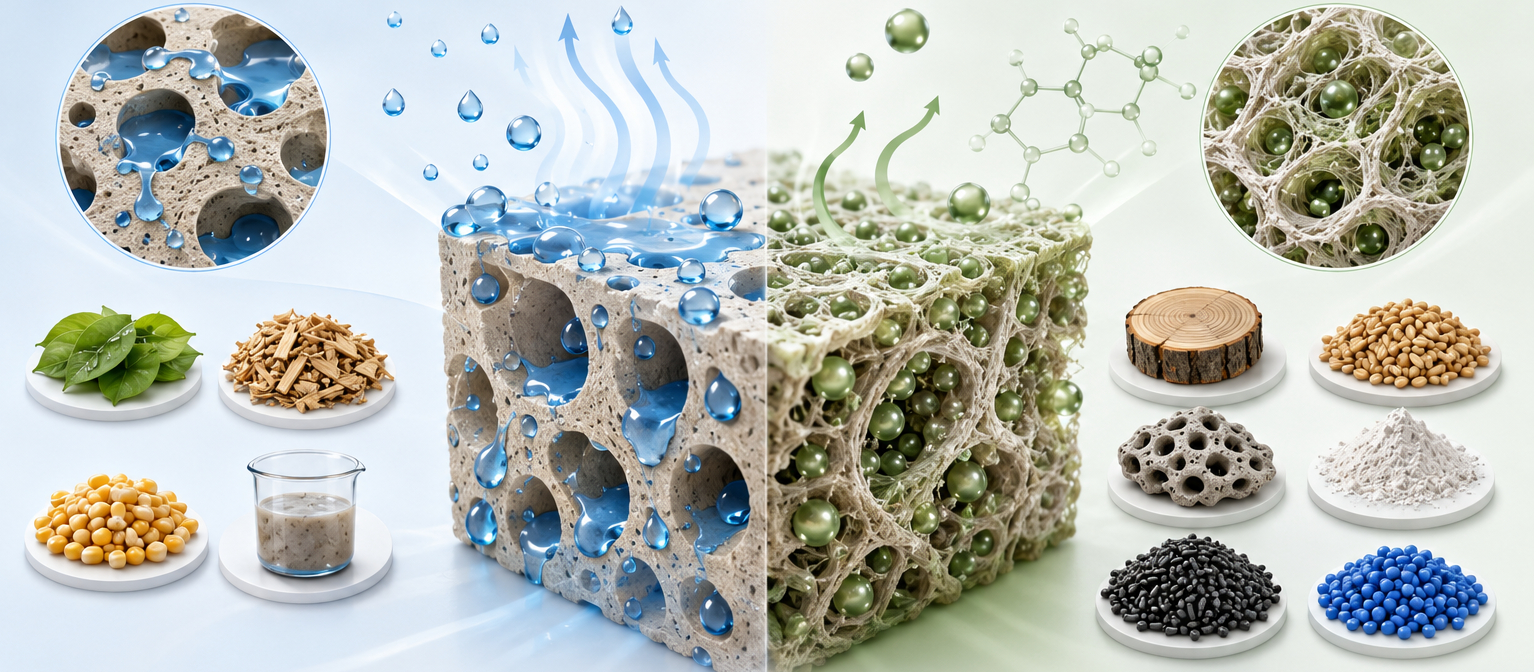
There is no single drying method that is suitable for all types of moisture in a material. However, water found within cell walls, very small pores or chemically bound to molecular structures will react in a completely different way, and may require higher temperatures, residence times and other means of heating such as microwave or infrared radiation. The free moisture portion will cause a problem and/or may be insufficient in a dryer that is designed only for free moisture.
What Is Free Moisture?
Free moisture (also known as unbound moisture) is water on the surface or within the larger pores and capillaries of a material that is not chemically and/or structurally bound to it. This water is similar to an open container of water. Its vapor pressure is near that of pure water at the same temperature, meaning that it easily evaporates when heated or when exposed to air.
How Free Moisture Exists in Industrial Materials
Free moisture is usually present in the form of a thin film on the surface of particles or in the larger open capillaries in the structure of a material. It is bound only by the weak force of surface tension and capillary attraction and does not require much energy to release. Imagine a damp sponge immediately after it’s been dipped in water. Some of that water just remains in the open pockets of the sponge and pours out or evaporates virtually as soon as it’s put there. The simplest form of that is free moisture.
Common Examples of Free Moisture
Examples include surface water on freshly washed vegetables, moisture on biomass chips after rain, water in a wet slurry outside the biomass particle, and dampness on grain shortly after harvesting. Free moisture is generally the water used to wash the mineral in mineral processing operations or water that is not removed from a wet screening operation. This is typically the first moisture to be removed from a drying process.
How Free Moisture Is Removed During Industrial Drying
The constant rate drying period is when free moisture is removed. During this stage the evaporation rate remains relatively constant as there is always surface water available for evaporation and the surface remains saturated. This stage can be easily accomplished by conventional hot air drying, tray drying, and basic convective dryers as the only requirement is sufficient hot air and air flow to remove the evaporated water vapor. After the surface film water has evaporated, the process of drying moves to a new, slower stage and bound water is beginning to play a role.
What Is Bound Moisture?
Bound moisture is water which is physically or chemically trapped in a material by forces greater than just surface tension. This can be because water has been absorbed by the cell wall of an organic substance, water is adsorbed on the inner surface of fine pores, or because the water molecules have established weak chemical bonds (hydrogen bonds) with the molecules of the organic substance. The bound water, therefore, has a lower vapour pressure than free water at the same temperature, and thus is much more difficult to remove.
How Bound Moisture Is Retained Within Materials
With hygroscopic materials, like wood, grains, or many biological products, water molecules are bound to the material at a molecular level, and may be held by hydrogen bonding to cellulose, starch, or protein structures. In porous materials such as ceramics, ores or pharmaceutical granules, the bound moisture exists inside of micro-capillaries which are small so that the normal evaporation forces are not sufficient to easily remove the water. The material retains this water just like a sponge that retain water, even after squeezing it out by hand.
Common Examples of Bound Moisture
The water held within the cell walls of wood and biomass that is below what is called the fibre saturation point, is a classic case of bound moisture. Food powders that absorb moisture in the interior of the starch granules, pharmaceutical excipients that retain moisture in the pores of their structure and polymer matrices in which moisture is bonded within the structure are all examples of this type of moisture. Another reason for the flatter drying curves in the later part of the process is that biochar and other carbonized biomass materials hold moisture in the fine pores of the biomass, as a result of which they maintain moisture content through the drying process.
Why Bound Moisture Is More Difficult to Remove
These are some questions about the difficulty of removing the bound moisture from food. The bound moisture is bound more tightly than the free moisture and therefore has to be separated from the solid by an additional energy, the heat of sorption, in addition to the normal latent heat of vaporization. If it’s removed, it typically requires diffusion to occur first, and moisture moving from the inside to the outside of the material before it can be removed. It is also the reason why drying rates decrease because, once free moisture has gone, only bound moisture remains, a point known as the falling rate period to the engineers.
Bound Moisture vs. Free Moisture
Comparison of Physical Properties and Removal Characteristics
Free moisture acts like pure water, having a vapor pressure almost the same as water at the same temperature and will evaporate from the surface without great resistance. The vapor pressure of bound moisture is lower than that of free moisture since it is bound to the material by capillary, chemical, or adsorptive forces, and it cannot evaporate until it is free of its binding forces and moves to the surface. This is the only difference in vapor pressure and migration behaviour that accounts for nearly all the downstream differences between the two.
Comparison of Energy Requirements and Drying Time
The removal of free moisture is not complicated and is typically the latent heat of vaporization and occurs relatively fast under normal drying conditions. This same latent heat is required to remove bound moisture, but additional energy must be used to break the bonds that bind the water in place so that it may be removed; and, in addition, the time required to remove bound moisture is much longer than that required to remove moisture by evaporation because the diffusion rate within the bound moisture is generally slower than the rate of evaporation at the surface. If a material dries rapidly for the first hour of processing, it may require several additional hours, or another type of heating, to remove the remaining moisture percentage points to target moisture levels.
Comparison of Industrial Drying Challenges
Free moisture removal is relatively tolerant. It is easily processed in most traditional dryers. The true engineering challenges are encountered in bound moisture removal, such as moisture removal that is not uniform throughout the particle size, case hardening that occurs when moisture is removed from the exterior of the particle and not from the interior, and the potential for internal stress that can cause product shrinkage or cracking due to moisture removal or overheating during the process. These problems are the reasons why advanced drying technologies have been developed in addition to the traditional hot air-drying systems.
Why Moisture Type Matters When Selecting an Industrial Dryer
Impact on Drying Time and Production Capacity
Moisture-free material can flow down a dryer at a relatively high rate, allowing higher throughputs. If the bound moisture fraction of the material is high, then the residence time will be longer and this will directly influence the quantity of product that can be processed at a facility in a certain time. It is common for dryers to be undersized because they do not account for the bound moisture content of the feedstock.
Impact on Energy Consumption
Materials with high bound moisture content are more expensive to dry and remove bound moisture will require more energy than simple evaporation of water. When comparing the costs of operation of various drying technologies, this is also an important consideration, as some technologies, such as microwave or radio frequency heating, can access bound moisture more efficiently than hot air alone.
Impact on Product Quality and Uniformity
The impact on product quality and uniformity. The effect on product quality and uniformity. The drying process may result in uneven drying with surface cracking, warping or case hardening if the drying is not carefully controlled with materials that have a significant amount of bound moisture. The moisture removal process can also impact the end product in terms of structure, colour, and stability on the shelf, just as much in the food processing industry as it does in the pharmaceutical or chemical industry.
Impact on Industrial Dryer Selection
Ultimately, the ratio of free to bound moisture in a feedstock should guide the entire dryer selection process. A simple, low bound moisture material might do perfectly well in a conventional rotary or hot air system. A material with a large bound moisture fraction, particularly one that is heat sensitive, often needs a combination approach, such as convective drying for the bulk moisture followed by microwave or infrared finishing for the remaining bound fraction.
Industrial Applications of Bound and Free Moisture Removal
- Food and Agricultural Product Drying
- Chemical and Pharmaceutical Processing
- Biomass, Biochar, and Renewable Energy Processing
- Minerals, Powders, and Bulk Materials
- Polymers and Other Industrial Materials
Selecting the Right Drying Technology for Different Moisture Types
Conventional Hot Air and Tray Drying
Well suited for materials that are mostly free moisture, offering a straightforward and cost-effective way to handle bulk surface water removal at industrial scale.
Rotary and Fluidized Bed Drying
Effective for granular or particulate materials, providing good heat and mass transfer that helps with both free moisture and moderate levels of bound moisture, particularly when particle sizes are relatively uniform.
Microwave and Microwave Vacuum Drying
Because microwave energy heats water molecules directly rather than relying on surface convection, it can reach moisture bound deep within a material’s structure more efficiently, making it valuable for difficult bound moisture applications, especially when combined with vacuum conditions to lower drying temperatures.
Infrared Heating and Drying
Infrastructure energy can help to speed up the removal of moisture from slightly beneath the surface layer of the material, which is normally done as a final step after moisture has been reduced in bulk via other methods.
Radio Frequency Drying
Radio frequency energy such as microwave is useful when using thick or dense products because it heats moisture in the interior of the product in addition to the outside surface, so that bound moisture is heated throughout the product.
Vacuum Drying for Sensitive Materials
The reduced pressure results in the lowering of the boiling point of the water, which means that water, bound moisture and more, can be removed at lower temperatures. This is especially useful for the temperature-sensitive pharmaceutical, food or chemical goods, in which high temperatures would affect the merchandise.
Best Tips for Industrial Moisture Removal
Analyse the Material Before Selecting a Drying System
Understanding the ratio of free to bound moisture in a specific feedstock, along with its particle structure and heat sensitivity, should be the starting point for any drying system decision rather than an afterthought.
Measure Initial and Target Moisture Content Accurately
Accurate moisture measurement at the start and setting a realistic target moisture content prevents both underdrying, which risks product spoilage, and overdrying, which wastes energy and processing time.
Avoid Overdrying and Unnecessary Energy Consumption
Pushing moisture content below what is actually required for storage or processing standards consumes extra energy for no real benefit and can even damage certain products, so drying targets should be based on actual specifications rather than assumptions.
Consider Material Thickness, Particle Size, and Moisture Distribution
Thicker materials and larger particles take longer for internal moisture to migrate to the surface, so particle size reduction or bed depth adjustments can meaningfully improve drying efficiency for bound moisture heavy materials.
Optimize Temperature, Airflow, Pressure, and Residence Time
These four variables work together, and adjusting one without considering the others often leads to uneven results. A slower, well-balanced process frequently outperforms an aggressive, high temperature approach that risks surface damage.
Use Advanced Drying Technologies for Difficult Bound Moisture
When conventional hot air-drying plateaus and residual moisture will not budge, technologies like microwave, radio frequency, or vacuum drying are often the practical way to reach target moisture levels without excessive processing time.
Conduct Pilot Testing Before Large-Scale Implementation
Testing a representative sample of the actual material trial on a pilot scale system helps confirm drying behaviour, energy requirements, and expected cycle times before committing to full scale equipment.
Monitor Moisture Uniformity Throughout the Drying Process
Uneven moisture distribution across a batch, not just the average moisture content, affects product consistency, so in process monitoring at multiple points is worth the additional effort for quality sensitive applications.
How Kerone Supports Industrial Drying Applications
Kerone has spent decades designing thermal processing and drying systems across a wide range of industries, and that hands on experience shapes how each system is engineered for the specific moisture characteristics of a material rather than treating every drying application the same way.
- Industrial Drying Solutions Based on Material Characteristics
- Conventional and Advanced Heating Technologies
- Customized Systems for Specific Industrial Applications
Conclusion
Free moisture and bound moisture are not just technical terms; they represent two very different engineering challenges within the same drying process. Free moisture does a lot of escaping easily and quickly, bound moisture requires more energy, more time, and more of a different kind of heating procedure. Understanding the moisture type and its quantity is the key to choosing the appropriate drying technology, energy costs and product quality protection. Correctly solving this problem up front will save time and money during the life of an industrial drying operation.
Frequently Asked Questions
What is the main difference between bound moisture and free moisture?
Free moisture sits on the surface or in large pores of a material and evaporates easily, while bound moisture is held within the material’s internal structure through stronger physical or chemical forces and needs more energy and time to remove.
Why does drying slow down after the first stage of processing?
Drying slows down once free moisture has been removed and only bound moisture remains, because that remaining moisture has to migrate from inside the material to the surface before it can evaporate, a stage known as the falling rate period.
Can all bound moisture ever be fully removed from a material?
In practical terms, most industrial drying processes target a specific residual moisture level rather than zero moisture, since materials naturally reach an equilibrium moisture content based on the surrounding air conditions.
What is equilibrium moisture content?
Equilibrium moisture content is the moisture level a material naturally settles at when it is left in a given temperature and humidity environment long enough, meaning it neither gains nor loses moisture further under those conditions.
Does particle size affect how quickly moisture is removed?
Yes, smaller particles have a shorter distance for internal moisture to travel to the surface, which generally speeds up drying, while larger particles or thicker materials take longer, especially for bound moisture removal.
Why do some materials crack or warp during drying?
Cracking or warping often happens when the outer surface dries and shrinks faster than the internal moisture can migrate out, creating internal stress, which is more common in materials with significant bound moisture content dried too aggressively.
What does overdrying mean and why should it be avoided?
Overdrying means removing more moisture than actually required for storage or processing standards, which wastes energy, extends processing time unnecessarily, and can degrade certain heat sensitive or texture sensitive products.
How do you know if a material has mostly free or bound moisture?
Laboratory moisture analysis combined with drying rate curves can indicate this, since materials with mostly free moisture show a steady drying rate initially, while a sharp drop in drying rate partway through typically points to a significant bound moisture fraction.
Why do biomass and wood products often need longer drying times?
Biomass and wood contain moisture bound within their cellular structure below the fibre saturation point, and this internally held water diffuses out slowly, which is why these materials often take considerably longer to dry than materials with mostly free moisture.
What is case hardening in industrial drying?
Case hardening happens when the outer surface of a material dries and forms a sealed layer while internal moisture is still present, trapping that moisture inside and making further drying much more difficult.
Are microwave and radio frequency drying always better than conventional hot air drying?
Not always. Conventional hot air drying is often more economical for materials that are mostly free moisture, while microwave or radio frequency methods become more valuable specifically when bound moisture or heat sensitivity makes conventional drying inefficient or risky.
How does humidity in the surrounding air affect industrial drying?
Higher humidity in the surrounding air reduces the vapor pressure difference driving evaporation, which slows down drying rates, so controlling or accounting for ambient humidity is an important part of designing an efficient drying process.
What role does airflow play in removing free versus bound moisture?
is very effective at carrying away evaporated free moisture from a material’s surface, but it has limited impact on bound moisture, since the bottleneck there is internal diffusion rather than surface evaporation.
Why is pilot testing recommended before choosing a full-scale industrial dryer?
Pilot testing on an actual material sample reveals real drying behaviour, moisture split between free and bound fractions, and realistic cycle times, which helps avoid costly mismatches between the material and the selected drying technology at full scale.
Does the same material always have the same free to bound moisture ratio?
No, this ratio can vary based on the material’s source, processing history, and prior exposure to moisture, which is why testing the specific batch or feedstock being processed is more reliable than relying on general assumptions.