Rubber and Plastic Processing for Industrial Compounding: Methods & Machinery
Rubber and plastic processing are the work of turning raw polymers into materials and parts that hold up in real use. A tyre tread, a PVC pipe, a silicone gasket and a polycarbonate lens all start as rubber bales, resin powder or pellets. What makes each one useful is how it is mixed, shaped and cured.
Most people only notice the finished part. The more demanding work happens earlier, during compounding. This is the stage where the base polymer is blended with fillers, stabilizers, oils and curing agents so that it runs well on the machine and performs well in service.
This guide explains how industrial compounding works for both rubber and plastics. It also covers where polymerization fits in, why PVC and polycarbonate need special care, and what machinery a typical compounding and moulding plant uses.
What Rubber and Plastic Processing Covers
Rubber and plastics are both polymers, which are long chains of repeating molecules. The big difference between them is how the final shape gets locked in.
Rubber, also called an elastomer, is soft and stretchy. It is shaped first and then vulcanized. During vulcanization, heat and a curing agent such as sulphur or peroxide build chemical links between the chains, and after that the part cannot be melted and reshaped.
Most everyday plastics are thermoplastics. They soften when heated, flow into a mould or through a die, and harden again when cooled. Because they can be remelted, production scrap can often be ground and reused. A smaller group, the thermosets, cure permanently in the same way rubber does.
Polymer processing is the wider field that covers all of this. It deals with how polymers behave under heat, pressure and shear. Melt viscosity, heat stability, moisture sensitivity and cure speed decide which machines a plant needs and how they are set up.
In practice, rubber and plastic processing plants share many ideas but use quite different equipment. The sections below follow each material from raw polymer to finished part.
Rubber Compounding: From Raw Polymer to a Workable Mix
Raw rubber on its own is weak, sticky and hard to shape. Rubber compounding fixes this by mixing the base polymer with ingredients chosen for the final job. Of all the steps in rubber and plastic processing, this is where most of a rubber part’s properties are decided.
Recipes are written in phr, which means parts per hundred parts of rubber by weight. So a recipe with 50 phr of carbon black has 50 kg of black for every 100 kg of rubber.
What Goes into a Rubber Compound
The base polymer comes first. Natural rubber, SBR, EPDM, nitrile (NBR), neoprene (CR) and silicone are common choices, each picked for its resistance to heat, oil, weather or wear.
Reinforcing fillers such as carbon black and precipitated silica add strength and abrasion resistance. Non-reinforcing fillers like clay and calcium carbonate lower the cost and adjust hardness. Process oils or plasticizers soften the mix and help it flow.
Zinc oxide and stearic acid act as activators for sulphur cure. Antioxidants and antiozonants protect the finished part from ageing and surface cracking. Last comes the cure system, which is usually sulphur with one or more accelerators, or a peroxide for grades that need better heat resistance.
How the Mixing Is Done
Most factories mix in an internal mixer, often called a Banbury-type mixer, with a two-roll mill as the support machine. Mixing is normally split into two stages.
In the first stage, called the masterbatch or non-productive mix, the polymer, fillers, oils and activators go in. The batch heats up from friction and is typically dropped somewhere around 140 to 160°C, depending on the polymer and filler. Silica compounds usually need this higher range so the silane coupling agent can react with the silica.
In the second stage, called the final or productive mix, the cure system is added. This batch must stay cooler and is usually dropped below about 100 to 110°C. If it runs hot, the compound starts curing inside the mixer, a problem known as scorch.
After each stage, the batch is sheeted out on a mill, dipped in an anti-tack solution, cooled on a batch-off unit and stacked for the next step.
Handling Uncured Rubber Compound
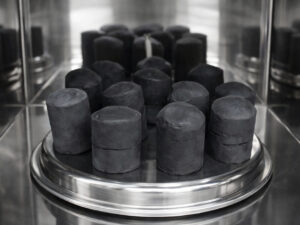
The output of this process is an uncured rubber compound. Many moulders buy it ready-made from custom mixers instead of running their own mixing line. It has a limited shelf life because the cure system is already inside it and slowly reacting, even at room temperature.
Good practice is to store uncured compound in a cool, dry place, use it on a first-in, first-out basis and test it before use. A Mooney viscometer checks viscosity and scorch safety. A moving die rheometer (MDR) shows how fast the compound cures and when it reaches full cure, which helps set the press time and temperature.
Silicone Rubber Compound and Why It Is Handled Differently
A silicone rubber compound is built on a backbone of silicon and oxygen atoms instead of carbon. This gives it a much wider service temperature range than most organic rubbers. Many general grades work from around minus 50°C up to about 200°C, and special grades go further. It is also chemically inert, which is why silicone is common in food, medical and electrical parts.
Silicone comes in two main processing forms. High consistency rubber (HCR) is a thick, dough-like material that is softened and catalysed on a two-roll mill, then shaped by compression moulding, transfer moulding or extrusion. Liquid silicone rubber (LSR) is a pumpable two-part material, mixed in a fixed 1:1 ratio and injected into hot moulds. LSR suits high-volume, precise parts such as seals, valves and baby feeding teats.
The reinforcing filler is usually fumed silica, and curing is done either with a peroxide or with a platinum catalyst. Platinum cure is clean and leaves no by-products, but it is easily poisoned. Traces of sulphur, amines or tin from other compounds can stop it from curing, so silicone is best mixed on dedicated equipment or after very thorough cleaning.
Many silicone parts get a post-cure in a hot air oven after moulding. A common starting point is around 200°C for about 4 hours, though the right cycle depends on the grade and the wall thickness. Post-curing drives off leftover volatiles and peroxide by-products and settles the final hardness and compression set. For food-contact and medical parts it is often a requirement, not an option.
Plastic Compounding in Polymer Processing
Plastic compounding is the melt mixing of a base resin with additives to make pellets with the exact properties a moulder or extruder needs. A plain polypropylene or nylon pellet rarely goes straight into a demanding part. It usually needs colour, fillers, reinforcement or protection first.
Common additives include talc and calcium carbonate for stiffness and lower cost, glass fibre for strength, impact modifiers for toughness, flame retardants, UV stabilizers, antioxidants and pigments. When an additive is packed at high concentration into a carrier resin, the product is called a masterbatch, and the moulder dilutes it with natural resin at the machine. When everything is already mixed in at the final level, the product is a ready-to-use compound.
The Twin-Screw Extruder
The main machine for plastic compounding is the co-rotating twin-screw extruder. Its screws are built from separate elements, so the conveying, kneading and mixing zones can be rearranged for each product. Length-to-diameter (L/D) ratios of around 36 to 48 are common on compounding lines.
A typical line works like this. Loss-in-weight feeders meter the resin and powders into the main feed throat. Glass fibre and heavy filler loads are often added through a side feeder further down the barrel, so the fibres are not broken too early. Vacuum vents pull out moisture and volatile gases before the melt reaches the die.
At the end, the melt leaves the die as strands, which are cooled in a water bath and cut into pellets. Underwater and water-ring pelletizers are used where strand cutting does not work well, for example with soft or very high-output materials.
Single-screw extruders still handle simpler jobs and final product extrusion. For heat-sensitive materials such as PVC, some plants use counter-rotating twin screws or kneader-type compounders, which give gentler and more controlled shear.
In rubber and plastic processing alike, many defects that look like moulding problems actually start in the compound. Poor filler dispersion, moisture pick-up and wrong additive levels all show up later as weak, brittle or badly finished parts.
Plastic Polymerization and Why the Resin Grade Matters
Before any compounding happens, the resin itself has to be made. Plastic polymerization is the chemical process that joins small molecules, called monomers, into long chains inside a reactor. The reactor conditions decide how long the chains are, how much they branch and how evenly they are sized. Those details show up later as melt flow, strength and behaviour on the machine.
Addition and Condensation Routes
There are two broad routes. In addition, polymerization, also called chain-growth, monomers with a double bond link up one after another with no by-product. Polyethylene, polypropylene, PVC and polystyrene are made this way, using free-radical initiators or catalysts such as Ziegler-Natta and metallocene types.
In condensation polymerization, also called step-growth, the monomers react and release a small molecule such as water, methanol or phenol. PET, nylon 6,6 and polycarbonate belong to this group. The reaction can partly run backwards when water meets hot polymer, so these materials lose molecular weight if they are processed wet. That is the main reason they must be dried before moulding.
Reactor Type and Grade Selection
The reactor process matters too. Polymers can be made in bulk, solution, suspension, emulsion or gas-phase reactors. The same polymerization plastic can come in very different forms depending on the route. PVC, for example, is sold as coarse suspension grades for pipes and fine emulsion grades for coatings, and the two process very differently.
For most plants in rubber and plastic processing, resin is a bought-in raw material, so the key job is choosing the right grade. An injection moulding grade usually has a higher melt flow index than an extrusion or blow moulding grade of the same polymer. Swapping one for the other to save cost often leads to trouble on the machine.
PVC Resin Manufacturing and Processing Aids for PVC
PVC is one of the most widely used plastics, and also one of the most demanding to process. Both facts come from how it is made and how it behaves under heat.
How PVC Resin Is Made
PVC resin manufacturing starts with vinyl chloride monomer (VCM). Most VCM is made by reacting ethylene with chlorine to form ethylene dichloride, which is then cracked into VCM. In some regions, an acetylene-based route is also used.
The VCM is then polymerized, mostly by the suspension process. VCM droplets are dispersed in water with suspending agents and initiators inside a stirred pressure reactor. The result is porous PVC grains, which is the form most rigid and flexible PVC products are made from. Emulsion or paste PVC is made for plastisols used in flooring, coated fabrics and gloves, and bulk polymerization is a smaller third route.
After the reaction, unreacted VCM is stripped out of the slurry. This step matters because VCM is a known human carcinogen, and residual levels in the resin are tightly limited. The slurry is then dewatered in a centrifuge, dried in a fluid bed or flash dryer, and screened before bagging or silo storage.
PVC grades are often described by K-value, which indicates molecular weight. Lower K-values suit injection moulded fittings and bottles. Values around 65 to 67 are common for rigid pipes and profiles, and higher values are used for flexible products such as cable insulation.
Why PVC Always Needs Additives
Pure PVC resin cannot be processed alone. Near its processing temperature it starts to break down and release hydrogen chloride, which discolours the product and corrodes the machine. So PVC is always turned into a dry blend first.
A rigid PVC dry blend normally contains heat stabilizers, lubricants, processing aids, impact modifiers, fillers such as calcium carbonate and pigments such as titanium dioxide. Flexible PVC also contains plasticizers. Lead stabilizers have been phased out in many markets in favour of calcium-zinc and organotin systems.
The dry blend is prepared in a hot and cold mixer pair. The high-speed hot mixer heats the blend by friction, typically to around 110 to 120°C, so the additives coat and partly absorb into the resin grains. The blend then drops into a cold mixer and is cooled to about 40 to 50°C before storage, so it does not lump or degrade.
What Processing Aids for PVC Actually Do
Processing aids for PVC are usually high molecular weight acrylic copolymers. They are often confused with lubricants, but their job is different. Lubricants control friction, either between PVC particles (internal lubricants) or between the melt and hot metal surfaces (external lubricants).
Processing aids help the PVC grains fuse into a uniform melt faster. They also raise melt strength and elasticity. On the shop floor this means a smoother surface, better gloss, fewer unmelted particles and a melt that holds its shape better after the die.
They are used at low levels, often a phr or two in rigid profiles and sheet. Foamed PVC board uses more, because melt strength controls how evenly the cells form. Getting the balance between lubricants and processing aids right is one of the most common tuning jobs in PVC extrusion.
Plastic Injection Moulding and Polycarbonate Injection Molding
Plastic injection moulding is the most common way to make plastic parts in large numbers. Pellets are fed into a heated barrel, where a rotating screw melts and meters them. The screw then moves forward like a plunger and pushes the melt into a closed steel mould under high pressure.
Every cycle follows the same order. The mould closes and clamps, the melt is injected, pressure is held to pack the part as it shrinks, the part cools, the mould opens and the part is ejected. Machines are rated by clamping force in tonnes, which must be high enough to keep the mould shut against the injection pressure acting on the part’s projected area.
The main settings are melting temperature, mould temperature, injection speed, holding pressure and time, and cooling time. Common defects such as short shots, flash, sink marks, warpage and burn marks usually come from these settings being out of balance with the part design or the material.
Why Polycarbonate Needs Extra Care
Polycarbonate (PC) is tough, clear and heat resistant. It is used for lenses, headlamp covers, safety visors, electrical housings and glazing. It is also one of the less forgiving resins on an injection machine.
The first rule of polycarbonate injection molding is drying. PC absorbs moisture from the air, and at melt temperature that moisture breaks the polymer chains. The part may look fine but turn brittle, or it may show silver streaks called splay. Resin suppliers commonly recommend drying at about 120°C for 3 to 4 hours in a desiccant dryer, aiming for moisture of about 0.02% or lower. The datasheet of the grade in use always has the final say.
Melt temperatures for PC typically fall between about 280 and 320°C, and mould temperatures are kept high, often around 80 to 120°C. A warm mould lets the melt flow further and reduces moulded-in stress. This matters because stressed PC parts can crack later, especially when they come into contact with certain solvents, cleaners or greases.
PC has a high melt viscosity, so generous gates and runners, smooth flow paths and rounded corners all help. Sharp inside corners act as notches and weaken an otherwise tough part. Regrind should be kept dry and limited, and many moulders set a maximum regrind percentage for clear or safety-critical parts.
Machinery Used in Rubber and Plastic Processing Plants
The equipment in a plant follows the flow of material, from raw material storage to the finished part. The table below shows the main machines at each stage for rubber and for plastics.
| Stage | Rubber lines | Plastic lines |
| Storage and feeding | Bale cutters, weighing systems, carbon black and silica handling | Silos, vacuum conveyors, gravimetric feeders, resin dryers |
| Mixing and compounding | Internal mixers, two-roll mills, dispersion kneaders | Twin-screw extruders, hot and cold mixers for PVC, kneader-type compounders |
| Shaping | Extruders, calenders, compression, transfer and injection presses | Injection moulding machines, pipe and profile extruders, blow moulding machines, calenders |
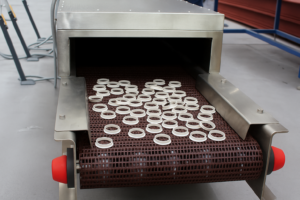
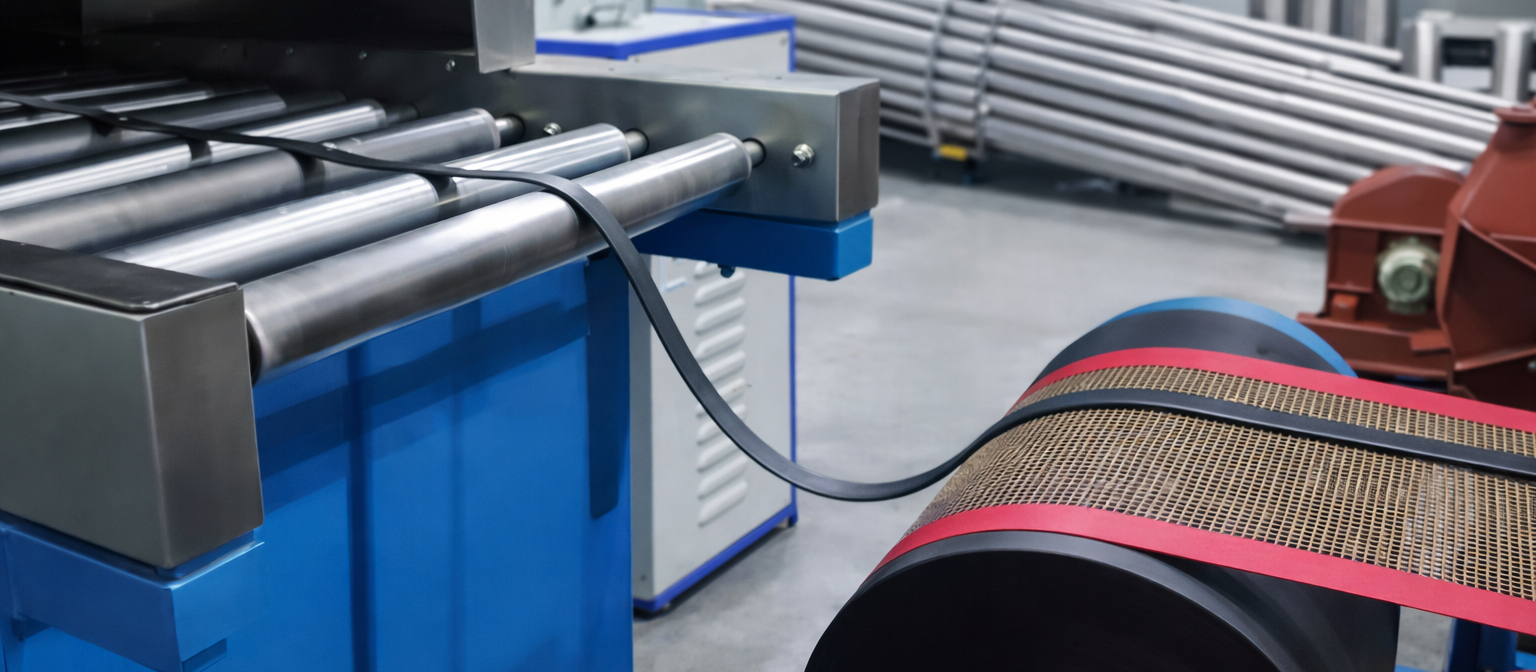
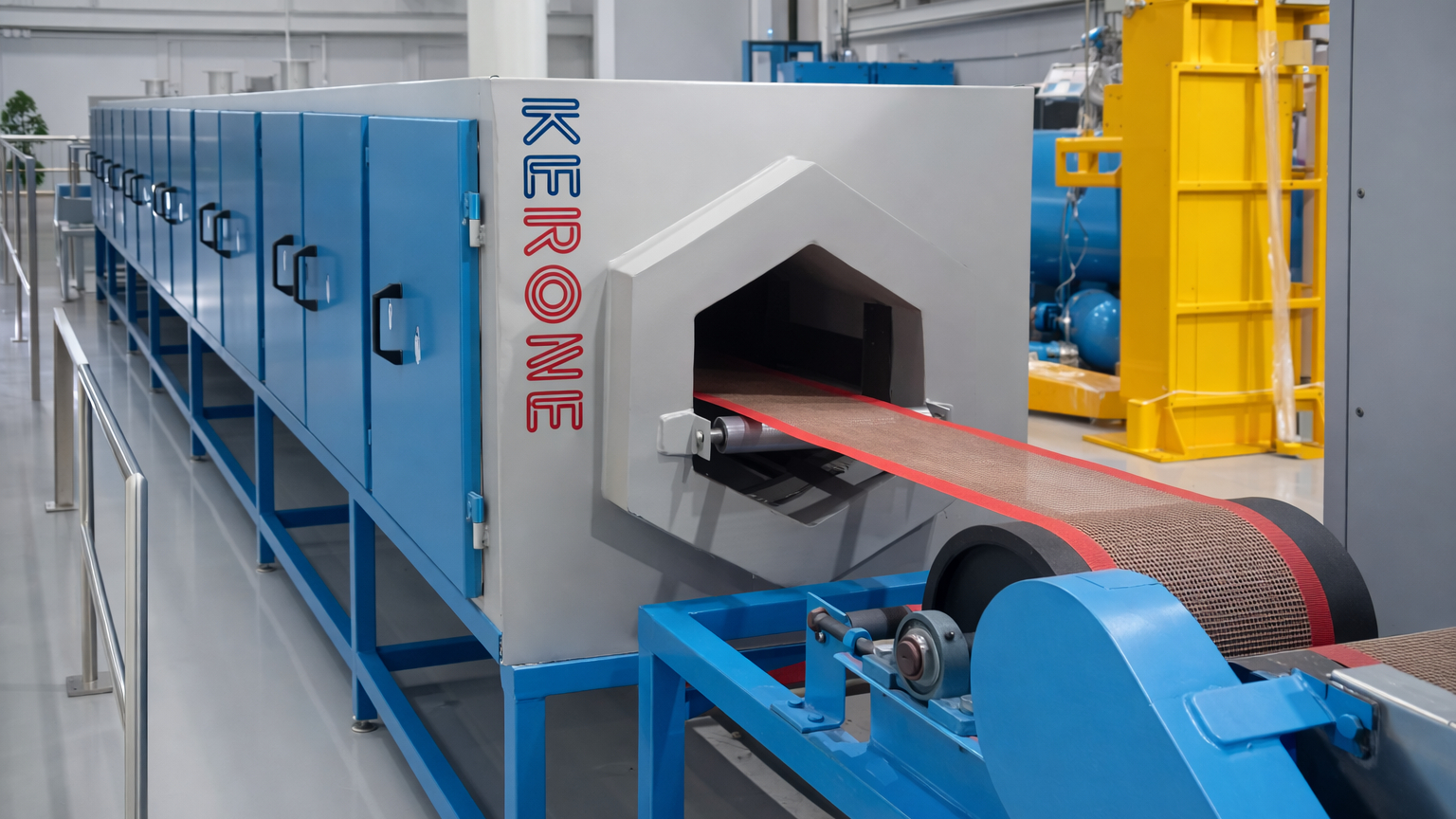
| Curing or cooling | Autoclaves, continuous vulcanization lines (hot air, microwave or salt bath), post-cure ovens | Mould temperature controllers, chillers, cooling tanks and calibrators |
| Finishing | Batch-off units, deflashing and trimming | Pelletizers, cutters, granulators for scrap |
| Testing | Mooney viscometer, rheometer, hardness and tensile testers | Melt flow index tester, moisture analyser, impact and tensile testers |
Support systems are easy to overlook, but they decide how well the line actually runs. Mixers and extruders need reliable cooling water, often chilled, to control batch and barrel temperatures. Areas that handle carbon black, silica and PVC powder need proper dust collection, and mixing rooms and curing areas need fume extraction.
When sizing a new line, it helps to start from the required output in kg per hour and the number of recipes the plant will run. A plant making many short batches in different colours or grades needs fast cleaning and changeover more than it needs peak throughput. Layout also matters, because every extra transfer between stages adds handling time and a chance of contamination.
Rubber, Plastic and Polymer Innovation
Most of the change in this industry is being pushed by recycling targets, safer chemistry and energy costs. These are the areas where rubber and plastic processing is seeing steady development.
Recycled and Circular Materials
Mechanical recycling of plastics keeps growing, and compounders are learning to work with recycled feedstock that varies from lot to lot. Compatibilizers help blend mixed plastics, while melt filtration and vacuum degassing remove contamination and odour. For rubber, reclaim, crumb rubber and devulcanization processes are bringing end-of-life material back into new compounds. Chemical recycling routes such as pyrolysis are being developed for waste that cannot be recycled mechanically.
Safer Additives
Phthalate-free plasticizers, lead-free PVC stabilizers and cleaner cure systems are now expected in many product categories, especially toys, medical devices and food-contact items. Changing an additive package often means re-tuning the whole process, since stabilizers and lubricants interact closely.
Better Tyre and Rubber Compounds
Silica-filled tread compounds with silane coupling agents help lower rolling resistance in tyres. They are harder to mix well than carbon black compounds, which has pushed tyre makers toward tighter temperature control and better mixer design.
Energy Use and Process Control
All-electric injection moulding machines use less energy than older hydraulic machines in many applications. Inline sensors, automatic batch records and closed-loop temperature control are making quality more repeatable. In rubber extrusion, continuous vulcanization lines using hot air and microwave heating have given plants an alternative to salt baths.
Bio-Based Feedstocks
Bio-based polyethylene made from sugarcane ethanol, and other resins made partly from renewable feedstock, can usually run on existing equipment. That makes them easier to adopt than completely new polymers that need new process settings or machines.
Final Thoughts
Good rubber and plastic processing depends less on any single machine and more on getting each stage right, in the right order. The resin or raw rubber has to suit the process. The compound has to be mixed with the right ingredients at the right temperature. The shaping and curing steps then have to respect how that material behaves under heat and pressure.
For anyone planning a new line or troubleshooting an old one, it pays to start from the material and the finished part, then work back to the equipment. Doing it in that order avoids many of the costly surprises that tend to appear during trials and commissioning.
Frequently Asked Questions
What is the difference between rubber compounding and plastic compounding?
Both are core steps in rubber and plastic processing, but they work differently. Rubber compounding mixes raw rubber with fillers, oils, protective chemicals and a cure system, usually in an internal mixer and on a two-roll mill. The result is an uncured compound that is shaped and then vulcanized. Plastic compounding melts a resin together with additives, usually in a twin-screw extruder, and cuts it into pellets that can be remelted and moulded later.
How long can uncured rubber compound be stored before use?
It depends mainly on the cure system and the storage conditions. Some compounds stay usable for several months, while fast-curing grades may last only a few weeks. Store it cool, dry and away from sunlight, use the oldest stock first, and check older batches on a Mooney viscometer or rheometer before moulding.
Why must polycarbonate be dried before injection molding?
Polycarbonate absorbs moisture from the air. When wet PC is melted, the water breaks down the polymer chains, which causes silver streaks and brittle parts. Drying in a desiccant dryer, commonly at about 120°C for 3 to 4 hours, prevents this. Always follow the datasheet for the exact grade.
Are processing aids for PVC the same as lubricants?
No. Lubricants reduce friction, either between PVC particles or between the melt and hot metal. Processing aids, usually acrylic polymers, help the resin fuse faster into a uniform melt and raise melt strength. Most rigid PVC formulations use both, and the balance between them has a big effect on output and surface finish.
Can silicone rubber compound be mixed on the same mill as other rubbers?
It can be done, but it is risky. Residues of sulphur, amines or tin from organic rubber compounds can stop platinum-cured silicone from curing, and silicone traces can also contaminate other compounds. Most processors keep dedicated mills and tools for silicone, or clean them very thoroughly before every changeover.