Coating vs Impregnation: Which Industrial Process Is Right for Films, Fabrics, Paper and Composites?
The coating and impregnation process decision sets the type of machine the size of the dryer the chemistry you can run and ultimately the cost per meter. The two terms coating and impregnation often appear together in brochures. Coating and impregnation do different jobs. Coating puts a layer on top of a material. Impregnation pushes a liquid into a material. This guide explains how each coating process works, where each impregnation process fits for films, fabrics, paper and composites and what to work out before you speak to an equipment supplier.
What Coating Does and How an Industrial Coating Machine Works
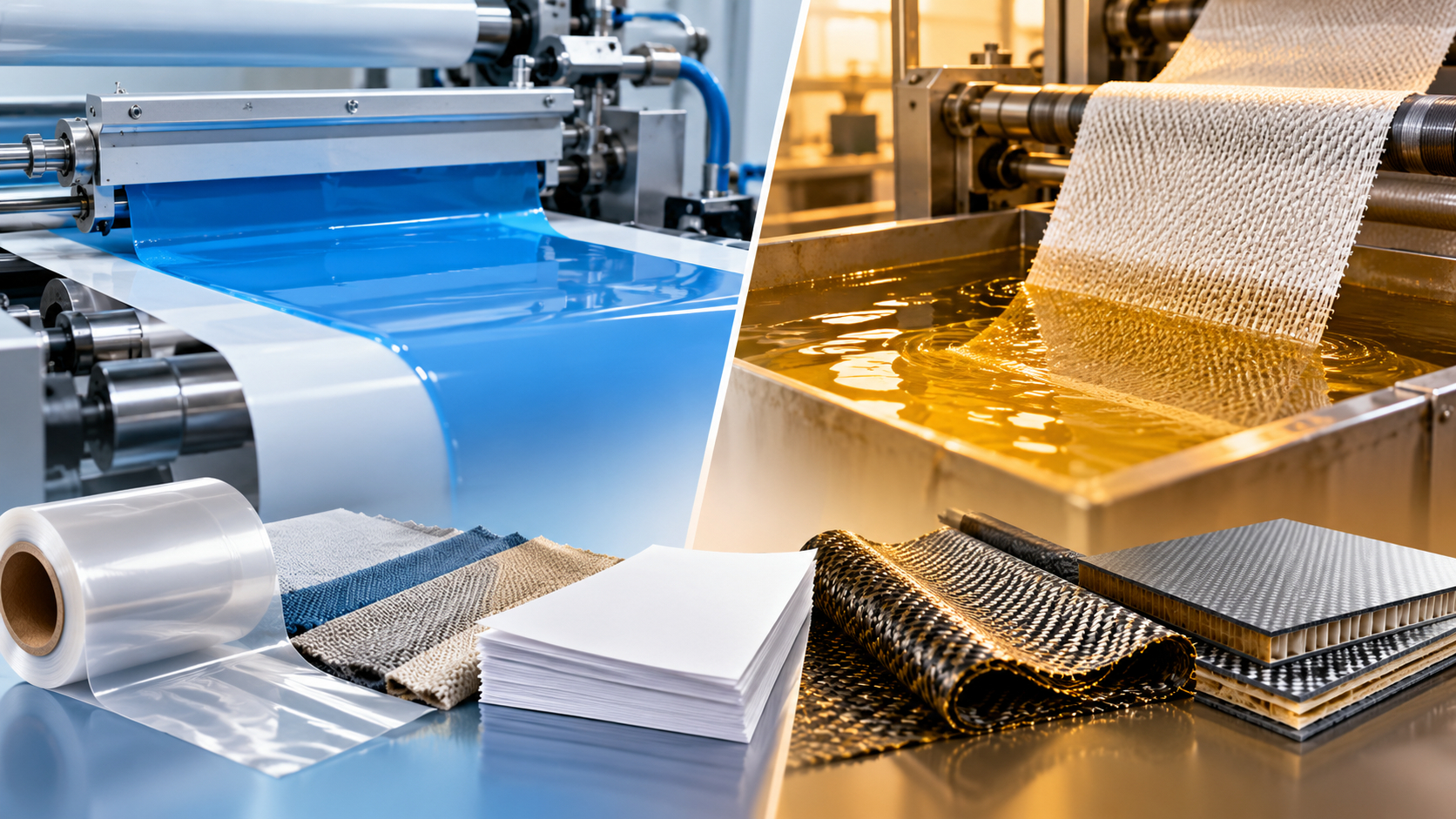
Coating means applying a controlled liquid layer onto the surface of a substrate and then drying or curing it into a continuous film. The material underneath stays largely unchanged. The new properties sit on the face: gloss, printability, a barrier, a heat seal layer, a release layer or waterproofing.
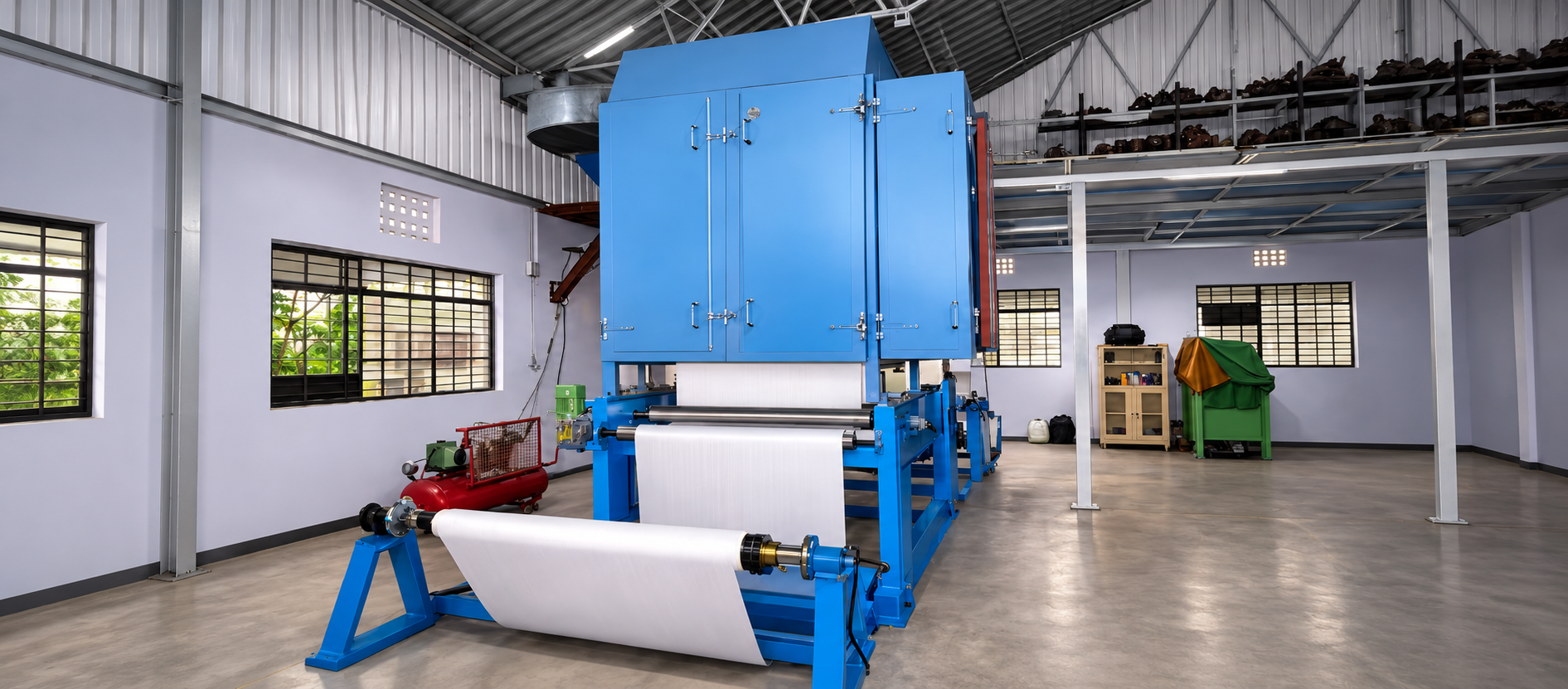
So how does an industrial coating machine work? A roll of material, called the web, is unwound and passed through a coating head that meters liquid onto it. It then travels through a dryer or curing zone, is cooled on chill rolls and is rewound. Tension control and web guiding keep the coat weight even, which is why these lines are called roll to roll coating machines or industrial web coating machines.
The coating head is the easiest way to understand the types of industrial coating machines. Gravure heads lay down thin, even coats at high speed. Reverse roll heads handle a wider range of viscosities. An industrial slot die coating machine is pre-metered, so coat weight is set by pump flow, web speed and coating width rather than roll gaps. Knife over roll and comma heads spread thick pastes, which is why they are common in PVC and PU fabric coating.
What Impregnation Does and How an Impregnation Plant Works
Impregnation means getting a resin, varnish, latex or chemical finish to soak into the pores and fibres of a material so that it fills the structure through its thickness.
How does an impregnation plant work? Most continuous lines use a dip and squeeze principle. The web passes through a resin bath, stays under long enough for the fibres to wet out, then runs through metering rolls that remove the excess. The roll gap or nip pressure decides how much resin stays behind, usually reported as resin content or add-on against dry substrate weight. Many paper lines first wet the sheet from below only, letting air escape from the top before full immersion, which reduces bubbles and dry patches.
Since both faces are wet after the bath, the web cannot touch a roll inside the dryer. An industrial impregnation plant therefore usually has an air flotation dryer, where hot air from nozzles above and below carries the web without contact.
Continuous web lines are only one of the types of impregnation plants. Textile mills use padding mangles, and motor windings go through vacuum pressure impregnation (VPI). The industrial impregnation process idea stays the same: fill the inside, not just the surface.
The First Question in Any Coating and Impregnation Process
Before comparing machines, ask where the property you need has to live. If the product will be judged by how its face looks, prints, seals or sheds water, you most likely need coating. If it must be stronger, stiffer, flame retardant or stable through its full thickness, you most likely need impregnation.
Next, ask whether the substrate can absorb anything at all. A plastic film has no pores, so it can only be coated. A glass fabric, a nonwoven or an absorbent paper can go either way, depending on resin viscosity, contact time and how the line is set up.
Films: Coating Is Usually the Only Route
PET, BOPP, PE and aluminium foil have no pores, so the industrial coating process for films is all about the surface. Many plastic films have low surface energy, so liquids bead up instead of spreading. Corona or plasma treatment just before the coating head is standard, and operators check the result with dyne pens.
Coat weights on films are often just a few grams per square metre, so gravure and slot die heads are the usual choice for a continuous coating machine for films. Thin films stretch easily, so tension must stay low and steady, and dryer temperature must stay below the point where the film shrinks or wrinkles. Typical uses include food packaging barriers, heat seal lacquers and release liners.
Fabrics: Both Processes Have a Place
The options are really limitless when it comes to fabrics. Fabrics are typically industrial coated onto with woven polyester or nylon using a knife and roll or comma head to apply the PU, PVC, Acrylic or Silicone. This imparts waterproofing to the waterproof face of tarpaulins, artificial leather, protective clothing and conveyor belting. Sometimes the impregnation of fabric is referred to as padding. The fabric is passed through a trough and squeeze rolls, which capture the flame retardants, water repellents or antimicrobial finishes throughout the thickness of the fabric. Rubber is bonded to the fibres by dipping them in RFL (resorcinol formaldehyde latex) that gives tyre cord and belting fabrics a rubber-like surface. One thing that buyers do not realize is that a coated fabric will have an effect on the feel and breathability of a piece much more than an impregnated one. Both are employed in many technical textiles where impregnation is first to ensure adhesion and then coating to provide the barrier. Woven fabric shrinks when heated, so a stenter frame with pins or clips is required for an industrial fabric coating line to maintain the width during drying.
Paper: Surface Finish or Full Saturation
Coatings are used in an industrial paper coating line to improve print quality and add grease and water barrier to the paper, provide silicone for release liners or form the active layer of thermal paper. PE is being replaced by water based barrier coatings in some food packaging. Water requires a considerable amount of heat to evaporate compared to the majority of solvents and the coating must be run on a continuous coating machine, which requires a comparatively large sized dryer. There are other objectives for paper impregnation. The paper used for laminate flooring and furniture boards is treated with urea formaldehyde and melamine resin and filter paper may be treated with phenolic resin for strength. Clear examples of continuous coating and impregnation plants are many decor lines that conduct core impregnation, intermediate drying and melamine surface coating and final drying all in one sequence. The line’s speed depends on the absorbency of the paper. Wet paper will also have reduced strength, and web tension needs to be maintained at a low level to prevent paper breaks.
Composites: Impregnation Comes First
Prepregs are made from impregnated glass, carbon or aramid fabrics which contain epoxy, phenolic or other thermoset resins. The solvent method involves the fabric being dipped in a resin solution and then sent through a solvent removal and partial cure dryer (B-staging) which further progresses the cure. In the hot melt method, the resin is first cast onto release paper (coating) and then pressed onto the fibres under heat and pressure. Two numbers that are of particular interest to resin buyers are resin content and volatile content. If the impregnation is not uniform, there are dry sections and voids that are weak points in the finished product.
Sizing an Industrial Coating and Impregnation Plant
With the above factors and once the coating and impregnation process is determined the design follows from a few facts: the substrates width, thickness, gsm, porosity and the tension and temperature limits; the solvent based, water based, hot melt or UV curable chemistry, viscosity and solids content; one or two sides to be treated, target coat weight or add-on, tolerance. The dryer will then be determined by line speed. If the lab tests indicate that the wet layer requires 40 seconds to be dried and the desired line speed is 30 m/min, then the effective drying length of the line is approximately 20 m. If air temperature or velocity can go up then the dryer doubles, otherwise double the speed. Solvent based lines must also be monitored by LEL, exhaust properly, electricals must be flameproof and, in some cases, solvent recovery or thermal oxidiser is required. Good coating equipment should have coat weight gauges and temperature control in-line and bath temperature control.
Mistakes That Cost Time and Money
The most frequently made error is the selection of a coating head from a catalogue without testing it with the actual substrate and chemistry. It is seldom that the viscosity of a datasheet is the same as that of a bath and even paper made in two different mills can absorb differently. In our project work at Kerone, we have saved more time for redesign than from any desk calculation by simply going over a short pilot trial on the client’s material. Many of the common errors are putting too little dryer, using the impregnation bath as a non-circulating, non-temperature-controlled tank and believing that one dryer can do it all. The line designed for thin film lacquers is not suitable for impregnation of thick glass fabric.
Conclusion
Choosing between coating and impregnation comes down to what the finished material needs to do and where that performance is needed. Coating works best when the goal is to change the surface. Think of things like making a material block moisture making it easier to print on keeping water out letting things slide off easily or sealing with heat. These are all surface-level benefits.
Impregnation is better when the treatment has to go into the material. This is when you need the resin, chemical or functional change to spread through the thickness. For example, if the material needs to be stronger or more durable all the way through impregnation is the way to go.
When it comes to films coating is usually the choice. For fabrics, paper and composites the situation is different. These materials might need coating, impregnation or both together. The right decision depends on what the material’s made of, what kind of chemicals are used how much coating or resin is needed how fast the line runs how much drying is needed and what the process conditions are.
It’s an idea to start with small test runs using the real material and the actual formulation. These pilot trials help make sure everything works before choosing machines. That way you avoid surprises later.
A planned coating and impregnation system does more than just make the product better. It keeps things consistent. It also cuts down on wasted material reduces problems during processing and avoids changes after the equipment is already installed. If you begin by defining the process needs and then find equipment that fits those needs you can build a production line that works well and lasts a long time.
Frequently Asked Questions
What is the main difference between coating and impregnation?
Coating adds a separate layer on the surface of a material, while impregnation fills its pores and fibres through the thickness. Coating mainly changes surface properties such as gloss, barrier or sealability. Impregnation changes bulk properties such as strength, stiffness and flame resistance.
Can one machine do both coating and impregnation?
Yes, if the line is designed for a combined coating and impregnation process. Lines with a dip bath, a coating head and a flotation dryer are common for decor paper and some technical textiles. A line built only for coating rarely impregnates well without changes to the dryer, web path and tension system.
Which coating method suits thin plastic films best?
Gravure and slot die heads are the usual choices because they apply thin, even coats at good speeds. Corona or plasma treatment before coating is normally needed so the liquid wets the film properly.
How is resin content controlled in an industrial impregnation plant?
Mainly through the gap or pressure of the metering rolls after the bath, along with resin viscosity, solids content, bath temperature and line speed. Inline gauges measure weight before and after treatment so operators can correct drift quickly.
Why do impregnation lines use air flotation dryers?
After impregnation, both faces of the web are wet. Contact with a roll would mark the surface or pull resin away, so flotation dryers support the web on hot air jets from above and below until it is dry enough to handle.
