How Industrial Processing Technology Supports Modern Agriculture
Harvest day feels like the finish line. The crop is out of the field, the truck is loaded, and everyone breathes a little easier. But for grains, spices, fruits, and vegetables, harvest is really just the halfway point. What happens in the days right after harvest decides whether that crop turns into a good, sellable product or turns into a loss nobody wants to talk about.
At the center of that stretch is moisture. Every crop comes out of the field carrying more water than it should for safe storage. Leave that moisture in place and mould, insects, and slow spoilage follow close behind. Drying isn’t a new idea; people have dried food for as long as they’ve grown it. What’s changed is that industrial agriculture can’t leave the job entirely to the sun and the wind anymore. That’s where post-harvest drying technology comes in, and it’s a bigger part of modern farming than most people outside the industry realize.
A well-run drying operation has to keep track of several things at once: temperature, airflow, how long the material stays under heat, the moisture level it’s aiming for, how thick the bed of product is, and how much energy the whole process burns through. Get any of these wrong and you either waste energy or damage the product you’re trying to save. The goal was never to dry something as fast as possible. It’s to bring moisture down to the right level without cooking away flavour, colour, or nutrition along the way.
This matters just as much for the person running the numbers as it does for the person running the machine. A batch that dries unevenly means some of it gets thrown out, and a system that eats more power than it needs to quietly eats into the margin on every tonne processed. So, when people talk about post-harvest technology, they aren’t really talking about machinery for its own sake. They’re talking about what decides whether a harvest turns a profit or turns into a write off.
Grain drying: the example most people already know
Rice, wheat, corn and other common staple grains are usually the foods that people think of when they talk about drying after harvest and that is a good reason. If grain stays too wet, it heats up in storage, attracts insects and quickly loses value. Grain drying systems use heat and air flow to lower moisture to a safer level before the crop is put into a silo or warehouse.
This gives a farmer or grain handler control. Of waiting for the weather and hoping for a dry week drying can happen on a fixed schedule. Sensors monitor temperature and moisture while a batch runs so operators do not have to guess what is happening inside the machine. Because a dryer can treat a much larger amount of grain than spreading it out in the open the harvest season does not become a bottleneck when everyone is most busy.
Not every crop wants the same treatment
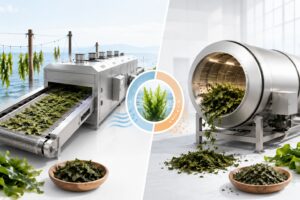
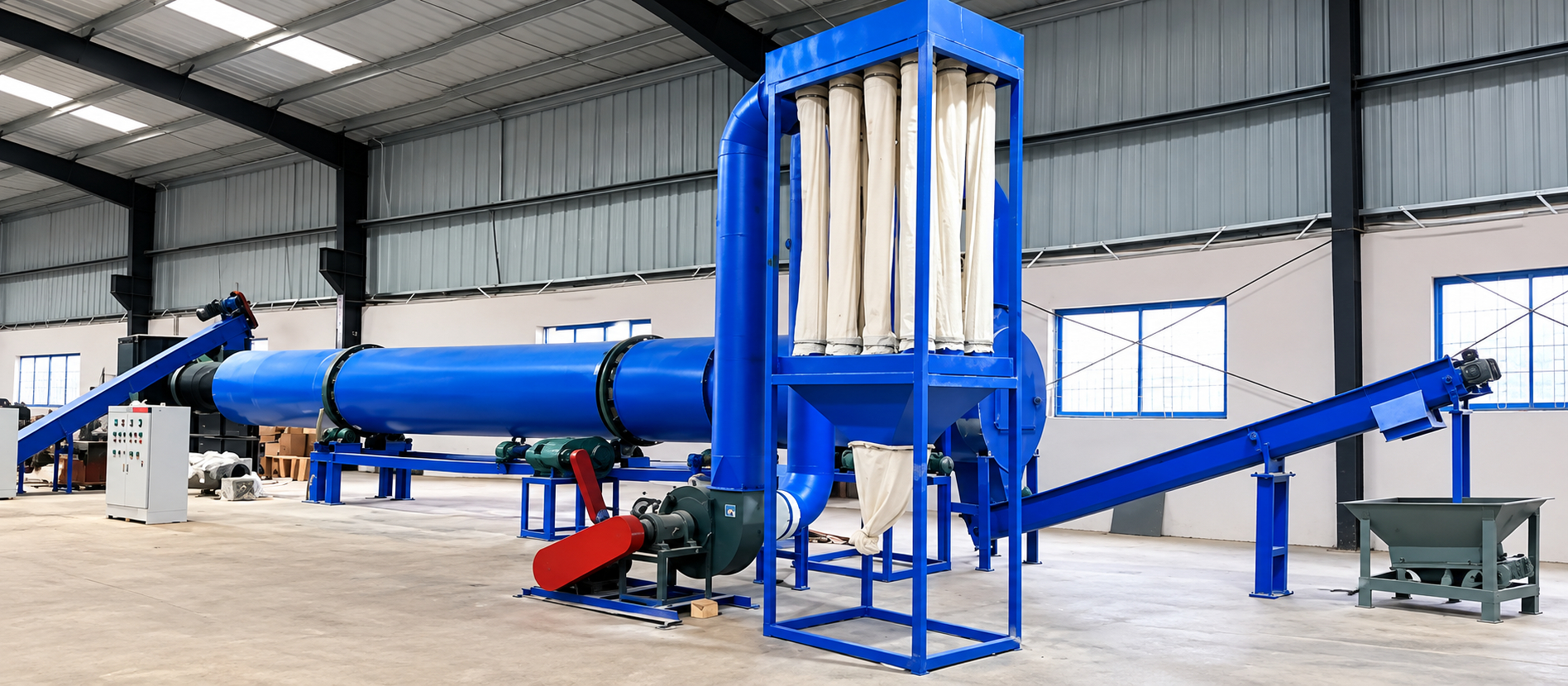
Once you move past grain, things get more specific. A chili pepper, a turmeric root, and a load of rice husk have almost nothing in common structurally, so running them through the same process rarely ends well. This is why industrial drying equipment for agriculture isn’t one machine, it’s a whole set of options: hot air drying, rotary drying, fluidized bed drying, belt drying, infrared, microwave, heat pump drying, and for a smaller group of high value or heat sensitive products, freeze drying.
Microwave drying is a good example of how these choices play out. Instead of heating a product from the outside in, the way a conventional oven does, microwave energy interacts with moisture that’s already inside the material. That can make the process faster in the right setting. It isn’t a universal fix, though. A processor still has to think about how moisture is distributed through the product, how much heat it can take, what throughput is actually needed, and what the running cost looks like. That’s usually why serious equipment decisions involve testing on the real product first, rather than picking a technology because it sounds impressive on paper. Kerone Engineering Solutions is one example of a company that builds this kind of trial work into its process, running pilot batches through its R&D setup before a full-scale system gets designed.
Spices need a gentler hand
Spice processing makes it obvious why “just remove the moisture” is the wrong way to think about drying. Chili, turmeric, cumin, coriander, black pepper, cloves and cardamom all need to lose water after harvest so they store well and process cleanly later. But the same heat that dries them can just as easily strip away the colour, aroma and flavour that make a spice worth buying in the first place.
So, the better questions in a spice drying process aren’t really about speed. They’re closer to: what moisture level does this particular batch need to reach, how even is the drying across the whole load, what temperature is the product actually experiencing rather than just the surrounding air, and how much energy is being spent for every kilogram of finished spice. Those answers say far more about whether a system is doing its job than any spec sheet will.
Turning crop waste into something useful
Harvesting crops and processing them leaves behind materials like husks, stalks, shells and straw. These used to be burned or dumped. Now depending on the crop and what’s available in the area some of this leftover stuff can become fuel, animal bedding, a soil booster or even feedstock for other industries. The problem often starts with moisture. Wet biomass is heavier to handle, harder to store. Doesn’t burn well. That’s why drying waste and biomass is usually the first step. It turns what was once trash into something useful. This change is part of a shift in farming and food processing. Of seeing crop residue, as garbage more people are starting to think of it as a raw material waiting to be put to use.
Drying and sterilizing are not the same job
One mix-up worth clearing up: removing moisture from a spice or food ingredient does not automatically make it microbially safe. Cutting water content can slow microbial growth, but it doesn’t guarantee a validated safety result on its own. Technologies like microwave heating and non-thermal plasma are being tested and used for microbial reduction in food processing, but they’re solving a different problem than drying is. A processor exporting spices or food ingredients needs validated parameters for both moisture content and microbial safety, not one standing in for the other.
What actually matters when choosing equipment
If you’re the one deciding what drying or processing system to invest in, price shouldn’t be the first thing you look at. How the product behaves matters more, its moisture content, particle size, density, and how sensitive it is to heat all shape which technology even makes sense. Throughput matters too, since a pilot scale unit and a several tonnes per hour line are completely different projects with different economics. The target moisture level needs to be tied to an actual storage or export requirement, not a rough guess. Energy use should be checked against what the system actually produces, not just its rated capacity. And if the product needs to look, taste, or perform a certain way after processing, that has to be confirmed, not assumed.
For crops or materials that haven’t been processed this way before, running a small batch through pilot scale equipment first is worth the extra time it takes. It’s a lot cheaper to find out a process doesn’t work during a lab trial than after a full commercial line has already been built. This is part of why some engineering firms, Kerone among them, keep pilot testing built into how they take on new projects, since confirming a design against the real material ahead of time heads off expensive surprises later.
Where this is heading
Agriculture is becoming more connected to engineering, automation and energy management. Post-harvest processing is a part of this change. The new equipment isn’t about drying crops faster. It’s about controlling moisture precisely using less energy improving monitoring and reducing damage to the product. Still the right technology, for a crop depends on the crop itself the cost of running it and what the final product must do after processing. Farmers and processors don’t need to be engineers to gain from these advances. What helps is asking questions before buying a system and giving the post-harvest stage the same attention that goes into growing the crop. Post-harvest technology was never meant to take the place of farming. It’s the step that turns a harvest into a good product.
Frequently Asked Questions
What does post-harvest processing actually mean?
It covers everything that happens to a crop between harvesting and its final use, mainly drying, cleaning, sorting, and sometimes sterilizing. This stage decides how well the crop stores and how much value it keeps.
Why does moisture control matter so much right after harvest?
Fresh crops usually carry more water than is safe for storage. Too much moisture invites mould, insects, and spoilage, so bringing it down to a safe level early on protects the whole batch.
What are the main types of industrial drying used in agriculture?
Common methods include hot air drying, rotary drying, fluidized bed drying, belt drying, infrared drying, microwave drying, and heat pump drying. Freeze drying is used for a smaller group of delicate or high value products.
How is grain drying different from spice drying?
Grain drying generally focuses on removing bulk moisture quickly and safely for storage. Spice drying has to be gentler, since too much heat can strip away colour, aroma, and flavour that grain doesn’t have to worry about in the same way.
Can industrial drying systems be tested before a full commercial setup is built?
Yes, and it’s usually a good idea. Pilot scale trials let a company test a specific product on a small batch first, so any issues show up before money is spent on a full-sized system.
Is drying the same as sterilizing a food product?
No, Drying reduces moisture, which can slow microbial growth, but it doesn’t guarantee the product is microbially safe on its own. Sterilization needs its own validated process, separate from moisture reduction.
What can be done with leftover agricultural waste like husks and straw?
Depending on the material, dried agricultural residue can be turned into fuel, animal bedding, soil additives, or feedstock for other industrial uses. Drying it down is usually the first step, since wet biomass is harder to store and transport.
What should I check before choosing a drying or processing system?
Look at how the product behaves (moisture, particle size, heat sensitivity), the throughput you actually need, your target moisture level, and the energy cost relative to output. If food safety or export standards apply, make sure the process has been validated against them.