Optimizing Plastic Performance Through Precise Heat Treatment
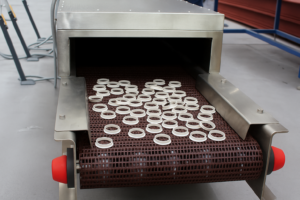
The heat treatment of plastics (known as annealing and Normalising) is important to make sure tight tolerances are maintained during precision machining, bonding and polishing and to avoid cracking and crazing. Heat treating also eliminates internal stresses and ensures higher mechanical and thermal properties. While not this essential heat treatment method, it’s virtually impossible to produce correct plastic parts to specific tolerances.
Why Heat Treat Plastics?
The most cost effective way to produce materials such as Acrylic, PEEK or Ultem is to use either a casting or extrusion process. Although cost effective, cast acrylic or extruded engineering grade materials such as PEEK or Ultem can be highly stressed and have a surface skin which can pull and distort components during and after the manufacturing processes.
To ensure stable dimensions and a long life for precision machined component parts, it is essential that materials are correctly heat treated to remove internal stress. Carville source material oversize, skim to break the surface skin and then heat treat to remove the internal material stress. Carville will not manufacture machined plastic component parts without fully heat treating the base material at the pre-production stage.
What is the Impact of Heat Treatment?
On plastic materials such as acrylic (PMMA), the initial heat treatment, or normalisation processes, can result in material shrinkage of between 2% and 4%. This movement is a result of the material relaxing and releasing the internal stresses that have developed during the casting or extrusion processes.
How Long Does Material Heat Treatment Require?
Subject to the part size, and also the volume of material removed, the heat treatment processes could also be performed many times during manufacturing operations. These heat treatment methods will add several days to the part producing process that is why KERONE’s lead-times are quoted in weeks instead of days
Plastics are all around us — in automotive parts, medical devices, packaging, electronics, and countless other applications. While plastics are known for their versatility and lightweight nature, achieving the right mechanical strength, dimensional stability, and performance often requires more than just molding. This is where heat treatment plays a vital role.
At Kerone, with decades of experience in thermal processing solutions, we understand the science and engineering behind heat-treating plastics. Here’s an in-depth look at how heat treatment improves plastic performance and reliability across industries.